

Owings Mills Federal Employee Injury Attorney
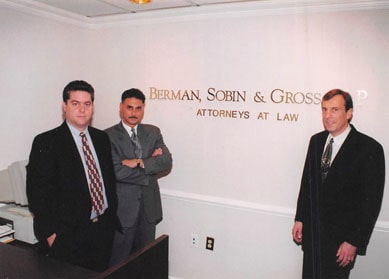
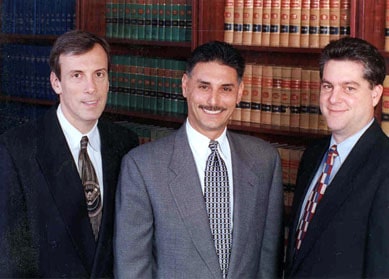
Federal employees in Owings Mills and across Baltimore County work in some of the most demanding environments the government has to offer, from Social Security Administration offices and Veterans Affairs facilities to postal service routes and federal law enforcement assignments. When those workers get hurt on the job, they do not file for workers’ compensation the way private employees do. They face a separate, often more demanding system governed by federal law, and the outcome of their claim depends heavily on how that process is handled from the start. Berman | Sobin | Gross LLP has spent 35 years representing injured workers throughout Maryland, including federal employees who need counsel that understands both the complexity of their injuries and the specific rules that govern their recovery.
The Federal Employees’ Compensation Act Is Not the Same System Your Coworker Used
The Federal Employees’ Compensation Act, commonly called FECA, is the statute that governs injury claims for most civilian federal workers. It is administered by the Office of Workers’ Compensation Programs within the Department of Labor, not by the Maryland Workers’ Compensation Commission. That distinction matters enormously. Filing deadlines, the medical evidence standards, the process for appealing a denied claim, the structure of wage-loss benefits, and the rules for vocational rehabilitation are all different under FECA than they are under Maryland state law.
Many federal employees in Owings Mills discover this the hard way. They assume that because they were hurt at work, the process will be roughly familiar, something they can handle with a form and a doctor’s note. Then the claim gets denied, or approved at a reduced rate, or the insurer disputes the causal relationship between the injury and their duties, and they realize they are in a different kind of fight.
FECA provides compensation for wage loss, medical treatment, and in some cases vocational rehabilitation or schedule awards for permanent impairment. But accessing those benefits requires satisfying documentation requirements that federal agencies and the OWCP enforce carefully. A federal employee injury attorney in Owings Mills who knows how these claims are built, reviewed, and appealed is not a luxury. For many workers, it is the difference between a successful claim and a prolonged dispute that leaves them without income while they recover.
Why Federal Injury Claims in the Owings Mills Area Present Specific Challenges
The Owings Mills area, including the broader corridor along I-795 and the communities it connects to Baltimore’s western edge, is home to a significant number of federal workers. Postal carriers cover routes across Reisterstown Road and beyond. Federal contractors and civilian government employees work throughout the region. SSA employees handle case loads that involve repetitive cognitive demands and sometimes volatile public interactions. Many of these workers sustain injuries that are not dramatic in the moment but become serious over time: repetitive stress injuries, hearing loss from sustained noise exposure, musculoskeletal damage from years of physical labor, or psychological trauma following a workplace incident.
These are precisely the kinds of claims that federal agencies and the OWCP scrutinize most carefully. The connection between a gradual-onset condition and a specific work environment requires solid medical documentation, often including opinions from treating physicians who understand how to frame causation in the language FECA requires. Without that, even legitimate claims get denied at the initial determination stage.
Appeals within the FECA system go to the Branch of Hearings and Review, and ultimately to the Employees’ Compensation Appeals Board. These are administrative channels with their own procedures, timelines, and expectations. The attorneys at Berman | Sobin | Gross LLP have represented clients not just before administrative bodies but through appellate proceedings before both of Maryland’s highest courts in the state workers’ compensation context. That depth of appellate experience translates directly into understanding how to build a record that survives review.
What Happens When a Federal Injury Claim Goes Wrong
OWCP denials are common, and they arrive in language that can seem final even when they are not. A denial letter citing “insufficient medical evidence” or “failure to establish causal relationship” does not close the door permanently, but the window for responding appropriately is narrow. Missing a deadline for reconsideration or failing to submit the right supporting documentation can effectively end the claim.
For federal employees who have been injured and whose claims have stalled, been denied, or been accepted at a lower compensation rate than the injury warrants, the path forward usually involves gathering stronger medical evidence, possibly challenging the agency’s account of how the injury occurred, and navigating the appeal process strategically. This is not administrative busywork. It requires a clear understanding of what OWCP reviewers look for and how to present evidence in a form that addresses their specific objections.
Berman | Sobin | Gross LLP does not shy away from the cases that require more time and resources. The firm’s founders and attorneys have built a practice on representing injured workers in contested, difficult claims, including jury trials and appellate arguments that have resulted in legal decisions that changed how Maryland’s compensation laws are applied. When other attorneys have declined a case or stopped at the administrative level, workers have come to this firm and found counsel willing to take the next step.
Answers to the Questions Federal Employees in Owings Mills Are Actually Asking
Can I choose my own doctor under FECA?
Generally, yes. Unlike some state workers’ compensation systems that require injured workers to see an employer-designated physician, FECA allows federal employees to select their own treating physician. However, the OWCP may send the employee to a second opinion medical exam, and disputes between the treating physician and OWCP-selected physicians often drive claim outcomes. Having your treating physician document your condition in a way that addresses OWCP’s standards is important from the beginning.
What is the difference between a traumatic injury claim and an occupational disease claim under FECA?
A traumatic injury is one that occurs as the result of a specific incident or series of incidents during a single work day. An occupational disease or illness develops over time due to repeated exposure or conditions inherent in the work environment. They are filed on different forms and evaluated differently. Many federal workers who develop repetitive stress conditions or hearing loss file occupational disease claims, which often face more scrutiny because causation must be established across a longer history of exposure.
What happens to my pay while my FECA claim is being processed?
Depending on your agency’s policies, you may be entitled to use accrued sick or annual leave, or your agency may offer continuation of pay for up to 45 days for traumatic injury claims. After that period, compensation through OWCP kicks in if your claim is accepted. Gaps in that transition are common and can create financial pressure. Understanding the timeline and how to keep the claim moving helps minimize those gaps.
Does FECA cover psychological injuries?
Yes. FECA covers psychological conditions, including those that arise from workplace trauma or develop as a consequence of a physical injury. Law enforcement officers, postal workers, and others in high-stress federal roles sometimes sustain psychological injuries that are compensable under FECA, though these claims require careful medical documentation connecting the condition to work-related causes.
Can I also file a third-party lawsuit if someone other than the federal government caused my injury?
In some cases, yes. If a third party, such as a negligent driver who struck a federal employee while on duty, contributed to the injury, there may be grounds for a civil claim against that third party even while a FECA claim is pending. These situations require careful coordination because FECA includes provisions for subrogation when a third-party recovery is involved. An attorney familiar with both federal compensation law and personal injury claims can help evaluate whether this applies to your situation.
What if my injury was caused by harassment or a toxic work environment?
FECA can cover psychological injuries that develop from workplace harassment or hostile working conditions, but these claims are among the most contested. The standard for establishing compensability in these situations is demanding. Documentation of the conditions, the timeline, and the medical connection is essential. These claims do not resolve quickly, and they benefit significantly from representation that understands how the OWCP evaluates evidence in emotionally complex workplace situations.
Does it matter that my agency is denying that the injury happened the way I say it did?
Yes, and this is one of the most important reasons to have legal representation early. Agencies submit their own factual account of the incident to the OWCP, and when that account conflicts with the injured employee’s version, the OWCP must weigh the competing records. Evidence gathered at the claim stage, including witness statements, medical records, and documentation of prior workplace conditions, shapes how the OWCP resolves that conflict. Once the record is closed, adding new facts becomes difficult.
Representation for Injured Federal Workers Throughout the Baltimore Region
Berman | Sobin | Gross LLP serves clients across Maryland, with offices in Lutherville, Baltimore, Gaithersburg, and Frederick. For federal employees in Owings Mills, Reisterstown, Pikesville, and the surrounding communities of Baltimore County, the firm provides the kind of hands-on representation that keeps one attorney as your consistent point of contact throughout the life of your claim. The firm’s attorneys come from diverse backgrounds and include staff fluent in Spanish. Every client is treated as an individual whose case warrants a strategy built around their specific circumstances, not a form letter approach.
If you are a federal employee in the Owings Mills area who has been hurt on the job and needs to understand your options under FECA, contact Berman | Sobin | Gross LLP to discuss your situation with an Owings Mills federal employee injury lawyer who has the resources and the commitment to handle your case from the initial filing through whatever level of review it requires.