

Owings Mills Factory Worker Injury Attorney
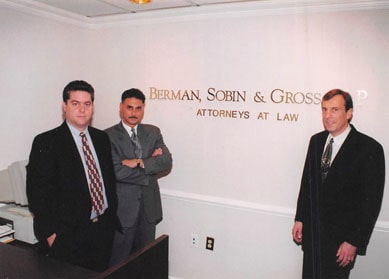
Factory work in Owings Mills and throughout Baltimore County puts real physical demands on the people who do it. Assembly lines, warehousing operations, food processing facilities, and manufacturing plants all share something in common: the conditions that make them productive are also the conditions that lead to serious injuries. When those injuries happen, workers often find themselves caught between an employer’s insurance carrier and a system that was not designed to be easy to navigate alone. The attorneys at Berman | Sobin | Gross LLP have spent 35 years representing Maryland workers in exactly this situation, and as the largest workers’ compensation law firm in Maryland representing injured workers, the firm has the resources to take on cases of any complexity.
What Factory Floors in Owings Mills Actually Look Like From a Liability Standpoint
The industrial corridor along Dolfield Road, the distribution and manufacturing operations near Owings Mills Boulevard, and the facilities that support Baltimore County’s logistics economy all involve equipment, repetitive motion, chemical exposure, and loading operations that create predictable categories of harm. Forklift accidents, conveyor belt injuries, falls from elevated platforms, crush injuries from heavy machinery, and long-term musculoskeletal damage from repeated lifting and reaching are among the most common claims that come out of factory environments in this part of the state.
What makes factory injury cases more complicated than they might appear is the layering of potential liability. A worker hurt by defective equipment may have a workers’ compensation claim against their employer and a separate product liability claim against the manufacturer of the machine. A contractor injured on a factory floor may be entitled to workers’ comp through their direct employer while also having a claim against the property owner or general contractor. These cases require someone who understands both how the Maryland Workers’ Compensation Commission processes claims and how civil litigation works when third-party negligence is in the picture. Berman | Sobin | Gross LLP handles both and coordinates the strategy so that pursuing one route does not inadvertently harm the other.
Why Factory Injury Claims Get Disputed and What That Means for Your Case
Insurance carriers for large manufacturers and distribution companies do not treat every claim as straightforward. They have adjusters and sometimes their own medical experts whose job is to find reasons to limit or deny what workers are owed. A factory worker with a back injury from repeated heavy lifting may be told the condition is degenerative and not work-related. A worker who develops carpal tunnel syndrome from years of assembly work may face an argument about pre-existing conditions. A worker who suffers a traumatic injury may have the severity of that injury questioned.
These disputes are not minor bureaucratic hurdles. They determine whether a worker gets wage replacement during recovery, whether medical treatment gets authorized, and whether permanent disability benefits get paid. Berman | Sobin | Gross LLP’s attorneys do not approach these disputes as routine. One of the firm’s founders literally wrote the definitive two-volume treatise on workers’ compensation in Maryland, which continues to serve as a primary reference for practitioners throughout the state. The firm has handled hundreds of workers’ compensation jury trials and appeals before Maryland’s highest courts. If your claim has been disputed or denied, or if you have been told by another attorney that your case is too complicated to pursue, that is the kind of situation this firm was built for.
Occupational Disease and Long-Term Exposure Claims in Factory Settings
Not every factory injury happens in a single moment. Some of the most serious conditions that affect manufacturing and warehouse workers develop over time: hearing loss from sustained exposure to industrial noise, respiratory conditions from chemical fumes or dust, repetitive stress injuries that accumulate over years of the same motion, and occupational skin conditions from prolonged chemical contact. These claims are harder to bring than acute injury claims because the causation is less obvious, the timeline is diffuse, and employers sometimes argue the condition predates employment or has nothing to do with the work environment.
Maryland’s workers’ compensation system does cover occupational diseases, but the burden of establishing causation falls on the worker, and the evidence requirements are real. Berman | Sobin | Gross LLP has experience building these cases, including challenging employer-retained medical experts who give opinions designed to undermine a legitimate claim. The firm’s appellate victories include cases that changed the rules on when employer medical experts can testify against workers, which reflects the depth of the firm’s engagement with these issues at the highest levels of Maryland’s legal system.
Questions Factory Workers in Owings Mills Ask Us
Can I still file a workers’ comp claim if my employer says the injury was my fault?
Maryland’s workers’ compensation system is a no-fault system. That means fault generally does not determine whether you are entitled to benefits. With limited exceptions, you are entitled to workers’ comp benefits if you were injured in the course of your employment, regardless of whether the employer thinks you contributed to the accident. Employer claims about fault are often used to discourage workers from filing, not because fault actually bars recovery.
What if I was injured by a piece of equipment that malfunctioned?
A malfunctioning machine can give rise to both a workers’ compensation claim and a separate civil claim against the manufacturer or distributor of the equipment. These two avenues are not mutually exclusive, but they require careful handling because a settlement in one area can affect the other. An attorney who handles only workers’ comp without experience in personal injury litigation may not be the right fit for this kind of case.
What happens if my employer does not have workers’ compensation insurance?
Maryland employers are required by law to carry workers’ compensation coverage. If your employer has failed to do so, you still have options. Maryland has an Uninsured Employers’ Fund designed to provide a recovery path for workers in this situation. This is not a simple process, but it exists precisely because workers should not be left without any recourse due to their employer’s failure to comply with the law.
My injury happened gradually, not all at once. Does that still qualify for workers’ comp?
Yes. Cumulative trauma and occupational diseases are compensable under Maryland law. The challenge with gradual injuries is establishing the connection between the work conditions and the condition itself. Documentation of your job duties, your work history, and your medical timeline all become important in building that connection.
Can I be fired for filing a workers’ compensation claim?
Maryland law prohibits employers from retaliating against workers for filing a workers’ compensation claim. If you believe you have been fired, demoted, or otherwise penalized because you filed a claim, that is a separate legal issue from your workers’ comp case itself, and you should discuss it with an attorney promptly.
How long do I have to file a claim after a factory injury in Maryland?
The general statute of limitations for workers’ compensation claims in Maryland is two years from the date of the accidental injury or, in the case of occupational disease, two years from the date you knew or should have known the disease was work-related. Waiting to file can complicate your claim, so getting proper guidance early is worth the effort.
What if my claim was denied by the Workers’ Compensation Commission?
A denial at the Commission level is not the end of the road. Workers have the right to appeal, and in some circumstances, disputed claims can go to jury trial in circuit court. Berman | Sobin | Gross LLP has a demonstrated history of taking claims beyond the administrative level and into the courts when that is what the case requires.
Representing Injured Factory Workers Throughout Baltimore County
Berman | Sobin | Gross LLP serves injured workers across Maryland, with offices in Lutherville, Baltimore, Gaithersburg, and Frederick. Workers from Owings Mills have straightforward access to the firm through its Lutherville location, and the firm regularly handles cases arising from the manufacturing and distribution operations throughout Baltimore County. The firm’s attorneys and staff include Spanish-speaking members who can work with clients without language barriers, because effective representation starts with clear communication.
Talk to an Owings Mills Factory Injury Lawyer About Your Situation
Factory injuries can affect your ability to work, your long-term health, and the financial stability of your family. The workers’ compensation system is designed to provide support in those circumstances, but the process of actually securing benefits is often more contested than workers expect going in. Berman | Sobin | Gross LLP represents workers, not employers and not insurers, and the firm takes on the cases that require real effort to win. If you were hurt at a manufacturing facility, warehouse, or industrial worksite in Owings Mills or the surrounding area, contact Berman | Sobin | Gross LLP to have an attorney evaluate your claim and explain your options. There is no obligation in getting that conversation started, and knowing where you stand is always worth the time.