

Maryland Workplace Fall Injury Attorney
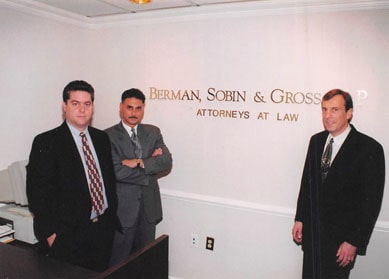
Falls are the leading cause of serious injury across nearly every sector of Maryland’s workforce, from construction sites in Baltimore to warehouse floors in Gaithersburg to the corridors of the state’s schools, hospitals, and public buildings. When a worker goes down after a slip on an unmarked wet floor, a trip over an unsecured cable, or a fall from an elevated surface without adequate guarding, the injuries that follow are rarely minor. Broken bones, spinal cord damage, traumatic brain injuries, and torn ligaments can sideline a worker for months or permanently. The attorneys at Berman | Sobin | Gross LLP have spent 35 years representing Maryland workers whose lives changed in a moment because of a workplace fall injury, and they understand what it takes to recover the full benefits and compensation those workers are owed.
What Makes Fall Injuries Different From Other Workplace Accidents
Not all workplace injuries follow the same pattern through Maryland’s workers’ compensation system, and fall injuries have characteristics that set them apart from repetitive stress claims or equipment-related accidents. The immediate question after a fall is often whether the fall happened in the course of employment, and the answer is not always obvious. A worker who slips in a parking lot before clocking in, falls on a staircase while traveling between floors during the workday, or tumbles from a loading dock while assisting a co-worker may face early challenges to the compensability of the claim even when the connection to work is genuine.
Falls from elevation present their own set of complications. OSHA standards govern scaffolding, ladder safety, fall protection systems, and the use of personal protective equipment at heights, and a violation of those standards by an employer or a third-party contractor can shape the legal strategy considerably. In Maryland, a fall injury claim may proceed through the workers’ compensation system and may also support a separate civil action against a negligent third party, such as a property owner, a general contractor, or an equipment manufacturer, depending on the specific facts. Berman | Sobin | Gross LLP evaluates all of these angles when assessing a fall injury claim, not just the administrative path that is most straightforward to pursue.
The Injuries That Follow a Serious Fall at Work
The severity of a fall injury is often underestimated in the days immediately after the accident. Adrenaline masks pain, swelling develops gradually, and some of the most consequential injuries, including herniated discs, subdural hematomas, and hairline fractures, do not appear prominently on initial imaging. Workers who return to the job too quickly after a fall, or who delay seeking medical care because the injury seems manageable, can find themselves in a far worse position medically and legally as the weeks pass.
Traumatic brain injuries from falls deserve particular attention. A worker who strikes their head on a concrete floor, a steel beam, or even a desk can sustain cognitive, neurological, and psychological effects that outlast all visible physical injuries. These workers often face skepticism from employers and insurance carriers because the damage is not visible in the way a fractured arm is, yet the functional limitations on their ability to work can be just as real and just as permanent. Similarly, spinal injuries from falls frequently require surgery, extended physical therapy, and long-term management, with total medical costs that can reach figures that significantly exceed initial insurance estimates.
Workers who fall from heights, including roofers, ironworkers, utility workers, and those working on scaffolding across Maryland’s ongoing construction and infrastructure projects, often sustain injuries to multiple body systems simultaneously. These multi-trauma cases require careful coordination between medical documentation and legal strategy. Berman | Sobin | Gross LLP’s attorneys have the experience to work through the medical complexity of these claims and to push back when insurance carriers attempt to limit benefits based on pre-existing conditions or disputes about the mechanism of injury.
Third-Party Liability and the Construction Site Context
Maryland’s construction sector generates a disproportionate share of serious fall injuries, and construction sites typically involve multiple employers, contractors, and subcontractors working in the same space. When a subcontractor’s employee falls on a project site because the general contractor failed to maintain a safe working environment, or because another subcontractor’s crew left a hazard unaddressed, the injured worker’s options extend beyond a workers’ compensation claim against their direct employer.
A third-party personal injury claim against a negligent general contractor or property owner can recover damages that workers’ compensation does not cover, including pain and suffering, the full value of future lost wages rather than the partial wage replacement available through workers’ comp, and compensation for the impact on quality of life. These cases require a different evidentiary framework than a workers’ compensation proceeding and typically involve depositions, expert witnesses on safety standards, and litigation strategy that only comes from years of handling construction accident cases at the trial level. Berman | Sobin | Gross LLP does not limit its fall injury representation to administrative proceedings. When a third party bears responsibility for what happened, the firm pursues that accountability in court.
What Maryland Workers Who Have Fallen at Work Genuinely Need to Know
Do I have to prove my employer was at fault to receive workers’ compensation benefits after a fall?
No. Maryland’s workers’ compensation system is a no-fault system, which means you do not need to show that your employer was negligent or did anything wrong. You are entitled to benefits if you were injured in the course of your employment, regardless of who caused the fall. Fault becomes relevant only in a separate civil claim against a third party, not in the workers’ compensation claim itself.
What if I fell because of my own mistake or inattention?
Your own role in the accident generally does not prevent you from receiving workers’ compensation benefits in Maryland. The system was designed to cover work-related injuries without requiring workers to prove they were blameless. There are narrow exceptions, such as injuries caused by intentional self-harm or intoxication, but an honest trip or a moment of distraction on the job is not a disqualifying event.
How long do I have to file a workers’ compensation claim after a fall?
Maryland law requires that workers file a claim with the Workers’ Compensation Commission within two years of the date of the accidental injury. However, the notice requirements are separate: you are generally required to give your employer written notice of the injury within ten days, or at minimum, as soon as is reasonably practical. Failing to provide timely notice can complicate your claim, even if the two-year filing window has not closed.
What if the insurance company says my back or knee condition is pre-existing and not related to the fall?
This is one of the most common disputes in fall injury claims. An employer or insurer may argue that a spine, hip, or knee condition was already present before the fall and that the accident merely aggravated a pre-existing problem. Under Maryland workers’ compensation law, aggravation of a pre-existing condition can still be compensable, and the question of how much of the current disability is attributable to the fall versus what existed before it is often resolved through competing medical opinions. Having legal representation is particularly important in these cases because the outcome depends heavily on how medical evidence is developed and challenged.
Can I receive wage replacement benefits if I cannot return to my job after a fall?
Yes. Maryland workers’ compensation provides temporary total disability benefits for workers who are completely unable to work while recovering, and temporary partial disability benefits for workers who can only perform limited duties at reduced pay. If the fall injury results in permanent impairment, permanent partial or total disability benefits may also be available, depending on the nature and extent of the impairment as determined through medical evaluation and, in some cases, a hearing before the Workers’ Compensation Commission.
What if I was working as an independent contractor rather than an employee when I fell?
This is a nuanced question and the answer depends on how the working relationship is actually structured, not simply how it is labeled. Maryland courts and the Workers’ Compensation Commission look at the reality of the working arrangement, including who controls the work, whether the worker is economically dependent on one company, and other factors. Workers who have been misclassified as independent contractors when they function more like employees may still have access to workers’ compensation benefits. It is worth having an attorney assess the situation rather than assuming classification as a contractor eliminates your options.
Should I give a recorded statement to the insurance company after a fall at work?
You should speak with an attorney before agreeing to any recorded statement. Insurance carriers have a financial interest in limiting the benefits they pay, and recorded statements are often used to create inconsistencies or to pin down descriptions of the accident or your symptoms in ways that can disadvantage you later. Nothing in Maryland law requires you to provide a recorded statement to the insurance carrier as a condition of pursuing your claim.
Representing Maryland Workers Injured in Falls Across the State
Berman | Sobin | Gross LLP has offices in Lutherville, Baltimore, Gaithersburg, and Frederick, and the firm represents workers throughout Maryland, including the Washington, D.C. area, the Eastern Shore, Western Maryland, and the counties surrounding the Baltimore metro. Fall injuries happen wherever people work, and the firm’s attorneys serve clients from construction workers injured on the outer beltway’s expanding commercial corridor to correctional officers who fall on institution grounds to public works employees injured while maintaining Maryland’s roads and infrastructure. No matter where in Maryland the fall occurred or what sector the worker was in, the firm brings the same level of preparation and commitment to the case.
Speak With a Workplace Fall Injury Lawyer at Berman | Sobin | Gross LLP
A serious fall at work can reshape a person’s life in ways that go well beyond the initial medical crisis. Lost income, mounting medical bills, disputes over the extent of permanent injury, and uncertainty about returning to work all accumulate quickly, and the workers’ compensation system does not automatically deliver what a worker is entitled to receive. If you were hurt in a work-related fall in Maryland, the attorneys at Berman | Sobin | Gross LLP are prepared to evaluate your claim, explain what benefits and remedies apply to your situation, and pursue every avenue available to you. With 35 years of experience representing Maryland’s working people and a record that includes hearings, jury trials, and appeals before the state’s highest courts, the firm has the depth to handle even the most contested workplace fall injury cases from start to finish.