

Maryland Workplace Crush Injury Attorney
Crush injuries are among the most destructive trauma categories that Maryland workers encounter. When a limb, torso, or extremity is compressed between two objects, the damage extends far beyond what an X-ray captures: blood vessels collapse, muscles die from oxygen deprivation, nerves are severed, and bones shatter in patterns that often require multiple surgeries. Workers who survive a workplace crush injury in Maryland frequently face months of hospitalization, reconstructive procedures, and permanent functional loss that changes the trajectory of their working lives. The attorneys at Berman | Sobin | Gross LLP have represented injured workers throughout Maryland for 35 years, including workers whose cases involved the kind of catastrophic physical harm that demands serious legal attention from start to finish.
The Industries and Work Environments Where Crush Injuries Concentrate
Crush injuries do not occur at random. They cluster in specific occupational environments where heavy equipment, confined spaces, shifting loads, or vehicular movement create predictable hazard conditions. Maryland’s economy generates these risks across multiple sectors.
Construction sites across Baltimore, Montgomery County, and Prince George’s County see workers pinched between reversing equipment and fixed structures, caught in trench collapses, or struck by falling concrete forms. Warehousing and freight operations, particularly those tied to the Port of Baltimore and the distribution corridors along I-95, involve forklifts, pallet jacks, and loading dock equipment that can trap workers in seconds. Manufacturing and fabrication facilities use presses, rollers, conveyors, and automated machinery where the pinch points may not be adequately guarded. Corrections officers and public safety workers can be caught in doorways or security gates. Agricultural workers across Maryland’s rural counties are exposed to tractor PTOs, hay balers, and auger systems that are notorious for causing degloving and amputation-level crush injuries.
When Berman | Sobin | Gross LLP evaluates a crush injury claim, the occupational context shapes everything: which body parts absorbed the force, what underlying conditions the injury may have aggravated, how long the compression lasted, and whether the equipment or environment involved a third party whose negligence contributed to the incident.
What Makes Crush Injury Claims Medically and Legally Complex
Crush syndrome is a systemic condition, not just localized tissue damage. When muscle is compressed for an extended period, myoglobin and other cellular breakdown products flood the bloodstream upon release. This can cause acute kidney failure, dangerous cardiac arrhythmias, and clotting abnormalities. Workers who are extracted from a crush situation may be in greater immediate danger than they appear to be at the scene. Treating physicians unfamiliar with the syndrome may underestimate the systemic risk and discharge a patient too quickly, leading to complications that insurers will later claim are unrelated to the workplace event.
From a workers’ compensation standpoint, crush injuries generate disputes that simpler injuries do not. Maryland employers and their insurers frequently contest the degree of permanency, argue that pre-existing degenerative conditions account for residual impairment, or challenge whether ongoing treatment is causally related to the work incident. Compartment syndrome, a pressure buildup inside muscle compartments that is common after crush trauma, requires emergency surgical release called a fasciotomy. If that intervention is delayed or disputed, permanent muscle death can result. Whether the insurer will authorize emergency surgical treatment promptly is a real question in Maryland workers’ compensation cases, and delays have consequences that no amount of later legal recovery fully undoes.
Amputations, which occur in a significant subset of severe crush cases, carry their own trajectory of legal issues: prosthetic device coverage, vocational rehabilitation, permanent partial disability ratings, and in the most severe cases, permanent total disability determinations before the Maryland Workers’ Compensation Commission. One of the founding attorneys at Berman | Sobin | Gross LLP literally wrote the comprehensive two-volume treatise on Maryland workers’ compensation law that continues to guide practitioners across the state. That depth of institutional knowledge matters when an insurer challenges the degree of permanent impairment after an amputation or multi-tissue crush event.
Third-Party Liability When a Crush Injury Involves More Than Your Employer
Workers’ compensation provides benefits regardless of fault, but it is not the only avenue of recovery available after a serious Maryland workplace crush injury. When the crushing event involved equipment manufactured with inadequate guarding, a property owner whose premises were negligently maintained, or a contractor other than the injured worker’s direct employer, a separate personal injury claim may run parallel to the workers’ compensation case.
These third-party claims are legally distinct from the compensation claim and can yield recoveries, including pain and suffering and full lost wages, that the workers’ compensation system does not provide. They also involve different time limits and procedural requirements. Identifying whether a third-party claim exists requires examining who owned the equipment, who was responsible for its maintenance, whether applicable OSHA standards were violated, and whether any subcontractors or property owners owed an independent duty to the injured worker.
Berman | Sobin | Gross LLP represents injured workers in both workers’ compensation proceedings and personal injury claims arising from the same incident. Having attorneys who understand both tracks means that evidence developed for the compensation case is not inadvertently used in a way that harms the tort claim, and vice versa. These are not cases where it is wise to have two separate firms operating without coordination.
Questions Maryland Workers Ask After a Workplace Crush Injury
My employer is pushing me to return to work, but my arm still has no grip strength. Do I have to go back?
Return-to-work decisions must be guided by your treating physician’s actual functional assessment, not your employer’s scheduling needs. If your physician has not released you to full duty, or has only released you to light duty work that your employer cannot genuinely accommodate, you retain the right to temporary total or temporary partial disability benefits. Employers sometimes pressure injured workers before restrictions have been legitimately lifted. An attorney can help you understand what your physician’s documented restrictions actually authorize and ensure the compensation system reflects your real condition.
The insurance company sent me to a doctor who says my injury is mostly pre-existing. How does this affect my claim?
Insurance carrier independent medical examinations are common in complex crush injury cases. Maryland workers’ compensation law requires that a claimant’s injury aggravated, accelerated, or combined with a pre-existing condition in order to be compensable; the pre-existing condition alone does not defeat the claim. An attorney can help secure a credible medical opinion that accurately characterizes the relationship between your work event and your current condition, and can cross-examine the insurer’s expert if the case proceeds to hearing.
My crush injury resulted in an amputation. What benefits am I entitled to under Maryland workers’ compensation law?
Maryland’s workers’ compensation system provides scheduled benefits for the loss of specific body parts, calculated by a formula that accounts for the affected member and the worker’s average weekly wage. Beyond the scheduled award, you may be entitled to payment for all medical treatment related to the amputation, including prosthetic devices and their replacement over time, physical and occupational therapy, and potentially vocational rehabilitation if you cannot return to your former occupation. In cases involving catastrophic loss, permanent total disability benefits may also be available. The specific amounts depend on your wage history, the severity of the loss, and how the permanent impairment is rated.
Can I recover anything for the pain and suffering from my workplace crush injury?
Maryland workers’ compensation does not include pain and suffering as a compensable category. However, if your injury involved a third party, such as a negligent equipment manufacturer, a property owner, or an independent contractor, a personal injury claim can seek damages for pain, suffering, and loss of quality of life. Whether this avenue exists in your situation depends entirely on the facts of how the injury occurred. It is worth having those facts examined by an attorney who handles both compensation claims and tort litigation.
What happens if I miss the deadline to file a workers’ compensation claim in Maryland?
Maryland law requires that most workers’ compensation claims be filed within two years of the date of injury. Missing this window can permanently bar recovery. There are limited exceptions and nuances involving occupational disease claims or injuries where the connection to work was not immediately apparent, but these are narrow. For traumatic crush injuries where the cause and date are clear, there is no practical reason to delay filing.
My employer says the crush happened because I was not following safety procedures. Does that bar my claim?
Maryland workers’ compensation is a no-fault system. Employee negligence, with very narrow statutory exceptions, does not defeat a workers’ compensation claim. You are entitled to benefits for a workplace injury even if your own actions contributed to the incident. The employer’s characterization of your conduct, while it may affect how the incident is investigated and whether OSHA becomes involved, does not override your right to compensation under Maryland law.
I was injured on a job site but I’m not sure whether I’m classified as an employee or an independent contractor. Does that matter?
It matters significantly, but the employer’s classification does not control the legal outcome. Maryland courts and the Workers’ Compensation Commission look at the actual working relationship, not just what the paperwork says. Workers who have been misclassified as independent contractors to avoid workers’ compensation coverage have successfully obtained benefits when the true nature of their relationship with the employer was properly analyzed. This is a fact-intensive inquiry that an attorney should evaluate before you assume a classification bars your claim.
Pursuing a Crush Injury Claim with Attorneys Who Handle the Difficult Cases
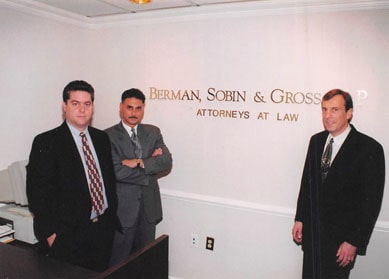
Berman | Sobin | Gross LLP is the largest workers’ compensation law firm in Maryland representing injured workers. That is not a marketing description; it reflects 35 years of growth driven by the firm’s willingness to take on claims that require real litigation, not just administrative hearings. The firm has handled hundreds of workers’ compensation jury trials and appellate arguments before Maryland’s highest courts. Attorneys here do not redirect difficult cases toward early settlement because the litigation is inconvenient. When a crush injury has produced permanent, life-altering consequences, the compensation must reflect that reality, and reaching a result that does requires attorneys prepared to make the full case.
If another firm has declined to pursue your claim past the initial filing stage, or if you are concerned that the benefits offered do not reflect what you have actually lost, Berman | Sobin | Gross LLP will evaluate the claim and tell you honestly what the options are. The firm serves workers throughout Maryland, with attorneys and staff members who are fluent in Spanish and equipped to communicate with clients across language barriers. For workers dealing with the aftermath of a Maryland workplace crush injury, the attorneys at Berman | Sobin | Gross LLP are available for a confidential case analysis.