

Maryland Workers Compensation Vocational Rehabilitation Attorney
When a work injury permanently changes what you can do for a living, the question shifts from recovery to survival. Medical treatment addresses the body. But if you cannot return to the job you held before, something else has to happen. That something is vocational rehabilitation, and under Maryland workers’ compensation law, injured workers may be entitled to it as a benefit. A Maryland workers compensation vocational rehabilitation attorney works to make sure that entitlement becomes reality, not just a line item in a statute that gets quietly ignored.
What Vocational Rehabilitation Actually Covers in Maryland
Vocational rehabilitation in the Maryland workers’ compensation system is not a single service. It is a category of benefits designed to help injured workers re-enter the workforce when they cannot return to their previous occupation. Depending on the nature of the injury and the worker’s prior employment, this can include job placement assistance, on-the-job training, formal education or retraining programs, and counseling to identify realistic work options given new physical limitations.
The Maryland Workers’ Compensation Commission has the authority to order vocational rehabilitation services. Employers and their insurers are required to participate. But the process rarely moves on its own. Insurers have financial incentives to keep rehabilitation costs low, which can mean steering injured workers toward inadequate programs, questioning whether rehabilitation is necessary at all, or disputing the worker’s limitations in ways that undermine the entire benefit.
One appellate victory from Berman Sobin Gross LLP illustrates how much the legal details matter here. In Fikar v. Montgomery County, Maryland, the firm established that injured workers who are receiving service-connected disability retirement are still entitled to vocational rehabilitation services. That ruling directly expanded access for workers who might otherwise have been told their benefits were exhausted. The law on this issue exists because attorneys pushed for it.
Who Qualifies and When the Benefit Gets Disputed
Maryland law generally requires that an injured worker be unable to return to their former position as a result of their compensable injury. That sounds straightforward. In practice, the disputes are frequent and can turn on technical medical and vocational evidence.
Insurers often argue that a worker can return to “light duty” or some modified version of their former job, which may eliminate the need for rehabilitation services in their view. They may challenge the medical findings supporting the work restrictions. They may dispute whether the restrictions are caused by the work injury or by pre-existing conditions. They may also argue that the cost of a particular retraining program is unreasonable.
For workers in physically demanding occupations, these disputes carry extra weight. A firefighter, corrections officer, or construction laborer whose injury prevents heavy physical work faces a different vocational reality than an office worker with the same diagnosis. The rehabilitation plan has to account for actual skills, actual labor markets, and actual earning potential, not a generic assessment that minimizes the economic impact of the injury.
Maryland has a significant population of workers in transportation, government services, food service, and healthcare. Many of these jobs involve physical demands that a serious injury can permanently foreclose. The vocational rehabilitation benefit exists precisely for these situations, and getting it right requires an attorney who understands how to present that kind of claim before the Commission.
How the Commission Process Works When Rehabilitation Is at Issue
A claim for vocational rehabilitation benefits typically arises after an injured worker reaches what is called maximum medical improvement, the point at which their condition has stabilized. At that stage, if the worker cannot return to their prior occupation, the issue of rehabilitation comes forward.
The Commission can order an employer or insurer to provide a vocational rehabilitation assessment. That assessment then becomes the basis for a rehabilitation plan. If the parties cannot agree on the plan, there will be a hearing. Medical records, expert opinions from vocational consultants, and testimony about the worker’s work history, education, and physical capabilities all become part of the record.
The employer’s insurer will typically have its own vocational expert. That expert’s job, in practice, is to identify the cheapest path that satisfies the legal standard. An attorney representing the injured worker pushes back on assessments that underestimate the worker’s limitations, that identify phantom jobs that do not actually exist in the regional labor market, or that propose training programs that are too short or too narrow to produce meaningful employment at a reasonable wage.
When disputes cannot be resolved at the Commission level, Maryland law allows for appeals to the circuit courts, and beyond that to Maryland’s appellate courts. Berman Sobin Gross LLP has handled workers’ compensation cases at every level of that process, including jury trials and appeals before both of Maryland’s highest courts. Most rehabilitation disputes resolve before reaching that point, but the willingness to litigate changes how the other side approaches settlement.
Questions Injured Workers Often Have About Vocational Rehabilitation
Can I be forced into a retraining program I think is inappropriate?
The Commission has authority to approve rehabilitation plans and to resolve disputes over their adequacy. You cannot simply refuse participation without risking your benefits, but you do have the right to challenge a plan that fails to account for your actual limitations or that proposes training for work you are not medically cleared to perform. An attorney can help you document those objections and present them effectively.
What if my employer says I can return to light duty? Does that end my vocational rehabilitation claim?
Not necessarily. Light duty offers raise complex questions about whether the position is genuine, whether it matches your actual restrictions, and whether it constitutes suitable employment under Maryland law. If the light duty offer does not reflect your real limitations or is not a position that would exist in the open labor market, it may not defeat your rehabilitation claim.
Does vocational rehabilitation affect my other workers’ compensation benefits?
Yes, in ways that matter. Participation in rehabilitation can affect temporary total disability benefits during the retraining period. How your benefits are structured while you are in a program depends on the specifics of your case and your plan. This is one reason why having legal representation during the rehabilitation phase, not just at the start of a claim, is important.
What happens if I complete a retraining program but still cannot find work?
Completing a vocational rehabilitation program does not automatically resolve your claim. If the retraining does not produce suitable employment, there may be additional benefits available depending on your level of permanent impairment. These situations often require further proceedings before the Commission.
How long does vocational rehabilitation typically take?
The timeline depends on the nature of the retraining required. A job placement program may take weeks. A formal education or certification program can extend significantly longer. Maryland law does not set a single fixed duration, and the Commission evaluates reasonableness on a case-by-case basis.
Can I choose my own vocational rehabilitation counselor?
The employer’s insurer typically initiates the process and may select a counselor. If you believe the counselor is not acting in your interest or is producing an assessment that misrepresents your capabilities, you have the right to challenge that assessment. In some situations, an independent vocational evaluation may be appropriate.
What if I was already receiving disability retirement when my injury occurred?
As established in the Fikar v. Montgomery County case, receiving service-connected disability retirement does not automatically disqualify you from vocational rehabilitation benefits under Maryland workers’ compensation law. This is a nuanced area where legal guidance directly affects outcomes.
What Workers Across Maryland Should Know About Pursuing This Benefit
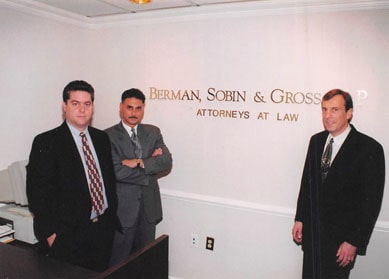
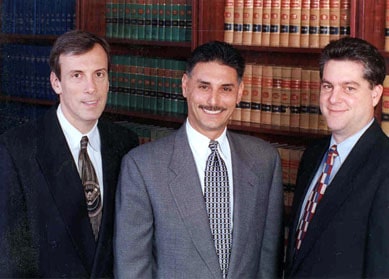
Berman Sobin Gross LLP has spent 35 years representing the workers who make Maryland run, including firefighters, paramedics, EMTs, law enforcement officers, corrections officers, teachers, truck drivers, and workers in countless other demanding fields. The firm operates from offices in Lutherville, Baltimore, Gaithersburg, and Frederick, and represents clients throughout the state. Spanish-language services are available for clients who need them.
The firm has built its reputation by taking on the cases other attorneys turn away, and by following claims through hearings, trials, and appeals when that is what the situation requires. For injured workers dealing with complex rehabilitation disputes, that depth of experience changes what is possible.
If you are at the stage of your workers’ compensation claim where your ability to earn a living is the central issue, you should not be navigating the Commission’s vocational rehabilitation process without legal representation.
Connect with a Maryland Vocational Rehabilitation Lawyer
The vocational rehabilitation phase of a workers’ compensation claim is where long-term financial consequences get decided. A retraining program that does not fit your actual situation, an insurer that disputes your limitations, or a plan that points you toward work you cannot realistically perform can all shape the rest of your working life. The attorneys at Berman Sobin Gross LLP understand the Commission process, know how to challenge inadequate rehabilitation assessments, and have the litigation background to take these disputes as far as they need to go. Contact the firm to discuss your situation with a Maryland vocational rehabilitation workers’ compensation attorney.