

Maryland Social Worker Injury Attorney
Social workers carry one of the heaviest loads in Maryland’s public sector. They enter homes in crisis, manage volatile situations, work long hours under institutional pressure, and absorb the emotional weight of the families they serve. When physical injury follows, whether from a client attack, a car accident during a home visit, or a cumulative musculoskeletal condition from years of fieldwork, the workers’ compensation system is supposed to step in. In practice, that process is often harder than it should be. A Maryland social worker injury attorney who understands how these claims actually work, and who is willing to push back when agencies or insurers push first, can mean the difference between receiving the benefits you are owed and being left without income or adequate medical care while you recover.
The Injuries Social Workers Face That Workers’ Comp Tends to Dispute
The injuries social workers suffer do not always look like what insurance adjusters expect from a workplace claim. There is no machinery, no construction site, no obvious industrial hazard to point to. That ambiguity becomes a tool for claim denial or benefit reduction.
Violence is a real and documented occupational hazard. Maryland social workers employed by county departments of social services, mental health agencies, substance abuse programs, and corrections-adjacent programs regularly face threats and physical confrontations from clients in distress. A worker bitten, struck, pushed down stairs, or assaulted during a home visit has a valid workers’ compensation claim, but the circumstances of the injury, particularly if it occurred off-site or during travel, often become a point of dispute.
Vehicle accidents during home visits generate a significant share of social worker injuries. Workers driving their personal vehicles or fleet cars between appointments are generally covered under Maryland workers’ compensation when the travel is a required part of their duties. Agencies sometimes try to characterize this travel as a personal commute rather than work-related activity. That characterization is frequently wrong, and it can be challenged.
Then there are the injuries that build gradually: back and neck strain from carrying heavy files, equipment, or assisting clients with mobility issues; repetitive stress injuries; and the documented physical effects of chronic occupational stress, including cardiovascular conditions that, under Maryland law, may qualify for coverage under certain circumstances. These cases require more documentation and often more litigation, but they are not without merit.
Why Maryland’s Workers’ Compensation System Creates Particular Problems for Public Sector Social Workers
Most social workers in Maryland are employed by state or county agencies. That places their claims in a specific administrative framework, and the agencies often have in-house legal resources or contracted defense firms actively working to limit their exposure. A social worker dealing with the Maryland Department of Human Services, a county health department, or a school system’s social services division is not negotiating with a neutral party.
Government employers in Maryland have the right to designate medical providers, and their chosen physicians often have strong incentives to return workers to duty quickly or to attribute injuries to non-work causes. An independent medical evaluation requested by the employer carries real weight in a workers’ compensation proceeding. Claimants who do not have their own legal representation often find themselves navigating those opinions without any counterweight.
At the same time, public employees in Maryland may have access to benefits that private-sector workers do not, including sick leave banks, disability retirement programs, and in some cases enhanced protections for first responders. But accessing those programs alongside workers’ compensation, and ensuring that accepting one benefit does not inadvertently compromise another, requires a working knowledge of how these systems interact. That is not intuitive, and agency HR departments do not always explain it clearly or accurately.
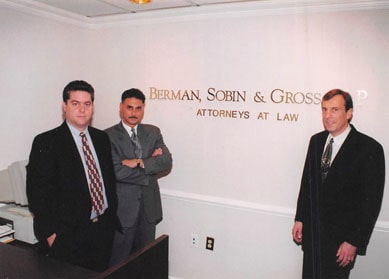
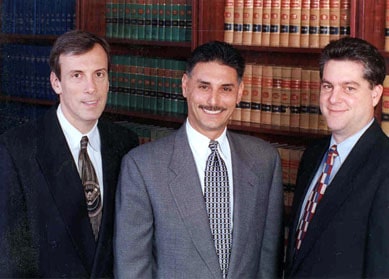
Berman Sobin Gross LLP has represented public-sector workers across Maryland for 35 years. The firm’s attorneys understand both sides of this equation, the compensation claims themselves and the broader landscape of benefits that injured public employees may be entitled to access.
When a Social Worker Is Injured Off-Site or Under Circumstances the Agency Wants to Characterize as Personal
A substantial portion of social work happens outside an office. Home visits, court appearances, hospital assessments, community outreach, and interagency meetings all pull social workers away from a fixed worksite. Maryland’s workers’ compensation law covers injuries that arise out of and in the course of employment, but applying that standard to field-based work is not always straightforward.
An injury that occurs while traveling between client appointments is almost certainly covered. An injury that occurs while a worker is running a personal errand during a workday is almost certainly not. The disputes arise in the middle ground: the lunch break that ended with an emergency home visit, the car accident on the way to a required training, the injury that occurred while a worker was responding to a supervisor’s call after hours.
These factual disputes are where experienced legal representation matters most. The outcome depends on how the facts are developed and presented, not on a simple statutory formula. Berman Sobin Gross LLP has handled tens of thousands of workers’ compensation hearings and hundreds of jury trials, and the firm’s attorneys know how to build the factual record these cases require.
Questions Social Workers Ask About Their Injury Claims
My agency told me I need to use their approved doctor. Can I see my own physician?
Maryland workers’ compensation law gives employers and insurers significant control over the initial selection of medical providers. However, there are processes through the Workers’ Compensation Commission to request a change of treating physician, and you retain the right to seek an independent medical opinion for purposes of your claim. How and when you exercise these options matters, and an attorney can help you avoid steps that could limit your access to care or your ability to contest the employer’s medical evidence.
I was assaulted by a client during a home visit. My agency is saying the injury was my fault. Does that affect my claim?
Worker fault, including contributory negligence, generally does not bar a workers’ compensation claim in Maryland the way it might in a personal injury case. Workers’ compensation is a no-fault system for most purposes. The agency’s position may reflect a misunderstanding of the law, or it may be a negotiating posture. Either way, it should not go unchallenged.
I was hurt in my car while driving to a client’s house. Does workers’ comp cover that?
Travel injuries are covered when the travel is a required component of the job. Social workers who conduct home visits as a core part of their responsibilities have strong grounds to argue that vehicle accidents during those visits are compensable. Whether you were driving a personal vehicle or an agency vehicle can affect some aspects of the claim, but it does not automatically remove coverage.
My employer is offering me a settlement. How do I know if it is fair?
Settlement value in a Maryland workers’ compensation claim depends on multiple factors, including the nature and permanence of your injury, your wage rate, your age, your vocational situation, and the likely cost of your future medical needs. An offer that closes out your claim entirely should be evaluated carefully, especially if you have a condition that may require ongoing treatment or that affects your long-term earning capacity. Once a full and final settlement is approved, reopening the claim is generally not possible.
What if I also have a potential third-party claim against someone other than my employer?
A social worker injured in a car accident caused by another driver, for example, may have both a workers’ compensation claim against the employer and a personal injury claim against the at-fault driver. Maryland law allows both, but they interact in specific ways that affect how any recovery is structured. Pursuing both avenues requires coordination, and missing either one can leave significant compensation on the table.
I filed a claim and it was denied. Is that the end?
A denied claim is not a final outcome. Maryland workers’ compensation denials can be appealed to the Workers’ Compensation Commission, and Commission decisions can be appealed further into the circuit courts. Berman Sobin Gross LLP has handled cases at every level of this process, including appeals before both of Maryland’s highest courts. If another attorney declined to take your case past the initial administrative stage, that is a reason to get a second evaluation, not a reason to stop.
Can I keep working in a limited capacity and still receive partial wage benefits?
Maryland workers’ compensation provides for partial disability benefits when a worker can return to some form of work but earns less than before the injury due to their physical limitations. The calculation involves comparing pre-injury and post-injury wage capacity. How this plays out depends on what work your employer offers, what the medical evidence says about your restrictions, and how the Commission evaluates your vocational situation.
Social Work Injury Claims Deserve Serious Legal Representation
Maryland social workers do demanding, often dangerous work in service of the state’s most vulnerable residents. When an injury disrupts that work, the financial consequences arrive quickly and the institutional response is rarely straightforward. Berman Sobin Gross LLP is Maryland’s largest workers’ compensation firm representing injured workers, with offices in Lutherville, Baltimore, Gaithersburg, and Frederick and attorneys who handle cases statewide. The firm’s attorneys represent workers across all sectors, including public employees navigating the added complexities of government employment. If you have been hurt on the job and need counsel who will stay with your case from the first hearing to the final resolution, contact Berman Sobin Gross LLP for a confidential case analysis with a Maryland social worker injury attorney.