

Maryland Roofer Injury Attorney
Roofing is one of the most physically demanding and statistically dangerous trades in Maryland. Workers on residential and commercial roofs face fall hazards, equipment failures, extreme heat, and structural collapses every day, and when something goes wrong, the injuries are rarely minor. A severe fall from a roof can fracture vertebrae, shatter knees and ankles, cause traumatic brain injury, or result in paralysis. For a Maryland roofer injury attorney, understanding what actually happens on a job site, how insurers respond to these claims, and what the workers’ compensation system will and will not deliver on its own is the foundation of effective representation. At Berman | Sobin | Gross LLP, we have spent 35 years representing the working people of Maryland, including the men and women in the trades who build and maintain the structures the rest of us take for granted.
Why Roofing Injuries Follow Patterns That Attorneys Need to Recognize
Falls account for the majority of serious roofing injuries, but the circumstances behind each fall vary in ways that matter enormously for a claim. A worker who slips from a wet surface on a commercial project may have a straightforward workers’ compensation claim against their direct employer, but may also have a viable third-party claim against a general contractor whose site management contributed to the hazard. A worker who falls because a safety harness failed may have a product liability claim against the manufacturer entirely separate from the workers’ comp system. Someone injured when scaffolding collapses may have a claim against the scaffolding company. These are not interchangeable scenarios, and treating them the same produces worse results for injured workers.
Beyond falls, roofing workers face heat-related illness from working on exposed surfaces in Maryland summers, occupational respiratory conditions from prolonged exposure to asbestos-containing roofing materials in older buildings, cumulative damage to knees and lower backs from years of kneeling and carrying heavy loads, and acute injuries from tools and equipment. Each of these categories presents distinct issues in the workers’ compensation system. Heat stroke claims, for example, are sometimes contested on the grounds that the worker had a pre-existing condition. Occupational disease claims for respiratory illness require establishing the connection between workplace exposure and the diagnosed condition, which often involves medical evidence that needs to be carefully developed from the start.
What the Workers’ Compensation System Actually Covers for Injured Roofers
Maryland’s workers’ compensation system provides several categories of benefits that an injured roofer may be entitled to pursue. Medical benefits cover reasonable and necessary treatment related to the work injury, which in a serious fall case can include emergency care, surgery, hospitalization, physical and occupational therapy, and ongoing management of chronic conditions. Temporary total disability benefits replace a portion of the worker’s average weekly wage during the period they are unable to work. If a worker is able to return in a limited capacity at reduced earnings, temporary partial disability benefits may apply. Permanent partial or permanent total disability awards account for lasting impairment, and in fatality cases, death benefits are available to surviving dependents.
Where the system creates friction for roofing workers specifically is in disputes over causation, the extent of permanent impairment, and whether a worker is truly limited from returning to employment. Insurance carriers in these cases frequently arrange independent medical examinations with physicians who are selected and paid by the insurer, and those examiners reliably produce opinions that minimize impairment ratings and recommend work releases ahead of when the treating physician believes the worker is ready. Understanding how to challenge those opinions, what contrary medical evidence is available, and how the Maryland Workers’ Compensation Commission evaluates competing medical testimony is where legal representation translates directly into better outcomes.
There is also the question of how average weekly wage is calculated for roofers, many of whom work seasonally, take jobs through multiple employers in a given year, or have earnings that fluctuate significantly week to week. The way the calculation is done can materially affect the value of a disability award. Getting it right from the beginning is far preferable to correcting it later in the process.
When a Workers’ Comp Claim Is Not the Only Option for an Injured Roofer
Maryland’s workers’ compensation system is an exclusive remedy against a direct employer in most situations, meaning an injured roofer generally cannot sue their employer in civil court. But roofing work is rarely a two-party transaction. Large commercial and institutional roofing projects involve general contractors, subcontractors, property owners, architects, equipment rental companies, and materials suppliers. A worker employed by a roofing subcontractor who is injured due to conditions that the general contractor created or controlled may have a third-party negligence claim against that general contractor, entirely outside the workers’ comp system and capable of recovering damages that workers’ comp does not provide, including pain and suffering.
Similarly, defective equipment is a persistent contributor to roofing injuries in Maryland. A ladder that collapses, a nail gun that misfires, a harness that fails, or scaffolding that is not constructed to weight specifications can all give rise to product liability claims. These claims require identifying the manufacturer, establishing the defect, and connecting it to the specific injury, which takes investigation that needs to begin promptly while evidence is still available. An attorney who handles these cases knows what to look for and when to bring in the right expert consultants.
Questions Roofers and Their Families Ask About Injury Claims
Can I file for workers’ compensation if I was working as a subcontractor rather than a direct employee?
Worker classification is a significant issue in the roofing industry, where employers sometimes classify workers as independent contractors to avoid the cost of workers’ compensation coverage. Maryland law does not automatically accept that classification. How work is actually structured, directed, and controlled matters, and workers who have been misclassified may still be entitled to workers’ compensation benefits. This is worth evaluating carefully rather than assuming the employer’s characterization is the final word.
What happens if my employer does not have workers’ compensation insurance?
Maryland has an Uninsured Employers’ Fund that can provide benefits to workers injured by employers who have failed to carry required coverage. There may also be liability exposure against the employer directly in civil court when they are uninsured. Neither path is as straightforward as a standard claim, but injured workers are not without options simply because their employer broke the law.
My doctor released me to work, but I cannot physically do roofing anymore. What are my options?
A physician releasing a worker to “light duty” or “sedentary work” does not necessarily end a workers’ compensation claim if the worker’s actual occupation requires physical demands they can no longer meet. Vocational rehabilitation, retraining benefits, and permanent disability awards may all be relevant. Maryland appellate decisions, including one won by our firm in Fikar v. Montgomery County, have established that workers receiving disability benefits can also access vocational rehabilitation services, which reflects the broader principle that injured workers are not simply discarded when they can no longer do their original job.
How long do I have to report a roofing injury to my employer and file a claim?
Maryland law generally requires that a worker notify their employer of an injury within ten days, though there are exceptions for circumstances that made timely notice impossible or impractical. The deadline for filing a workers’ compensation claim is typically two years from the date of the accidental injury. Occupational disease claims have different deadlines tied to the date of disablement or the date the worker knew or should have known the condition was work-related. Missing these deadlines can bar a claim entirely, which is why early consultation matters.
Can I recover compensation if the fall was partly my own fault?
In the workers’ compensation system, fault is generally not the determining factor. A worker who contributes to their own accident can still receive workers’ compensation benefits in most circumstances. In a third-party civil claim, Maryland’s contributory negligence doctrine is more restrictive and can bar recovery if the injured party bears any fault, which makes the legal framing of those cases significant.
What should I do immediately after a roofing injury to protect my claim?
Seek medical treatment promptly and tell your treating provider that the injury occurred at work. Report the injury to your employer as soon as possible and document that you did so. Preserve any photographs of the work site, the equipment involved, and your injuries. Do not provide recorded statements to insurance company representatives before consulting an attorney. The steps taken in the days immediately following an injury can affect what evidence is available and how the claim develops.
Representing Injured Roofers Across Maryland
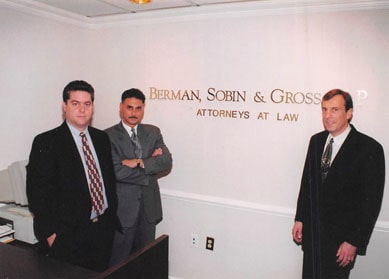
Berman | Sobin | Gross LLP is the largest workers’ compensation law firm in Maryland representing injured workers, with offices in Lutherville, Baltimore, Gaithersburg, and Frederick. Our attorneys have handled workers’ compensation claims and litigation across the state, from urban commercial construction sites to residential roofing projects in suburban and rural communities. We have taken cases through the Maryland Workers’ Compensation Commission, into the courts, and before Maryland’s highest appellate courts when necessary to get the right result. One of our founding attorneys literally wrote the two-volume treatise that serves as the authoritative text on Maryland workers’ compensation, and that depth of knowledge informs every case we handle. If you have been injured doing roofing work in Maryland, we are prepared to evaluate your situation, explain your options honestly, and pursue every avenue of recovery that your case presents. Contact Berman | Sobin | Gross LLP to speak with a Maryland roofing injury attorney about your claim.