

Maryland Postal Worker Injury Attorney
Postal workers in Maryland face a different set of hazards than almost any other occupation. Dog bites during deliveries. Repetitive stress injuries from decades of sorting and carrying. Slip and falls on icy walkways in January. Motor vehicle accidents while driving postal routes across Baltimore, Montgomery County, or anywhere else in the state. What makes these injuries legally distinct is that most postal workers are federal employees, which means standard Maryland workers’ compensation rules do not apply. A Maryland postal worker injury attorney who understands the federal compensation framework can mean the difference between a successful claim and one that gets denied or undervalued from the start.
Federal Employees’ Compensation Act: The Law That Governs Your Claim
Because the United States Postal Service is a federal agency, injured postal workers fall under the Federal Employees’ Compensation Act, commonly called FECA, rather than Maryland’s Workers’ Compensation Act. FECA is administered by the Office of Workers’ Compensation Programs within the U.S. Department of Labor, not Maryland’s Workers’ Compensation Commission.
That distinction matters in concrete ways. The filing procedures are different. The forms are different. The medical authorization process is different. The standards for proving a work-related injury or occupational disease have specific FECA requirements that do not match what most Maryland workers’ compensation attorneys handle on a daily basis.
FECA does provide meaningful benefits, including coverage for all reasonable and necessary medical treatment, wage replacement while unable to work, and compensation for permanent impairment. Survivors of postal workers killed on the job may also be entitled to death benefits. But getting those benefits requires knowing how to document the claim, how to respond to OWCP requests, and how to push back when the agency questions the connection between the injury and the job.
Why USPS Injury Claims Get Complicated
The Postal Service employs a large internal HR and safety apparatus. When a carrier or mail handler reports an injury, the agency generates its own documentation, often in ways that do not fully capture what the worker experienced. Supervisors may pressure employees to continue working through pain or characterize injuries as minor. The OWCP has its own medical review process, and its decisions are not always favorable on the first pass.
Repetitive use injuries deserve particular attention here. Letter carriers walk five to ten miles a day carrying bags that can exceed thirty pounds. Over years, this produces shoulder, knee, and back conditions that develop gradually rather than from a single incident. FECA covers occupational disease and cumulative trauma, but those claims require medical documentation that directly links the condition to the specific physical demands of postal work. A vague diagnosis is not enough.
Dog attacks are another frequent source of serious injury. The USPS reports tens of thousands of mail carrier dog bites annually across the country. In Maryland, dog owners carry strict liability under state law, and a postal worker attacked on a delivery may have both a FECA claim through the federal system and a personal injury claim against the dog’s owner. Sorting out which avenue applies, and whether both can be pursued, requires specific legal analysis.
Postal workers who are injured in vehicle accidents while on route face a similarly layered situation. If a third party caused the accident, there may be a personal injury claim separate from any federal workers’ compensation benefits. FECA has rules about coordinating with third-party recoveries, and handling that coordination incorrectly can cost a worker money they are entitled to keep.
What Postal Workers Can Expect When They File a Claim
The timeline under FECA is different from what Maryland workers may be used to. An injured worker files a CA-1 form for traumatic injuries or a CA-2 form for occupational disease. The OWCP assigns a claims examiner who reviews the submission and may request additional medical evidence, statements from supervisors, or a second opinion from a physician the agency selects.
Initial decisions can take weeks. If the claim is denied, the worker has options, including reconsideration, review by the Employees’ Compensation Appeals Board, and in some cases, federal court review. Each level has its own procedures and deadlines. Missing a filing window can cut off an appeal entirely.
Wage replacement under FECA pays either 66 and two-thirds percent of the worker’s salary (for workers without dependents) or 75 percent (for workers with dependents). That benefit continues as long as the worker is unable to return to their position due to the work-related condition, subject to ongoing documentation requirements. The OWCP periodically requests updated medical reports and may schedule its own examinations. Workers who fall behind on documentation often see their benefits interrupted.
Permanent impairment cases involve a separate process under FECA’s schedule award provisions. A physician must assess the degree of functional loss according to specific OWCP guidelines, and the resulting award calculation follows a statutory formula. These cases benefit from careful medical management from the outset, including choosing the right treating physician and ensuring the records accurately reflect the extent of the injury.
Questions Postal Workers Ask Before Pursuing a Claim
Can I choose my own doctor under FECA?
Yes, injured federal employees have the right to select their own treating physician. That physician must be authorized to treat FECA claimants. It is important to choose a provider who understands the OWCP documentation requirements, because medical reports submitted to the agency must meet specific standards to support a successful claim.
Does FECA cover pre-existing conditions made worse by postal work?
FECA covers aggravation of pre-existing conditions, not just new injuries. If the physical demands of the job accelerated or worsened a condition that already existed, the worker may still have a compensable claim. The medical documentation needs to specifically address the causal relationship between the job duties and the worsening of the condition.
What if my supervisor disputes how the injury happened?
The OWCP makes its own factual determinations. A supervisor’s account of events is one piece of evidence, not the final word. Witness statements, route logs, surveillance footage, and medical records can all support the worker’s account. Having legal representation during the claims process means someone is actively building and presenting that evidence on your behalf.
Can I sue the Postal Service directly for my injury?
Generally, FECA is the exclusive remedy against the federal government for work-related injuries, which means a direct lawsuit against the USPS is usually not available. However, if a third party was responsible for the injury, such as a negligent driver who struck a postal vehicle or a property owner whose dangerous conditions caused a fall, a separate civil claim may be available alongside the FECA claim.
What happens if I am never able to return to letter carrying but could do a different job?
FECA includes vocational rehabilitation provisions. If a worker cannot return to their specific postal position but retains the ability to work in some capacity, the OWCP may require participation in a rehab program. Workers who cooperate and still cannot find suitable work may continue to receive wage loss benefits. Workers who refuse without good cause can lose benefits. The standards and procedures here are detailed, and how you respond to OWCP communications matters.
Are there time limits for reporting an injury or filing a claim?
Traumatic injuries should be reported to a supervisor as soon as possible. The formal FECA filing deadlines vary depending on the type of claim, but waiting too long can complicate or forfeit the claim entirely. Occupational disease claims have different time rules tied to when the worker knew or should have known about the connection between the condition and the job. Do not assume you have missed your window without speaking to an attorney first.
Does my family receive anything if I am killed on the job?
FECA provides death benefits to eligible survivors of federal employees killed in the line of duty. This includes a percentage of the worker’s salary paid to qualifying dependents, as well as a burial allowance. Establishing eligibility and pursuing those benefits requires timely action and proper documentation of the family’s circumstances.
Berman | Sobin | Gross LLP Represents Federal Workers Across Maryland
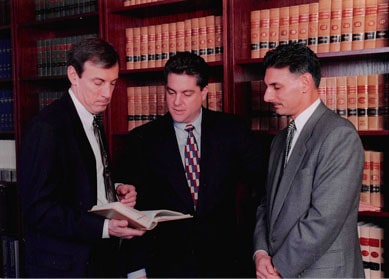
For 35 years, Berman | Sobin | Gross LLP has represented workers across Maryland who have been injured on the job, including those whose claims require going beyond the standard state workers’ compensation process. The firm is the largest workers’ compensation law firm in Maryland representing injured workers, with offices in Lutherville, Baltimore, Gaithersburg, and Frederick, and the ability to serve clients statewide. One of the firm’s founders authored a two-volume treatise on workers’ compensation that remains a primary reference in Maryland. The attorneys at Berman | Sobin | Gross LLP have handled hundreds of workers’ compensation trials and appeals before Maryland’s highest courts, and they do not turn away cases simply because they are complex. Spanish-speaking staff are available for clients who prefer to communicate in Spanish. If you are a postal worker who has been hurt on the job and you are not sure where to start, the attorneys at Berman | Sobin | Gross LLP are ready to evaluate your situation and help you understand your options as a Maryland postal worker injury lawyer.