

Maryland Manufacturing Worker Injury Attorney
Factory floors, assembly lines, and production facilities across Maryland generate some of the most serious workplace injuries seen in the workers’ compensation system. Crush injuries from presses, chemical burns from industrial solvents, hearing loss from constant machinery noise, fractures from falls on wet concrete, repetitive stress injuries that quietly disable workers over years of performing the same motion thousands of times a shift. A Maryland manufacturing worker injury attorney handles a different kind of case than most workers’ comp practitioners see, and the differences matter when it comes to getting the right benefits in place.
What Makes Manufacturing Injuries Different in Maryland’s Workers’ Comp System
Most workers’ compensation claims follow a recognizable pattern: a single event, a clear injury, and a fairly direct path to medical treatment and wage replacement. Manufacturing injuries often don’t work that way. A significant portion of the injuries that plant and factory workers sustain fall into categories that require more careful handling from the start.
Occupational diseases and conditions that develop gradually present one example. A worker who has run a grinding machine for fifteen years and now has documented hearing loss is dealing with a different legal question than someone who broke a bone on a specific Tuesday. Maryland law has specific provisions governing occupational diseases and the timeline for filing claims, and missing those nuances can close the door on a legitimate case before it even opens.
Repetitive motion injuries are similarly complicated. Carpal tunnel syndrome, tendinitis, rotator cuff deterioration from overhead work, and similar conditions get disputed heavily by employers and their insurers because there’s rarely a single moment to point to. The employer’s position often starts with the claim that the condition pre-existed the job or is unrelated to work duties. Building that connection requires medical evidence handled the right way.
Then there are the catastrophic acute injuries: amputations, crush injuries, severe burns, traumatic brain injuries from equipment failures. These cases carry large potential benefit values, which means employers and insurers fight them harder. The initial handling of these claims, from the first report to the first hearing, shapes what happens for months or years afterward.
Third-Party Liability Alongside Workers’ Compensation
Workers’ compensation is Maryland’s primary remedy when an employee is injured on the job, but it has real limits. The system provides medical benefits and a portion of lost wages, not full compensation for pain and suffering or the full scope of economic loss. In manufacturing environments, there is often a third party whose negligence contributed to the injury: the manufacturer of a defective machine, a contractor working on site whose crew created a hazard, an equipment lessor who failed to maintain machinery in safe condition.
When another party’s fault played a role in a workplace injury, pursuing a third-party personal injury claim alongside the workers’ compensation case can significantly change the total recovery available. These parallel claims involve different deadlines, different standards of proof, and procedural rules about how any recovery interacts with the workers’ comp benefits already paid or owed. Getting that coordination right is important, and it’s one of the reasons manufacturing injury cases benefit from representation by attorneys who have handled both sides of that equation.
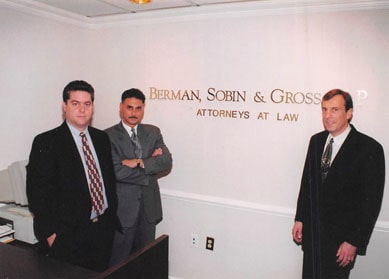
At Berman Sobin Gross LLP, the firm’s practice covers both workers’ compensation and personal injury, which means clients dealing with a manufacturing injury that involves both a comp claim and a potential third-party case don’t have to split that representation between two firms unfamiliar with each other’s work.
Disputes That Come Up Repeatedly in Factory and Plant Injury Claims
Certain arguments surface in manufacturing injury cases with enough regularity that workers should know what to expect before those disputes arise.
Causal relationship challenges are common. An insurer may acknowledge that an injury exists but argue it isn’t work-related, that it would have developed regardless of employment, or that the employee’s own actions were the primary cause. Maryland workers’ compensation attorneys who handle manufacturing cases know how to develop the medical and factual record that responds to these challenges.
Permanent impairment ratings become contested in cases involving long-term injuries to hands, backs, shoulders, and hearing. The difference between the employer’s chosen physician and an independent evaluation can translate to a significant difference in the final award. Workers have rights in the rating process, and those rights matter.
Return-to-work pressure is real in manufacturing environments. Employers may push workers back to modified duty positions that aren’t genuinely within their restrictions, or that expose them to the same conditions that caused the original injury. A worker who re-aggravates an injury under those circumstances has a legitimate claim, but the path back through the Commission requires documentation from the start.
Vocational rehabilitation becomes relevant when a manufacturing worker’s injuries prevent them from returning to the physical demands of their prior position. Maryland law provides for vocational rehabilitation services in appropriate cases. Berman Sobin Gross LLP secured an important ruling in Fikar v. Montgomery County establishing that injured workers receiving service-connected disability retirement can also receive vocational rehabilitation services, reflecting the firm’s broader record of expanding protections for Maryland’s working people.
Questions Maryland Manufacturing Workers Ask About Their Claims
I’ve been doing this job for years and now I have a serious back condition. Can I still file a claim?
Yes, provided the condition is causally connected to your work duties and you meet the filing deadlines under Maryland law. Cumulative injury and occupational disease claims are governed by specific timeframes that run from when you knew or should have known the condition was related to your employment, not necessarily when symptoms first appeared. Getting this analysis right from the beginning is important because filing too late can bar an otherwise valid claim.
My employer says the machine was fine and my own carelessness caused the injury. Does that end my claim?
Maryland’s workers’ compensation system is a no-fault system. With limited exceptions, an injured worker is entitled to benefits regardless of who caused the accident. An employer pointing to worker error is generally not a defense to the comp claim itself, though it may become relevant in certain limited circumstances. If there’s also a potential product liability claim against a machine manufacturer, fault questions become more significant in that separate proceeding.
I was injured at a plant that contracts with my actual employer. Who do I file against?
Maryland workers’ compensation law addresses these situations through statutory employer and principal contractor provisions. Depending on the structure of the relationship, you may have a claim against more than one entity, or the site owner may have statutory obligations even if your direct paycheck came from a subcontractor. These situations require a careful look at the actual employment and contractual arrangements before filing.
The company doctor cleared me to return to full duty, but I’m still in significant pain. What are my options?
You have the right to seek an independent medical evaluation, and you have rights before the Maryland Workers’ Compensation Commission if you disagree with a physician’s findings. A return-to-work clearance from an employer’s physician is not the final word. The Commission evaluates all the medical evidence in disputed cases, and workers who have their own medical documentation often obtain better outcomes than those who rely solely on the employer-selected physician’s conclusions.
I settled a workers’ comp claim years ago for a hand injury, but it has gotten much worse. Can I reopen it?
Maryland law distinguishes between full and final settlements, which typically close a claim permanently, and agreements that leave certain rights open. Whether your specific settlement can be revisited depends on the exact language of the prior agreement and the nature of the change in your condition. This is worth a consultation, because the answer isn’t the same in every case.
My employer doesn’t seem to have workers’ compensation insurance. What happens now?
Maryland has an Uninsured Employers’ Fund specifically to address situations where an employer has failed to maintain required workers’ compensation coverage. Filing against an uninsured employer involves a different procedural path than a standard claim, but injured workers are not left without a remedy simply because their employer broke the law.
Can my employer fire me for filing a workers’ compensation claim?
Retaliation against a worker for filing a workers’ compensation claim is prohibited under Maryland law. If you are terminated, demoted, or otherwise penalized in connection with a claim, that retaliation creates a separate cause of action. Document any adverse employment actions and their timing relative to your claim filing, and discuss those facts with your attorney.
Berman Sobin Gross LLP Represents Injured Manufacturing Workers Throughout Maryland
The firm’s offices in Lutherville, Baltimore, Gaithersburg, and Frederick make it accessible to manufacturing workers across the state, from the industrial facilities in the Baltimore corridor to the plants and distribution centers in the I-270 technology corridor, the western Maryland manufacturing base, and beyond. As the largest workers’ compensation firm in Maryland representing injured workers, Berman Sobin Gross LLP has the resources to handle cases that require sustained effort, independent medical experts, and when necessary, full litigation before the Commission and into Maryland’s courts. The firm has handled hundreds of workers’ compensation jury trials and appeals before both of Maryland’s highest courts, including cases other attorneys declined to take further. If you are a manufacturing worker dealing with a serious injury, contact Berman Sobin Gross LLP to discuss your claim with a Maryland manufacturing injury attorney who will stay with you from the first hearing to the final resolution.