

Maryland IT Worker Injury Attorney
Technology sector jobs carry a reputation for being safe, and in some respects that reputation is earned. But the physical and psychological realities of working in information technology tell a more complicated story. Repetitive strain injuries from years at a keyboard, back and neck injuries from poor workstation setups, slip-and-fall accidents at data centers, injuries sustained during IT equipment installations, and serious stress-related conditions that manifest as diagnosable medical events are all documented injuries among Maryland IT workers. A Maryland IT worker injury attorney at Berman | Sobin | Gross LLP understands how workers’ compensation applies to tech workers whose claims often get pushed back precisely because the nature of their work is misunderstood by employers and insurers alike.
Why IT Worker Injuries Get Disputed More Often Than They Should
Employers and their insurance carriers tend to dispute IT worker claims at a higher rate than claims from more physically obvious occupations. Part of the reason is perception. There is an assumption that sitting at a desk writing code or managing a network cannot produce a serious compensable injury. That assumption is wrong, and it regularly costs workers thousands of dollars in benefits they are entitled to receive.
Repetitive stress injuries, which affect the hands, wrists, elbows, shoulders, and cervical spine, develop gradually. Because there is no single traumatic event, employers will argue that the condition is degenerative rather than work-caused. Carpal tunnel syndrome, cubital tunnel syndrome, tendinitis, and thoracic outlet syndrome are among the most common diagnoses affecting tech workers, and each of these conditions can qualify for workers’ compensation coverage in Maryland when the work environment is a contributing factor. The challenge is building a medical record that clearly connects the condition to the job. That is where the legal work actually happens.
IT workers who travel between facilities, manage hardware installations, or work at job sites rather than fixed offices face a different category of injury risk. Falls from ladders while running cable, back injuries from moving servers and networking equipment, and motor vehicle accidents on the way between client sites are all scenarios that fall within Maryland’s workers’ compensation system. These claims tend to be cleaner in terms of causation but can still be complicated by disputes over employment classification, especially for contract workers and consultants who are misclassified as independent contractors when they should be treated as employees.
The Independent Contractor Problem and Why It Matters for Tech Workers
The technology sector relies heavily on contractors, consultants, and gig-style arrangements that blur the lines between employee and independent contractor status. Under Maryland law, workers’ compensation coverage is tied to employee status. An employer who classifies a worker as an independent contractor is not required to carry workers’ compensation coverage for that person. When an IT consultant is injured on the job, the first thing the employer or staffing agency will do is point to a contract that says “independent contractor.” That contract does not end the analysis.
Maryland applies a multi-factor test to determine whether a worker is genuinely an independent contractor or whether the classification is a label that does not match the actual working relationship. Factors include how much control the employer exercises over the work, whether the worker operates independently or according to the employer’s direction, how the worker is paid, and whether the work performed is central to the employer’s core business. Many IT workers who have been told they are contractors are, under Maryland law, employees who are entitled to workers’ compensation benefits. Challenging that classification is one of the more consequential things a workers’ compensation attorney can do in a tech industry case.
The attorneys at Berman | Sobin | Gross LLP have handled the kinds of cases that require going beyond a standard administrative hearing. When an employer misclassifies a worker and then denies benefits after an injury, that is exactly the kind of contested case our firm pursues, including into the courts when that is what it takes.
Mental Health and Stress-Related Conditions Among IT Professionals
High-pressure deadlines, on-call responsibilities, cybersecurity incidents, and the demands of managing critical infrastructure can create sustained occupational stress. In Maryland, purely psychological claims without a physical component are among the most difficult workers’ compensation cases to win. However, when a stress-related condition manifests as a physical event, such as a cardiac episode, a hypertension diagnosis, or a condition that meets the threshold for a compensable occupational disease, the path to benefits exists.
IT workers in public sector roles, including those who work for state agencies or local governments managing communications infrastructure and public safety systems, may have access to enhanced benefits available to public safety employees in Maryland. Berman | Sobin | Gross LLP has handled appellate cases that directly shaped the law governing occupational disease presumptions for public safety workers. Whether a tech professional working within a public agency can access those enhanced protections depends on the specific facts of their employment, and it is the kind of threshold question that deserves a careful legal evaluation rather than a quick dismissal.
Questions Maryland IT Workers Ask About Workers’ Comp Claims
Does a gradually developing injury qualify for workers’ compensation in Maryland, or only sudden accidents?
Gradually developing injuries, including repetitive stress conditions that build over months or years of the same job tasks, can qualify under Maryland workers’ compensation as occupational diseases or repetitive trauma injuries. The medical evidence connecting the condition to the work environment is critical, which is why having legal representation early in the process matters for how the claim gets built and documented.
My employer says I’m a contractor and not covered. What are my options?
Your employer’s classification is not necessarily the final word. Maryland law looks at the actual relationship, not just the label in a contract. A workers’ compensation attorney can evaluate whether the nature of your working arrangement meets the standard for employee status under Maryland law. If it does, you may be entitled to benefits even if you signed a document calling you a contractor.
What if my injury developed while working remotely from home?
Remote work injuries can qualify for workers’ compensation in Maryland if the injury occurred in the course of work activity. The analysis focuses on whether you were performing a work task at the time and whether the work created the condition or event that caused the injury. These cases require careful documentation, and how the claim is presented from the beginning significantly affects how the Commission evaluates it.
Can I choose my own doctor for treatment, or does my employer control that?
Maryland’s workers’ compensation system gives the employer and insurer the right to direct medical care in certain respects, but injured workers also have rights regarding medical selection. The rules around this are specific and procedurally important. An attorney can help you understand what choices you have and how to protect your ability to receive appropriate care without jeopardizing your claim.
What if my repetitive strain injury also affects my ability to continue working in IT?
If a work injury results in permanent partial or permanent total disability, Maryland’s workers’ compensation system provides benefits beyond temporary wage replacement. Vocational rehabilitation may also be available in certain circumstances. Berman | Sobin | Gross LLP has litigated cases specifically addressing the availability of vocational rehabilitation for injured workers, including the appellate decision in Fikar v. Montgomery County, which clarified that injured workers receiving disability retirement can also receive vocational rehabilitation services.
My employer’s insurer sent me to a physician who says my condition is not work-related. What happens now?
Employer-selected medical examiners frequently produce opinions that favor the insurer. Maryland’s workers’ compensation process allows injured workers to challenge those opinions with their own medical evidence. This is a contested factual issue decided by the Maryland Workers’ Compensation Commission, and it is one of the places where experienced legal representation makes a concrete difference in outcomes.
How long do I have to file a workers’ compensation claim in Maryland?
Maryland law imposes filing deadlines that depend on whether the injury was sudden or developed gradually over time. For a sudden accident, the general deadline is two years from the date of injury. For occupational diseases, the timeline runs from when the worker knew or reasonably should have known the condition was work-related. Missing these deadlines can forfeit your right to benefits, which makes early legal consultation important.
Representing Maryland’s Technology Workforce
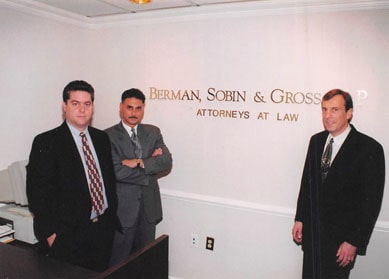
The attorneys at Berman | Sobin | Gross LLP have spent 35 years representing Maryland workers across a wide range of industries and occupations, from first responders to communications workers to all the employees the state depends on to keep systems running. Our firm is the largest workers’ compensation practice in Maryland representing injured workers, with offices in Lutherville, Baltimore, Gaithersburg, and Frederick and the ability to serve clients throughout the state and the Washington, D.C. region. We have attorneys and staff who are fluent in Spanish, and we work to make sure every client can communicate fully and comfortably about their claim. Maryland IT workers who have been injured on the job and are running into resistance from their employer or insurer deserve the same thorough representation we bring to every case we handle. If other attorneys have passed on your case or told you it is not worth pursuing, contact Berman | Sobin | Gross LLP to have your claim evaluated by attorneys who take the hard cases seriously.
To speak with a Maryland information technology worker injury attorney about your situation, reach out to Berman | Sobin | Gross LLP for a confidential case analysis. We represent injured workers across Maryland and Washington, D.C., and we stay with you from the initial filing through every stage your case requires.