

Laurel Mechanic Injury Attorney
Auto repair shops, tire centers, and dealership service bays are among the most physically demanding workplaces in Maryland. Mechanics work under vehicles, handle pressurized systems, operate heavy lifts, and spend hours in positions that strain joints and muscles in ways that accumulate over time. When something goes wrong in one of these environments, the injuries tend to be serious. A Laurel mechanic injury attorney at Berman | Sobin | Gross LLP has spent 35 years representing Maryland workers in exactly these situations, from the initial claim filing through hearings before the Workers’ Compensation Commission and, when necessary, into the courts.
What Mechanics in Laurel Actually Get Hurt Doing
The Route 1 corridor through Laurel is lined with auto repair shops, fleet service centers, and dealership service departments. The mix of commercial and residential traffic in Prince George’s and Howard Counties generates steady demand for vehicle maintenance and repair, which means mechanics in this area work at high volume, often under pressure to turn jobs quickly.
Lift failures and vehicle rolloffs cause some of the most catastrophic mechanic injuries, including crush injuries, traumatic brain injuries, and spinal damage. But the injuries that don’t make immediate headlines can be just as disabling. Mechanics who spend years crouching, kneeling, and working in awkward positions develop degenerative conditions in their knees, hips, and lower backs that eventually make it impossible to do the job. Chemical exposures, including brake dust, transmission fluid, and solvents, cause occupational illness that may not become diagnosable until years after the exposure began.
Other common injury mechanisms include tool-related hand and wrist injuries, eye injuries from metal shavings or fluid splatter, burns from exhaust systems and hot fluids, and hearing loss from sustained exposure to shop noise. Each of these has its own claims process under Maryland law, and the medical evidence required to prove them differs significantly. Getting this right from the start matters.
How Maryland Workers’ Compensation Applies to Mechanic Injuries, Including Occupational Disease Claims
Most people think of workers’ compensation as covering a single accident on a single day. That framing fits some mechanic injuries, but not all of them. Maryland’s workers’ compensation system also covers occupational diseases, which are conditions that develop gradually because of the nature of the work itself.
Repetitive strain injuries to the spine, shoulders, and knees are often covered under occupational disease provisions rather than as straightforward trauma claims. This matters because the rules governing when to file, which employer is responsible, and how disability is calculated differ from standard accident claims. Missing these distinctions can cost a mechanic the benefits they’re owed.
For trauma-based injuries, Maryland generally requires reporting within 10 days of the accident and filing a formal claim with the Workers’ Compensation Commission within two years of the injury. For occupational diseases, the timeline can be more complicated, often running from the date of disablement or the date the worker first connects the condition to their employment. The attorneys at Berman | Sobin | Gross LLP have handled both claim types and understand where workers in trades like auto repair tend to run into problems.
One particularly important issue for mechanics: employers and their insurers frequently argue that injuries to joints and the spine are purely degenerative and not caused by work. These disputes require credible medical documentation and, in many cases, expert testimony. Berman | Sobin | Gross LLP does not step back from those fights. One of the firm’s founders literally wrote the treatise on Maryland workers’ compensation law that practitioners across the state rely on.
When a Third Party, Not Just the Employer, Shares Responsibility
Workers’ compensation is not always the only source of recovery for an injured mechanic. When a defective tool, lift, or piece of shop equipment causes the injury, a separate product liability claim against the manufacturer or distributor may be available. When a driver’s negligence results in an injury at a roadside service call, personal injury claims against that driver can be pursued alongside a workers’ comp claim.
These parallel claims don’t cancel each other out, but they do have to be coordinated carefully. Maryland law governs how a workers’ compensation recovery interacts with a third-party civil settlement or verdict. If this coordination isn’t handled properly, a worker can end up reimbursing their employer or insurer for amounts they didn’t have to pay back. Berman | Sobin | Gross LLP handles both workers’ compensation and personal injury cases, which puts the firm in a position to manage this coordination from inside one set of hands rather than requiring a mechanic to deal with two separate firms that may not be communicating with each other.
Questions Mechanics in Laurel Ask Before Filing a Claim
My employer says my back injury is just normal wear and tear. Can I still file a workers’ comp claim?
Yes. Maryland workers’ compensation covers conditions that develop or worsen because of the physical demands of a job, even if degenerative changes in the spine or joints were already present. The question is whether your work contributed to or accelerated your condition. That’s a medical and legal question, not one your employer gets to resolve unilaterally.
I was injured at an offsite location while picking up parts. Does that count as a work injury?
Generally, yes. Injuries that occur while a worker is performing job duties, including running errands for the employer, are typically covered under Maryland workers’ compensation. The key is whether you were in the course and scope of your employment at the time.
My employer is telling me to use their doctor and not to see my own physician. Do I have to?
Maryland workers’ compensation does involve an employer’s right to direct initial medical treatment to some degree, but this is an area where understanding your rights matters. A lawyer can explain what applies to your specific claim and help ensure you receive appropriate care rather than treatment designed to minimize your claim.
What benefits am I entitled to as an injured mechanic in Maryland?
Depending on the nature and severity of your injury, you may be entitled to medical benefits covering all reasonable and necessary treatment, temporary total or partial disability benefits while you’re unable to work or working reduced hours, and permanent partial or permanent total disability benefits if you sustain lasting impairment. Vocational rehabilitation may also be available if you cannot return to mechanic work.
The insurance company made me a settlement offer. Should I take it?
Settlement offers from workers’ compensation insurers are often presented early, before the full extent of an injury is known. Once you settle, you typically cannot reopen a claim if your condition worsens. An attorney can assess whether an offer reflects the full value of your claim, including future medical costs and wage loss, before you decide.
I was injured because my employer ignored a safety issue I had reported. Does that change my claim?
Employer negligence generally does not change your ability to collect workers’ compensation, because Maryland’s system is a no-fault system. However, deliberate employer conduct and third-party liability remain separate considerations depending on the specifics of how the injury occurred.
How long do I have to file a mechanic injury workers’ comp claim in Maryland?
For accident injuries, Maryland law requires reporting to the employer within 10 days and filing a claim with the Commission within two years of the injury date. For occupational diseases, the deadline runs differently. These timelines are strictly enforced, so it is worth speaking with an attorney early rather than waiting.
Representation for Injured Mechanics Throughout the Laurel Area
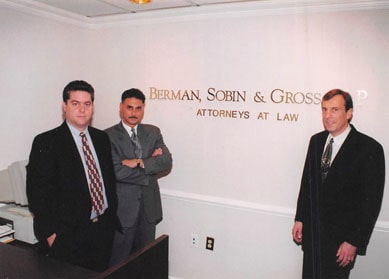
Berman | Sobin | Gross LLP serves workers across Prince George’s County, Howard County, and the broader Maryland and Washington, D.C. region from offices in Lutherville, Baltimore, Gaithersburg, and Frederick. Mechanics and auto service workers from Laurel, Bowie, Columbia, Laurel, and surrounding communities have turned to this firm when their employers or insurers have pushed back on legitimate claims. The firm has Spanish-speaking attorneys and staff, so language is not a barrier to getting effective representation.
The firm represents workers in hearings before the Workers’ Compensation Commission and, when cases require it, in circuit court proceedings and appellate arguments before Maryland’s highest courts. Berman | Sobin | Gross LLP has handled hundreds of workers’ compensation jury trials. If another attorney has told you your case is too complicated or not worth pursuing, this firm is willing to take a hard look.
Talk to a Mechanic Injury Lawyer Serving Laurel
A workplace injury in a shop or service bay can sideline a mechanic for weeks, months, or permanently. The workers’ compensation system exists to cover those losses, but the process of actually securing benefits is rarely as simple as filling out a form. Berman | Sobin | Gross LLP has been representing Maryland mechanics and other tradespeople in workers’ compensation claims for 35 years. If you were hurt doing your job, contact the firm to have your claim evaluated by a Laurel mechanic injury lawyer who will stay with your case from start to finish.