

Laurel Manufacturing Worker Injury Attorney
Manufacturing work in Laurel carries real physical risk every single shift. Workers at the industrial facilities, warehousing operations, and production plants along the Route 1 corridor and around the Maryland City area deal with heavy machinery, repetitive physical demands, chemical exposures, and fast-moving production environments where one equipment malfunction or one missed safety step can cause an injury that ends a career or changes a life. If you have been hurt on the job in a Laurel manufacturing facility, a Laurel manufacturing worker injury attorney at Berman | Sobin | Gross LLP can help you understand what the workers’ compensation system actually owes you and make sure you receive it.
What Makes Manufacturing Injuries in Laurel Different from Other Work Injury Claims
Not all workers’ compensation claims look alike. A warehouse slip-and-fall is a different legal and medical event than a crush injury from a press or a long-term hearing loss claim from years of unprotected noise exposure on a production floor. Manufacturing injuries in Laurel tend to cluster around specific mechanisms: caught-in or caught-between accidents involving conveyors, presses, and rollers; forklift and powered industrial truck collisions; falls from loading docks or elevated platforms; lacerations and amputations from cutting and stamping equipment; and cumulative trauma to the back, shoulders, wrists, and knees from repetitive lifting, reaching, or vibrating tool use over months and years.
The cumulative trauma cases are often the hardest to resolve. When an injury develops gradually, employers and their insurers frequently argue that the condition is not work-related, that it predated employment, or that the worker cannot pinpoint the specific event that caused it. Maryland workers’ compensation law does recognize occupational diseases and cumulative trauma conditions, but building a record that connects your diagnosis to your job duties takes preparation and legal knowledge. That is where experienced representation makes a concrete difference, not as an abstract concept but in the specific medical evidence gathered, the expert opinions retained, and the arguments made at the Commission level and beyond.
Third-Party Liability When Equipment or Outside Contractors Are Involved
Workers’ compensation covers injuries against your employer regardless of fault, but it also limits what you can recover. If your injury was caused by defective machinery, a negligently maintained piece of equipment, or the actions of a contractor working at your facility who is not on your employer’s payroll, you may have grounds for a separate civil lawsuit against that third party. In a manufacturing environment, third-party liability is more common than most workers realize.
Equipment manufacturers have a duty to design and build machinery that is reasonably safe when used as intended. When a guard is absent from a press, when a sensor fails to stop a conveyor before it reaches a worker, or when a forklift’s braking system performs well below its rated specifications, the company that made or serviced that machine may bear legal responsibility for the resulting injury. Similarly, when Laurel manufacturing facilities bring in outside maintenance crews, installation contractors, or temporary service providers, injuries caused by those parties’ negligence can give rise to claims that go well outside the workers’ compensation framework.
Berman | Sobin | Gross LLP handles both the workers’ compensation claim and the personal injury dimensions of cases like these. The firm’s attorneys understand how to investigate whether a third-party claim exists and how to pursue both avenues simultaneously so that an injured worker is not left with only one limited source of recovery when the facts support more.
The Workers’ Compensation Process for Injured Laurel Manufacturing Workers
Maryland workers’ compensation claims do not move forward automatically. After a workplace injury, the process requires reporting to your employer, filing a claim with the Maryland Workers’ Compensation Commission, and, in most cases, attending a hearing where both sides present their positions. What happens between the injury and that hearing shapes the outcome more than the hearing itself.
The medical evidence generated in the weeks and months after an injury forms the foundation of any claim. Which doctor you see, what they document, and whether the authorized treating physician’s opinion actually captures the full extent of your limitations all matter. Employers and insurers frequently schedule independent medical examinations by physicians of their choosing, and those examinations are often used to minimize the severity of an injury or to argue that an injured worker has reached maximum medical improvement before they actually have. Having an attorney who knows how to challenge those opinions and respond to them with credible counter-evidence changes the trajectory of a claim.
Vocational issues are also significant for manufacturing workers. If a back injury prevents a press operator from returning to a job that requires standing, lifting, and repetitive bending, the question of what that worker can now earn and what retraining might look like becomes a central issue in calculating permanent disability benefits. Maryland law addresses this, including through vocational rehabilitation services, but the full scope of what is available is often not explained to workers who navigate the system without representation.
Questions Injured Laurel Manufacturing Workers Ask Us
I did not report my injury right away because I thought it would get better. Can I still file a claim?
Maryland law requires workers to report an injury to their employer, and there are deadlines for filing a claim with the Commission. However, the rules differ somewhat for acute injuries versus occupational diseases and cumulative trauma conditions. If you delayed reporting because symptoms developed gradually or because you were hoping to manage the problem on your own, the situation is not necessarily hopeless. An attorney can evaluate the specific timeline of your case and advise you on what options remain.
My employer says my injury is not covered because I was not following proper procedure at the time. Is that true?
Maryland’s workers’ compensation system is largely no-fault. An employer cannot deny a claim simply because a worker violated a safety rule or was using equipment improperly at the time of the accident. There are narrow exceptions, but they do not apply to most cases. An employer or insurer making this argument should not be taken at face value without speaking to an attorney first.
I was hurt by a piece of equipment that I believe was defective. Does that affect my workers’ comp claim?
Filing a workers’ compensation claim does not prevent you from pursuing a separate lawsuit against the equipment manufacturer or another responsible third party. These claims proceed differently and involve different legal standards, but they can be handled together by the same firm. Berman | Sobin | Gross LLP has the depth to pursue both tracks when the facts support it.
My employer’s doctor says I can go back to full duty, but I cannot do my job without pain. What do I do?
You have the right to seek a second medical opinion. The opinion of an employer-designated doctor is not automatically binding on your claim. Your own physician’s assessment, functional capacity evaluations, and independent medical experts can all be used to challenge a finding that you are ready to return to full duty when you are not. This is one of the most contested areas in manufacturing injury claims, and having legal representation here is particularly important.
I have a pre-existing back condition. Will that disqualify my claim?
No. Maryland workers’ compensation law recognizes that a work injury can aggravate, accelerate, or combine with a pre-existing condition in a way that still entitles a worker to benefits. The fact that your back was not perfect before the injury does not mean your employer bears no responsibility for making it significantly worse. The legal standard looks at the contribution the work injury made to your current condition.
How long does a manufacturing injury claim in Maryland typically take to resolve?
There is no single answer, because the timeline depends on the severity of the injury, how long it takes to reach maximum medical improvement, whether the claim is disputed, and whether appeals are involved. Claims that go to hearing, face a denial, and require further proceedings can take considerably longer than straightforward cases. What can be said is that starting the process correctly and building a complete record from the beginning reduces delays and avoids the need to correct mistakes later.
Do I need an attorney, or can I handle my manufacturing injury claim on my own?
You are permitted to represent yourself before the Maryland Workers’ Compensation Commission. Many workers do. The question is not whether it is allowed but whether it is wise when your employer’s insurer has legal representation, when medical evidence is being gathered that will affect your benefits for years, and when the difference between a fully developed claim and an incomplete one can be measured in tens of thousands of dollars. For significant injuries with meaningful permanent disability or contested liability, legal representation has a real, practical value that bears directly on the result.
Talk to a Laurel Manufacturing Injury Attorney at Berman | Sobin | Gross LLP
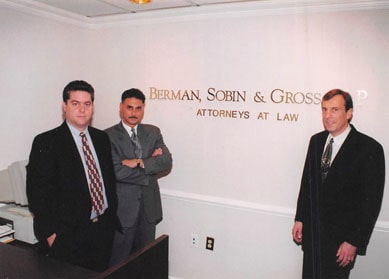
Berman | Sobin | Gross LLP has spent 35 years representing injured workers throughout Maryland, growing from a small firm to the largest workers’ compensation practice in the state representing employees. The firm’s attorneys have handled tens of thousands of hearings, hundreds of jury trials, and appeals before Maryland’s highest courts. One of the firm’s founders wrote the definitive two-volume treatise on workers’ compensation in Maryland, the resource that practitioners across the state still turn to. That depth of knowledge is directly available to workers hurt in Laurel manufacturing operations, whether the claim is straightforward or whether it involves contested medical evidence, third-party liability, or issues that other firms have declined to pursue. If you have been injured working in manufacturing in or around Laurel, contact Berman | Sobin | Gross LLP to discuss your claim with a Maryland manufacturing worker injury attorney who will stay with you from the first conversation through the final resolution of your case.