

Laurel Delivery Driver Injury Attorney
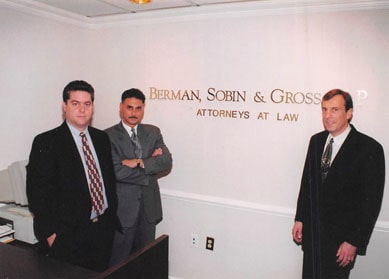
Delivery drivers in Laurel work some of the most physically demanding routes in the region, navigating US-1, Route 197, and the Laurel-Bowie corridor day and night under pressure to meet tight deadlines. When one of those runs ends in a collision, a loading dock fall, or a repetitive stress injury that builds over months, the path to compensation is rarely straightforward. A Laurel delivery driver injury attorney at Berman | Sobin | Gross LLP has spent 35 years helping Maryland workers untangle exactly these situations, where the line between a workers’ compensation claim and a third-party liability case can determine how much recovery is actually available.
Why Delivery Driver Injuries in Laurel Generate Complicated Claims
Most workplace injuries stay within the workers’ compensation system. Delivery driver injuries frequently don’t. The reason is structural: a delivery driver is almost always on a public road or someone else’s property when an injury occurs. That creates the possibility of a third-party claim against a negligent motorist, a property owner with a dangerous loading area, or a cargo shipper whose improper packing caused an unstable load.
Laurel’s geography adds to this complexity. The city sits at the intersection of Prince George’s County and Anne Arundel County, with major distribution routes running through both jurisdictions. Drivers working out of warehouses near I-95 and MD-32 regularly make deliveries across county lines and into Howard County. Which county a crash or injury occurs in affects where a case is filed, which court handles any disputed workers’ compensation matters, and which insurance policies come into play.
The employment relationships themselves are often contested. Many delivery drivers in the Laurel area work for staffing companies, operate as independent contractors for app-based platforms, or are misclassified in ways that employers use to deny workers’ compensation coverage. These classification disputes are among the most aggressively litigated issues in Maryland workers’ compensation today, and they require attorneys who have actually tried them before the Commission and in the courts, not just at the administrative level.
The Injuries That Don’t Look Serious Until They Are
Traumatic injuries from delivery vehicle accidents are visible and documented from the moment of impact. But a significant portion of delivery driver injuries don’t present that way. Repetitive lifting, awkward shoulder mechanics from in-cab movement, sustained vibration from long-haul routes, and knee stress from constant entry and exit all accumulate quietly. By the time a driver seeks treatment, the injury has progressed to the point where surgery or extended physical therapy is the only option, and the employer’s insurer is already building a case that pre-existing conditions or off-work activities are to blame.
Occupational disease and repetitive stress claims under Maryland workers’ compensation law carry their own evidentiary requirements. The causal connection between the work activity and the diagnosed condition has to be established with medical evidence that ties the specific demands of the job to the specific injury. Berman | Sobin | Gross LLP has handled these cases extensively, including claims where insurers attempted to exclude coverage through medical expert testimony. The firm’s appellate record includes cases that have actually changed how Maryland law treats employer-side expert witnesses in occupational disease disputes.
Back injuries, rotator cuff tears, meniscus damage, and cumulative trauma to wrists and forearms are the most common conditions in this category for delivery workers. Each requires a treating physician who understands the occupational context, and an attorney who understands how to present that evidence before a workers’ compensation commissioner or, if necessary, a jury.
When a Third-Party Claim Runs Alongside a Workers’ Comp Claim
Maryland law allows an injured delivery driver to pursue both a workers’ compensation claim and a civil claim against a third party who caused the injury. These two tracks do not cancel each other out, but they do interact in ways that require careful coordination. Any workers’ compensation benefits paid out create a subrogation interest that the employer or its insurer can assert against a personal injury recovery. How that lien is handled, and when settlement negotiations occur on each track, affects how much the injured driver actually receives.
For drivers injured by other motorists on US-1 or in collisions near the Route 198 interchange, the third-party claim is often against a commercial vehicle or a driver covered by a commercial auto policy with substantial limits. Those claims are handled differently than standard personal injury matters. Commercial carriers and their insurers move quickly to conduct their own investigations, collect surveillance, and lock in witness statements. Delay works against the injured driver in those situations.
Berman | Sobin | Gross LLP handles both tracks. The firm’s practice encompasses workers’ compensation and personal injury, which means clients do not need to coordinate between two separate firms with competing interests in case strategy or settlement timing.
What Delivery Drivers in Laurel Often Get Wrong About Their Claims
Does it matter that I was driving when I got hurt, not doing physical delivery work?
No. Maryland workers’ compensation covers injuries that arise out of and in the course of employment. For delivery drivers, that includes time spent in the vehicle traveling between stops, as long as the travel itself is a job requirement. The “going and coming” rule that excludes commutes does not apply once a driver is on their route.
My employer says I’m an independent contractor. Does that end my workers’ comp claim?
Not necessarily. Maryland courts look at the actual working relationship, not just what the contract says. Factors like who controls the work schedule, who provides the vehicle, and whether the driver works exclusively for one company all matter. Misclassification is a serious and litigated issue, and a classification that the employer asserts does not automatically govern the outcome at the Workers’ Compensation Commission.
The insurer’s doctor says my injury predates this job. What happens now?
A pre-existing condition does not bar recovery if the work activity aggravated, accelerated, or combined with that condition to produce a disabling result. Maryland law recognizes this, but the injured worker has to establish it with medical evidence. The insurer’s independent medical examiner will present a contrary opinion. The outcome depends significantly on the quality of the treating physician’s documentation and how the case is presented.
I was hurt on someone else’s property while making a delivery. Who is responsible?
Potentially more than one party. The property owner may have liability for dangerous loading dock conditions, inadequate lighting, or unsafe premises. The workers’ compensation carrier for your employer may also have a claim. Maryland allows you to pursue both, subject to the subrogation rules that govern how any recovery is allocated. These situations require careful analysis before any settlement is reached on either front.
Can I be fired for filing a workers’ compensation claim?
Maryland law prohibits retaliation against an employee for filing a workers’ compensation claim. If termination follows the filing of a claim, and the timing or circumstances suggest a connection, there may be a separate wrongful discharge claim available alongside the underlying compensation case.
How long do I have to report a work injury in Maryland?
The general rule is 10 days to report the injury to the employer, though Maryland law provides some flexibility in certain circumstances. The statute of limitations for filing a claim with the Workers’ Compensation Commission is generally two years from the date of injury or, for occupational diseases, from the date the disease is discovered and connected to employment. Missing these deadlines can close off options that cannot be reopened.
What if my injuries keep me from ever returning to delivery driving?
Maryland workers’ compensation provides for permanent partial or permanent total disability depending on the severity of the impairment. If you cannot return to your prior work, vocational rehabilitation services may also be available. Berman | Sobin | Gross LLP has litigated cases involving exactly these circumstances, including a successful appeal in Fikar v. Montgomery County that clarified the right of injured workers receiving disability retirement to also receive vocational rehabilitation.
Delivery Driver Injury Representation Across Laurel and Surrounding Areas
Berman | Sobin | Gross LLP serves injured workers throughout Prince George’s County, Anne Arundel County, Howard County, and the greater Baltimore and Washington metro areas. Laurel sits at the center of this geographic coverage, and the firm’s offices in Lutherville, Baltimore, Gaithersburg, and Frederick are positioned to serve clients throughout the delivery corridors that run through the region. For workers making runs through Beltsville, College Park, Jessup, or Savage, the firm handles claims across these jurisdictions.
Speak With a Delivery Driver Injury Lawyer in Laurel
A Laurel delivery driver accident attorney at Berman | Sobin | Gross LLP does not turn away complex claims. The firm has represented tens of thousands of injured Maryland workers over 35 years, tried hundreds of workers’ compensation jury cases, and argued before Maryland’s highest appellate courts. One of the firm’s founders authored the definitive two-volume treatise on workers’ compensation law in Maryland, the reference text that practitioners and commissioners still consult today. That depth of experience exists specifically for cases where the stakes are real and the legal questions are genuinely difficult. Contact Berman | Sobin | Gross LLP to have your claim evaluated by an attorney who will stay with you throughout the process.