

Laurel Commercial Driver Injury Attorney
Commercial drivers in and around Laurel, Maryland occupy one of the most physically demanding and legally complex positions in the workforce. They operate heavy equipment on Route 1, the Intercounty Connector, and the congested stretches of I-95 that run through Prince George’s and Howard Counties. They load and unload freight, work irregular hours, and do it all under federal regulatory frameworks that most workers never encounter. When a truck driver or delivery worker is hurt on the job, the workers’ compensation claim that follows is rarely straightforward. A Laurel commercial driver injury attorney at Berman | Sobin | Gross LLP understands what those claims actually involve and has the experience to pursue them fully.
Why Commercial Driver Injuries Create Complicated Workers’ Compensation Claims
Commercial drivers face a category of injury risk that does not fit neatly into the typical workplace injury model. A warehouse worker hurt at a fixed location has a relatively clear claim. A driver whose injury happened during a delivery run, at a loading dock not owned by their employer, on a public road, or while performing a task directed by a third-party shipper faces a much more layered situation.
Maryland workers’ compensation law covers employees injured in the course of their employment, but commercial driving creates recurring questions about what counts as the course of employment. A driver dispatched from a terminal in Laurel who sustains a back injury unloading freight at a client’s facility in Columbia is clearly covered. A driver who is hurt while performing a pre-trip inspection in a lot owned by a third party may face more scrutiny. An owner-operator who believes they are covered may discover that their status as an independent contractor was structured to defeat workers’ comp eligibility entirely.
These are not edge cases. They are the kinds of disputes that regularly arise in commercial driving injury claims, and they require attorneys who have actually litigated them before the Maryland Workers’ Compensation Commission, not just handled paperwork through the administrative process. Berman | Sobin | Gross LLP has handled workers’ compensation cases at every level, including circuit court appeals and both of Maryland’s highest courts. When classification disputes, coverage disputes, or subrogation claims arise in a truck driver’s case, that depth of experience matters.
The Physical Toll Specific to Commercial Driving in the Laurel Corridor
The injuries commercial drivers sustain reflect the nature of their work. Long-haul drivers on I-95 through the Laurel area deal with cumulative spinal stress from hours in a seat that transmits vibration and requires sustained posture. Local delivery drivers who run tight routes through Laurel’s commercial districts on Route 1 and around the Laurel Towne Centre repeatedly lift, carry, and push loads that add up over a career.
Herniated discs and lumbar degeneration are among the most common injuries in this workforce, but they create a persistent challenge in workers’ compensation claims: employers and their insurers routinely argue that spinal damage is pre-existing, degenerative, or unrelated to work. Getting past that argument requires medical documentation that connects the worker’s specific job tasks to the injury, along with legal representation that knows how to counter employer-retained medical opinions that minimize the work connection.
Repetitive use injuries to shoulders, knees, and wrists are also common, particularly among drivers who regularly handle cargo. Crush injuries and traumatic injuries from motor vehicle accidents during work routes present their own challenges, especially when a negligent third-party driver is involved. In those situations, a workers’ compensation claim runs alongside a potential personal injury claim, and the coordination between the two must be handled carefully to avoid reducing the overall recovery.
Berman | Sobin | Gross LLP has represented truck drivers, delivery workers, and transportation employees throughout Maryland. The firm’s practice covers not just the initial claim but the disputes over permanent partial disability, vocational rehabilitation, and the insurer’s attempts to terminate or reduce benefits during treatment.
Federal Regulations and Their Role in Your Injury Claim
Commercial drivers operating in interstate commerce are governed by Federal Motor Carrier Safety Administration regulations, which dictate hours of service, vehicle inspection requirements, load securement standards, and driver qualification rules. These federal rules do not govern workers’ compensation claims directly, but they frequently become relevant in two ways.
First, when a driver is injured because of a regulatory violation, such as a defective vehicle that should have been taken out of service, a load that was not properly secured, or a dispatch decision that put a driver on the road beyond legal hours, the employer or a third party may bear civil liability beyond what workers’ compensation provides. Workers’ compensation in Maryland is generally the exclusive remedy against an employer for a work injury, but it does not bar claims against negligent third parties. Identifying those third-party claims requires understanding what federal regulations required and how they were violated.
Second, FMCSA regulations affect what happens to a driver after injury. Commercial driver’s license holders face medical certification requirements, and a serious injury can affect their ability to maintain certification. The interaction between injury recovery, medical fitness for duty, and long-term earning capacity must be factored into how a claim is pursued, including the calculation of any permanent disability award.
Questions Laurel-Area Commercial Drivers Ask About Injury Claims
Does workers’ compensation cover injuries that happen while I’m driving between stops?
Generally yes, if you are driving as part of your employment duties. Maryland’s workers’ compensation system covers injuries that occur in the course and scope of employment, and driving a commercial route is employment activity. The question becomes more complicated for drivers with irregular schedules, owner-operators, or workers whose employment status has been misclassified.
My employer says I am an independent contractor, not an employee. Does that mean I cannot file a workers’ comp claim?
Not necessarily. Maryland law looks at the actual nature of the working relationship, not just the label an employer uses in a contract. If your employer controls your schedule, equipment, and routes, you may qualify as an employee regardless of how your paperwork characterizes the relationship. This is one of the most actively contested issues in trucking and delivery industry workers’ compensation claims, and it is worth getting a direct legal evaluation before assuming you have no claim.
Can I still pursue a claim if the accident happened on a public road and another driver was at fault?
Yes, and in that situation you may have both a workers’ compensation claim against your employer and a third-party liability claim against the at-fault driver. Coordinating those two claims correctly is important because Maryland workers’ compensation law gives the employer’s insurer a subrogation interest in any third-party recovery. An attorney who handles both types of claims can structure the approach to maximize your total recovery.
What if the injury developed over time rather than happening in a single incident?
Cumulative trauma injuries, including repetitive stress injuries and degenerative conditions caused or accelerated by years of commercial driving, are compensable under Maryland workers’ compensation law. These claims are harder to establish than single-incident injuries because they require clear medical evidence linking the condition to work activity, and they face more resistance from insurers. They are not, however, unwinnable, and Berman | Sobin | Gross LLP has the litigation track record to pursue them aggressively.
How does a permanent disability rating affect my claim?
A permanent partial disability award is determined based on a rating of the affected body part or function, calculated under Maryland’s workers’ compensation guidelines. Insurers often push for lower ratings or dispute whether permanent disability exists at all. Having legal representation during the permanent disability evaluation process can make a significant difference in the final award, particularly for spinal injuries and injuries affecting a driver’s ability to perform commercial work.
What if my employer’s insurer is trying to cut off my benefits before I have fully recovered?
Benefit termination disputes are among the most common issues in ongoing workers’ compensation claims. An insurer may seek to stop temporary total disability payments based on an independent medical examination that disputes your treating physician’s assessment. You have the right to contest those decisions before the Maryland Workers’ Compensation Commission, and representation by an attorney familiar with this process can be the difference between continued support and an abrupt loss of income during recovery.
Does it matter which county handles my case?
Workers’ compensation claims in Maryland are handled before the statewide Commission, but appeals proceed to the circuit court, which does depend on county. Laurel straddles Prince George’s and Howard Counties, and knowing the local courts and their processes can matter if an appeal becomes necessary. Berman | Sobin | Gross LLP has offices and attorneys throughout Maryland and handles claims in both counties.
Representing Laurel Commercial Drivers With the Resources to Go the Distance
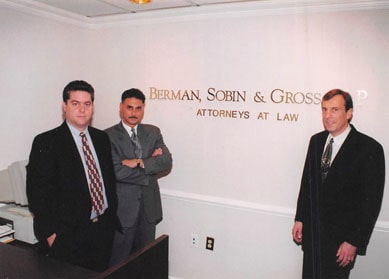
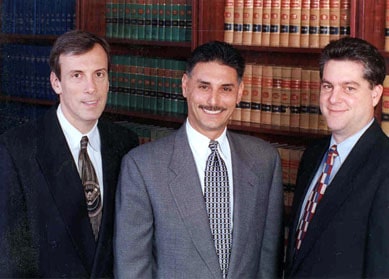
Berman | Sobin | Gross LLP is the largest workers’ compensation law firm in Maryland representing injured workers. Over 35 years, the firm has grown from three attorneys to more than 20, with offices across the state. One of the firm’s founders authored the definitive two-volume treatise on Maryland workers’ compensation law. The firm has handled hundreds of jury trials and appeals before both of Maryland’s appellate courts, and has won decisions that changed how the law applies to working people across the state. When a commercial driver’s injury claim in Laurel runs into the kind of resistance that requires a firm willing to litigate all the way through, Berman | Sobin | Gross LLP does not step back.
Every client is assigned an attorney who stays with the case from start to finish. Spanish-language representation is available. The firm takes on cases that other attorneys have declined, including claims involving disputed employment status, complex third-party liability, and insurers who use aggressive tactics to limit recovery. If your claim has not been handled fully, or if another attorney has told you there is nothing more to do, contact Berman | Sobin | Gross LLP for a direct evaluation from a Laurel commercial driver injury lawyer who will tell you plainly what your options are.