

Laurel Bus Driver Injury Attorney
Bus drivers in Laurel and across Prince George’s County take on physical demands that most commuters never think about. Long shifts on Route 1, Route 198, and the roads connecting Laurel to Fort Meade and Columbia leave drivers dealing with repetitive strain, awkward postures, sudden stops, and the ever-present risk of a serious accident. When a bus driver is hurt on the job, the workers’ compensation claim that follows is rarely simple. A Laurel bus driver injury attorney who understands the specific pressures of transit work, and who knows how to build a claim that actually holds up, makes a significant difference in what a driver ultimately recovers.
What Makes Bus Driver Injury Claims Different from Other Workers’ Comp Cases
Bus drivers are not injured the same way office workers or warehouse employees are. The nature of the work produces a distinctive set of injuries that workers’ compensation adjusters and employer representatives often try to minimize or attribute to factors outside the job. A driver who develops severe low back problems after years of sitting in a vibrating seat on uneven Maryland roads faces a real challenge proving that the condition arose out of and in the course of employment. That burden is real, and it requires evidence gathered correctly from the beginning.
Beyond musculoskeletal conditions, Laurel bus drivers face exposure to assault and physical attack, which remains a documented occupational hazard for transit workers throughout Maryland. Injuries sustained during passenger altercations are compensable under Maryland workers’ compensation law, but employers and insurers do not always treat them that way. Drivers also sustain injuries in collisions, whether they are rear-ended at a stop, involved in an intersection accident, or struck while the bus is in motion. These collisions can produce head injuries, neck and spine injuries, and shoulder damage that require sustained medical treatment and, in serious cases, extended time away from work.
The key issue in many bus driver cases is not whether the driver was hurt, but whether the employer and insurer will accept the full extent of the injury and cover the treatment that is actually necessary. When a transit employer’s occupational health provider clears a driver to return before the driver is genuinely ready, or when diagnostic imaging ordered by the driver’s own physician conflicts with what the employer’s doctor says, the claim becomes contested. That is when having legal representation matters most.
Routes, Employers, and Who Is Responsible in Laurel Transit Injury Cases
Laurel sits in a busy transit corridor. The Maryland Transit Administration operates routes through the area, and private transportation companies contract with various employers to provide shuttle and bus services throughout Prince George’s and Howard Counties. The identity of the employer matters because it determines which insurance carrier handles the claim, what benefits structure applies, and whether any special provisions for public employees or public safety personnel are relevant.
Maryland law provides enhanced benefits for certain categories of public employees, including those who fall within the definition of public safety employees. Whether a particular bus driver qualifies for those enhanced protections depends on the specific employment relationship, the type of work performed, and the governmental entity involved. Berman Sobin Gross LLP has litigated these definitional questions at the highest levels, including in the case of Downer v. Baltimore County, which established that emergency medical technicians are public safety employees entitled to enhanced compensation benefits. The same analytical framework applies when transit workers argue for public safety classification.
When a Laurel bus driver is injured in a collision caused by a third party, there may also be a personal injury claim against that driver in addition to the workers’ compensation claim. These two tracks run separately but interact with each other in ways that affect the ultimate recovery. Handling both correctly, and understanding how a settlement or verdict on the personal injury side affects the workers’ compensation lien, requires attorneys who work across both areas of law. Berman Sobin Gross LLP handles both workers’ compensation and personal injury for Maryland workers.
Occupational Disease and Cumulative Injury in Long-Haul Bus Work
Not every bus driver injury happens in a single moment. Hearing loss from years of engine noise and traffic, repetitive stress injuries to the hands and wrists from steering, and chronic spinal conditions that develop over a career of driving long routes are all potentially compensable under Maryland law as occupational diseases or cumulative trauma conditions. These claims are harder to develop than a single-incident injury, but they are not impossible to win.
Maryland’s occupational disease provisions allow workers to claim benefits when a condition results from the nature of the employment over time, rather than a specific accident. The challenge is establishing the causal link between the work and the medical condition, particularly when the employer argues that the condition is degenerative, age-related, or caused by factors outside the workplace. Medical evidence is central to these cases, and it matters significantly whether the treating physician understands the occupational medicine framework and can articulate the connection between the work and the diagnosis.
One of the firm’s founders wrote a two-volume treatise that remains the authoritative reference on workers’ compensation law in Maryland. That depth of knowledge informs how Berman Sobin Gross LLP approaches occupational disease claims for bus drivers and other workers whose injuries accumulate over time rather than appearing all at once.
Questions Laurel Bus Drivers Ask About Work Injury Claims
If my employer says I was not injured on the clock, what can I do?
Disputes about whether an injury occurred during working hours or within the scope of employment are among the most common in Maryland workers’ compensation. The Maryland Workers’ Compensation Commission resolves these disputes, and a driver who disagrees with the employer’s position can pursue the claim before the Commission with the help of an attorney. Documentation of the route, dispatch records, and any witnesses to the incident help establish that the injury happened when and how the driver says it did.
Can I see my own doctor, or do I have to use the employer’s provider?
Maryland law gives injured workers certain rights to choose their treating physician, but the employer and insurer also have rights to obtain medical opinions from their own providers. The tension between these positions frequently drives disputes in bus driver cases. An attorney can help a driver understand those rights and make sure the employer is not improperly controlling the medical care to minimize the claim’s value.
What happens to my workers’ comp claim if another driver caused the accident?
A bus driver injured when another motorist causes a collision may have both a workers’ compensation claim and a third-party personal injury claim. The workers’ compensation carrier may have a right to be reimbursed from any personal injury recovery. Navigating how these two claims interact, and making sure the driver’s total recovery is maximized rather than simply transferred from one payor to another, is one of the more complex aspects of these cases.
My injury was partly caused by a bad seat or faulty equipment on the bus. Does that affect my claim?
Defective vehicle equipment can support a workers’ compensation claim and may also support a product liability claim against the manufacturer or maintainer of the equipment. These additional claims do not eliminate the workers’ comp claim but can add to the driver’s overall recovery. An attorney who handles both areas of law can evaluate whether a products claim is worth pursuing alongside the workers’ compensation case.
How long do I have to file a workers’ compensation claim in Maryland?
Maryland law sets deadlines for filing workers’ compensation claims, and missing those deadlines can result in losing the right to benefits entirely. For most injuries, the filing period runs from the date of the accident or the date the worker knew or reasonably should have known the injury was work-related. Occupational disease claims have their own rules. The safest course is to consult an attorney as soon as possible after a work injury is discovered.
What if the employer fires me after I file a workers’ comp claim?
Maryland law prohibits employers from retaliating against workers for filing workers’ compensation claims. If a bus driver is terminated, demoted, or otherwise penalized after filing a claim, there may be a separate retaliation claim available. An attorney can evaluate whether the circumstances support that claim and what remedies may be available.
Will I have to appear at a hearing before the Maryland Workers’ Compensation Commission?
Many contested workers’ compensation issues are resolved at hearings before the Commission. The hearing is not a full trial in the traditional sense, but it is a formal legal proceeding where evidence is presented and arguments are made. Berman Sobin Gross LLP’s attorneys have handled tens of thousands of Commission hearings and are fully prepared to represent bus drivers through that process and beyond it if an appeal becomes necessary.
Representing Injured Bus Drivers Throughout the Laurel Area
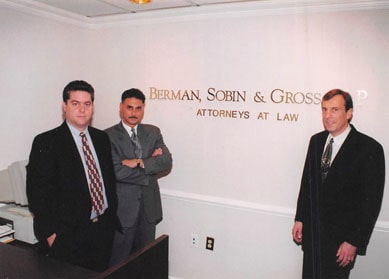
Berman Sobin Gross LLP has offices in Lutherville, Baltimore, Gaithersburg, and Frederick, making it straightforward for Laurel-area bus drivers to access the firm’s representation without significant travel. The firm is the largest workers’ compensation law firm in Maryland representing injured workers, with the resources to handle complex, disputed claims that other firms may decline. Spanish-speaking attorneys and staff are available for clients who prefer to communicate in Spanish. When you work with the firm, a single attorney stays with your case from start to finish so you always know who to reach and what is happening with your claim.
For a Laurel bus driver dealing with a work injury, the question is not whether to file a claim, but how to file it in a way that captures the full scope of the injury and puts the best possible case forward from day one. Berman Sobin Gross LLP represents injured transit workers and bus drivers across Maryland, and the firm’s attorneys are ready to evaluate your situation and explain your options in a confidential consultation.