

Hyattsville Security Guard Injury Attorney
Security work in Hyattsville carries real physical risk. Guards stationed at retail centers along Route 1, apartment complexes near the University of Maryland, commercial properties throughout Prince George’s County, and government facilities across the region deal with confrontational situations, slip hazards, repetitive strain demands, and the unpredictable nature of working alone during late shifts. When an injury happens on the job, the workers’ compensation system is supposed to step in. In practice, getting those benefits often requires pushing back. The attorneys at Berman | Sobin | Gross LLP have spent 35 years representing Maryland workers through exactly that kind of fight, and they understand what Hyattsville security guard injury claims actually involve at the claims stage, at the Commission, and in court when that’s where the case needs to go.
Why Security Guard Injuries in Hyattsville Tend to Be Contested
Insurance carriers and employers push back on security guard claims more often than workers expect, and for reasons that are largely predictable once you’ve seen enough of these cases.
The first issue is causation. Security work involves physical demands that build up over time: standing for an entire shift, patrolling uneven parking lots, responding to physical altercations, carrying equipment. When a guard reports a knee injury or a back injury, an employer’s insurer may argue it was pre-existing or not connected to any specific workplace incident. That argument is easier to make when the injury developed gradually rather than from one identifiable moment, which happens constantly in this line of work.
The second issue involves employer misclassification. Some security companies hire guards as independent contractors rather than employees, which, if the classification holds up, removes them from workers’ compensation coverage entirely. Prince George’s County has seen growth in third-party security staffing arrangements, and the employment relationship isn’t always as clear on paper as it should be. Whether someone was truly an independent contractor or a misclassified employee matters enormously for what benefits they can access.
A third issue comes up specifically with guards employed through staffing agencies placed at a client’s site. There may be a question about which entity bears responsibility, which insurance policy applies, and whether a third party, such as the property owner, bears independent liability for the conditions that caused the injury. These layered employment situations don’t resolve themselves.
The Injuries That Show Up Most Often in These Claims
Not all security guard injuries look the same, and the nature of the injury shapes how a claim gets built. Soft tissue injuries to the back, neck, and shoulders are common, particularly in guards who do vehicle patrols or spend extended periods sitting in a booth or standing at a post. These injuries can be dismissed early in the process because they don’t always appear dramatically on initial imaging, even when they’re genuinely disabling.
Assault-related injuries are a distinct category. Guards are sometimes the first point of contact when a situation escalates, and getting hit, shoved, or knocked down in the course of intervening is an occupational hazard that falls squarely within the workers’ compensation framework. Broken bones, head injuries, lacerations, and the psychological toll of violent incidents are all compensable when they happen in the course of the job.
Slip and fall injuries on property that guards are responsible for securing are also common. There’s a certain irony in a guard getting hurt because the property they’re protecting had an unmarked wet floor or a dark stairwell. When the dangerous condition was on someone else’s property, there may also be a premises liability claim worth evaluating alongside the workers’ comp claim.
Finally, occupational disease claims occasionally arise in security work, particularly related to prolonged exposure to environmental conditions, extreme temperatures, or chemical exposures in industrial settings. Guards assigned to warehouses, manufacturing facilities, or chemical storage sites in Prince George’s County face a different risk profile than those at retail posts.
What Benefits Are Actually Available to Injured Guards
Maryland workers’ compensation provides several categories of benefits, and understanding what applies to a given situation matters before accepting or challenging any insurer’s position.
Temporary total disability benefits cover a portion of lost wages when an injury prevents a guard from working at all, even temporarily. Temporary partial disability applies when a guard can work in some capacity but not at full earnings. These weekly benefit payments are calculated based on the average weekly wage, and errors in that calculation are more common than they should be, often working against the injured worker.
Medical benefits cover treatment that is causally related to the work injury. This includes emergency care, specialist treatment, physical therapy, and any reasonable and necessary future care. The insurer has a role in directing care through authorized providers, which sometimes creates friction when a guard wants to see a particular doctor. Knowing how to handle that process without inadvertently jeopardizing coverage is one of the practical things an attorney helps with from early in the case.
Permanent partial disability benefits become relevant when an injury leaves lasting impairment. These are evaluated through the Maryland Workers’ Compensation Commission and can be contested at a hearing. In serious cases involving permanent total disability, the stakes are considerably higher, and the insurer’s resistance is usually greater.
In cases where a third party’s negligence contributed to the injury, a separate personal injury claim may be pursued alongside the workers’ comp claim. These run on different tracks, and how a settlement in one affects the other is something that has to be thought through carefully.
Questions Hyattsville Guards Ask About Their Claims
Does it matter that I was working a night shift or an unusual schedule when I got hurt?
No. Workers’ compensation in Maryland covers injuries that occur in the course of employment regardless of shift or time of day. The key question is whether you were performing job duties or were on the employer’s premises in connection with your employment.
My employer said I waited too long to report the injury. Did I lose my claim?
Late reporting complicates a claim but does not automatically end it. Maryland law allows injured workers to file a claim within a certain period after the injury or, in the case of occupational disease or gradually developing conditions, after the worker knew or should have known that the condition was work-related. The specific facts determine whether a delay is fatal to coverage, and many claims that employers try to close on this basis are still viable.
The staffing agency placed me at the site where I was hurt. Who is responsible for my workers’ comp benefits?
In Maryland, when a staffing agency places a worker at a client’s site, the agency is typically the employer for workers’ compensation purposes. But the client company may also have liability under certain circumstances. These arrangements require a careful look at the contracts and the actual working relationship.
My claim was denied because the insurer says my injury was pre-existing. What can I do?
A pre-existing condition does not bar recovery if the work injury aggravated, accelerated, or combined with that condition to cause the current disability. Maryland law recognizes this principle. The question is building the medical record and, when necessary, presenting that argument before the Commission.
Can I be fired for filing a workers’ compensation claim?
Maryland law prohibits retaliation against an employee for exercising workers’ compensation rights. If an employer takes adverse action because a guard filed or pursued a claim, that may give rise to a separate legal claim.
What happens at a Maryland Workers’ Compensation Commission hearing?
A hearing before the Commission is a formal proceeding where a commissioner hears evidence and arguments from both sides. Medical records, employer records, and testimony are all part of the record. The decision can be appealed to the circuit court, and in some cases to Maryland’s appellate courts, which is territory the attorneys at Berman | Sobin | Gross LLP have covered extensively in the firm’s history.
Do I need an attorney to file a workers’ comp claim, or only if it’s disputed?
Technically, a worker can file on their own. As a practical matter, the decisions made early in a claim, including how injuries are described, which benefits are requested, and how medical treatment is managed, affect outcomes throughout the life of the case. Having an attorney from the start avoids common early mistakes that can limit recovery later.
Representing Hyattsville Security Workers Through Berman | Sobin | Gross LLP
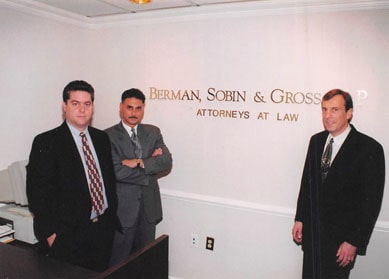
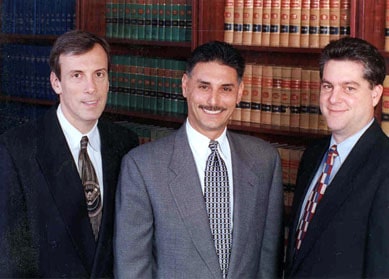
Berman | Sobin | Gross LLP is the largest workers’ compensation law firm in Maryland representing injured workers. The firm serves clients throughout Prince George’s County and across the state from offices in Lutherville, Baltimore, Gaithersburg, and Frederick. One of the firm’s founders authored the definitive two-volume treatise on Maryland workers’ compensation law, the same resource practitioners across the state rely on. The firm’s attorneys have handled hundreds of workers’ compensation jury trials and argued before Maryland’s highest appellate courts. If another attorney has turned down a case, or stopped pursuing it past an administrative hearing, Berman | Sobin | Gross LLP evaluates those claims. The firm also has attorneys and staff fluent in Spanish, which matters in serving the diverse workforce in the Hyattsville area.
When a Hyattsville security guard injury claim runs into resistance from an insurer or employer, the attorneys at Berman | Sobin | Gross LLP are prepared to take that claim wherever it needs to go, from the Commission to the courts if that’s what the case requires.