

Hyattsville Restaurant Worker Injury Attorney
Restaurant work in Hyattsville is physically demanding in ways that rarely get acknowledged until something goes wrong. Line cooks stand over open flames for eight-hour shifts. Servers carry heavy trays across wet tile floors. Dishwashers work with scalding water and caustic chemicals. Prep staff handle industrial slicers and knives. When one of these workers gets hurt, the question of what they’re owed and how to actually collect it is rarely simple. A Hyattsville restaurant worker injury attorney from Berman | Sobin | Gross LLP can help you understand what benefits you’re entitled to and make sure the workers’ compensation system works the way it’s supposed to.
What Restaurant Injuries in Hyattsville Actually Look Like
The food service industry has one of the highest injury rates of any sector, and Prince George’s County is no exception. Hyattsville sits at the intersection of several major commercial corridors, with restaurants ranging from fast food chains near University Boulevard to sit-down establishments along Route 1 and the arts district near the Gateway Arts District. The variety of environments is wide, but the injuries tend to cluster around a handful of causes.
Slip and fall injuries from wet kitchen floors are among the most common. Grease, water, and food spills accumulate fast in a working kitchen, and when employers fail to maintain anti-slip surfaces or enforce proper cleanup protocols, workers pay the price. The injuries from these falls are not always minor. Hip fractures, knee injuries, wrist fractures from bracing a fall, and spinal trauma all appear regularly in workers’ compensation claims filed by restaurant employees.
Burns are another constant in this industry. A moment of distraction near a fryer or a grill, a splash of boiling liquid, or contact with an oven rack can cause injuries ranging from minor to disfiguring. Deep burns often require skin grafting, long recovery periods, and permanent scarring that affects a worker’s ability to return to the same job or sometimes any job.
Repetitive strain injuries are less dramatic but just as disabling over time. Carpal tunnel syndrome from repetitive chopping, tendinitis from carrying trays, and back injuries from sustained standing and lifting compound gradually until a worker can no longer function. These cases are harder to win because the injury doesn’t trace back to a single incident, but they are compensable under Maryland law when the work activity is what caused or aggravated the condition.
The Workers’ Compensation Process When Your Employer Pushes Back
Maryland requires most employers to carry workers’ compensation insurance, and the system is designed to provide medical treatment and wage replacement when workers get hurt on the job. In practice, it does not always function smoothly. Claims get denied. Employers dispute whether an injury was work-related. Insurers schedule independent medical examinations with physicians who reliably minimize the severity of injuries. Workers who don’t understand the process often accept far less than they’re entitled to, or have their claims denied outright and assume they have no recourse.
Restaurant workers face some specific complications. Many are paid hourly and work irregular schedules, which affects how lost wages are calculated. Some work for employers who classify them as independent contractors, which may or may not hold up legally when a claim is filed. Undocumented workers sometimes fear that filing a claim will expose them to immigration consequences, and unscrupulous employers exploit that fear. It’s worth stating clearly: Maryland workers’ compensation protections apply based on employment within the state, not immigration status.
When a claim is denied or disputed, the case goes to the Maryland Workers’ Compensation Commission for a hearing. If the outcome there is unsatisfactory, it can be appealed to circuit court, and potentially beyond. Berman | Sobin | Gross LLP has handled not just administrative hearings but hundreds of jury trials and appeals before Maryland’s highest courts. The firm takes cases other attorneys turn down, including those that require going beyond the Commission level to get a fair result.
Wages, Medical Benefits, and What Your Claim Is Actually Worth
Workers’ compensation in Maryland provides several categories of benefits, and the value of a claim depends on which ones apply to your situation and how they’re properly calculated.
Medical benefits cover treatment that is reasonably necessary to address the work injury. This includes emergency care, surgery, physical therapy, prescription medications, and follow-up appointments. The insurer has the right to direct some aspects of your medical care, which is one reason it matters to have legal guidance early in the process before decisions get made that are difficult to reverse.
Temporary total disability (TTD) benefits replace a portion of your wages while you’re unable to work. Temporary partial disability benefits apply when you can work reduced hours or in a lighter capacity. The rate is based on your average weekly wage calculated from your earnings before the injury, and getting this number right matters, especially for workers with variable schedules or multiple jobs.
Permanent partial disability (PPD) benefits apply when the injury leaves lasting impairment. The amount depends on the body part affected and the degree of impairment, and these are negotiated through the Commission process or at a hearing. Permanent total disability applies in the most severe cases where the worker can no longer engage in any gainful employment.
If a third party, meaning someone other than your employer, contributed to the injury, a separate personal injury claim may run alongside the workers’ compensation claim. A vendor whose equipment malfunctioned, a property owner whose premises created the hazard, or a contractor who introduced a dangerous condition could all potentially be liable. These claims operate under different rules and can result in additional compensation beyond what workers’ comp provides.
Questions Restaurant Workers Ask About Injury Claims
My employer told me I wasn’t really injured at work. Does that end my claim?
No. Your employer’s characterization of the injury is not determinative. The Maryland Workers’ Compensation Commission evaluates the facts, not just the employer’s account. You have the right to file a claim and present your own evidence, including medical records and witness statements.
I didn’t report the injury immediately because I was afraid of losing my job. Can I still file?
Maryland law generally requires reporting an injury to your employer within 10 days and filing a claim with the Commission within two years. If you’re still within those windows, a delay in initial reporting does not automatically disqualify your claim, though it may require explanation. The sooner you act, the better.
What if my injury developed gradually rather than from a single accident?
Repetitive stress injuries and occupational diseases are covered under Maryland workers’ compensation when the work activity is a contributing cause. These claims require medical documentation connecting the condition to the work, and they are often contested by insurers, but they are legitimate and compensable.
The workers’ compensation doctor said I can return to work, but I don’t feel ready. What are my options?
You are not required to accept the insurer’s medical opinion as the final word. You have the right to seek your own medical evaluation. If the opinions conflict, the Commission weighs the evidence. Having an attorney helps you present your treating physician’s findings effectively and challenge the insurer’s expert when appropriate.
Can I be fired for filing a workers’ compensation claim?
Maryland law prohibits employers from retaliating against workers for filing workers’ compensation claims. If you were terminated or subjected to adverse employment action shortly after filing, that conduct may give rise to a separate retaliation claim.
I worked two jobs when I got hurt. Does my second job’s income count toward my benefits?
It can. When calculating your average weekly wage for workers’ compensation purposes, concurrent employment may be considered. This is an area where having legal representation to ensure the calculation is done correctly can make a meaningful difference in your benefit amount.
What does it cost to hire a workers’ compensation attorney?
Workers’ compensation attorneys in Maryland typically work on a contingency fee basis regulated by the Commission. You don’t pay out of pocket to pursue your claim. The fee comes from benefits recovered on your behalf and is subject to Commission approval.
Hyattsville Restaurant Injury Representation from Berman | Sobin | Gross LLP
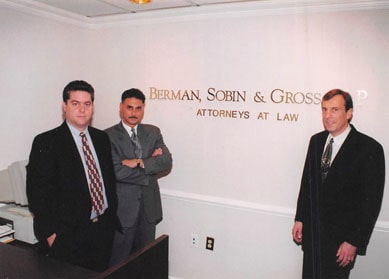
Berman | Sobin | Gross LLP is Maryland’s largest workers’ compensation law firm representing injured workers, with offices throughout the state and attorneys who have spent decades handling the kinds of disputes that arise when employers and insurers contest legitimate claims. One of the firm’s founders literally wrote the treatise on Maryland workers’ compensation law. The firm has handled thousands of hearings and hundreds of jury trials, and it takes on cases that other firms decline. For a Hyattsville food service worker navigating the Commission process or facing a denied claim, that depth of experience matters. If your claim has been disputed, your benefits have been reduced, or you’re not sure what you’re actually owed after a restaurant injury, contact Berman | Sobin | Gross LLP to have your situation evaluated by a workers’ compensation attorney who knows how these cases actually get resolved.