

Greenbelt Warehouse Worker Injury Attorney
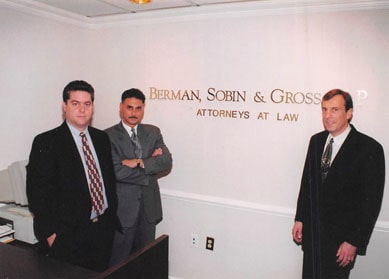
Warehouse work in Greenbelt and the surrounding Prince George’s County corridor is physically demanding in ways that often go unacknowledged until something goes wrong. Workers move freight, operate forklifts, load and unload vehicles, and spend long shifts on concrete floors in environments where shortcuts in safety protocols can have real consequences. When an injury happens, the path to benefits is rarely as simple as filing a form and waiting. A Greenbelt warehouse worker injury attorney at Berman | Sobin | Gross LLP can step in immediately, push back against claim denials, and stay with you through every stage of the process.
What Warehouse Injuries in the Greenbelt Area Actually Look Like
The distribution facilities and logistics operations in and around Greenbelt sit within one of the most active commercial corridors in Maryland, with proximity to major interstates, BWI rail connections, and the Port of Baltimore feeder network. That geography keeps warehouse jobs plentiful. It also means a steady volume of serious workplace injuries.
Forklift accidents rank among the most catastrophic. A loaded pallet falling from elevation, a forklift striking a worker in a poorly marked aisle, a tip-over on an uneven loading dock surface. These events happen in seconds and can result in crush injuries, traumatic brain injuries, fractured vertebrae, or amputations. The medical treatment is lengthy, often including surgery and extended rehabilitation, and the workers’ compensation benefits at stake reflect that severity.
Repetitive strain injuries develop differently but are just as real. Workers who spend months or years performing the same lifting, reaching, or gripping motions develop conditions in the shoulders, wrists, and lower back that may eventually require surgical intervention. Employers and their insurers often dispute these claims aggressively, questioning whether the injury is work-related or attributable to some prior condition. That fight requires an attorney who is prepared to go beyond an administrative hearing if necessary.
Slip and fall injuries in loading dock areas, injuries caused by defective warehouse equipment, and respiratory conditions from exposure to chemical or particulate matter in poorly ventilated facilities are also common. Each type of injury brings different evidentiary demands and different strategies for documenting causation.
Why Warehouse Workers’ Compensation Claims Get Disputed
Workers’ compensation is supposed to be a no-fault system. You were hurt on the job, you file a claim, you receive benefits. In practice, warehouse employers and their insurance carriers scrutinize these claims carefully, and disputes arise more often than injured workers expect.
Carriers frequently challenge whether the injury actually occurred at work, particularly for soft tissue injuries that lack obvious external signs. They may argue that a pre-existing condition, not the job, is responsible for the worker’s current limitations. They may dispute the treating physician’s conclusions and arrange for an independent medical examination conducted by a physician of their choosing. Those examinations can result in opinions that minimize the severity of the injury or recommend cutting off treatment sooner than the worker’s actual recovery warrants.
Employers sometimes add a layer of complexity by misclassifying warehouse workers as contractors rather than employees. Temporary staffing arrangements are also common in this industry, which can create confusion about which employer is responsible and which insurer covers the claim.
Berman | Sobin | Gross LLP does not shy away from these disputes. The firm has handled hundreds of workers’ compensation jury trials and has appeared before both of Maryland’s highest courts. When a claim requires more than an administrative hearing, the attorneys here are prepared to take it there.
Vocational Rehabilitation and Return-to-Work Pressures
Warehouse jobs require physical capability that may not be possible after a serious injury. A worker who sustained a lumbar disc injury may never be able to lift the weights that the job demands. A worker who lost function in a hand or arm may be unable to return to the same role. These situations open questions about vocational rehabilitation, permanent partial disability, and what happens when the employer offers a modified position that the worker genuinely cannot perform.
Maryland’s workers’ compensation system provides pathways for injured workers in these situations, but accessing them requires understanding how the Commission evaluates permanent impairment and what vocational rehabilitation services are available. One of the firm’s appellate victories, Fikar v. Montgomery County, established that workers receiving service-connected disability retirement can still receive vocational rehabilitation services, a ruling that has benefited injured workers across the state.
Employers often push workers back to modified duty quickly, sometimes before the worker has reached maximum medical improvement. Accepting a return-to-work arrangement before you are medically ready can have consequences for the value of your claim and your long-term health. An attorney who understands the interplay between medical status, light-duty offers, and benefit calculations can help you make decisions based on the full picture rather than pressure from the employer.
What Berman | Sobin | Gross LLP Brings to These Cases
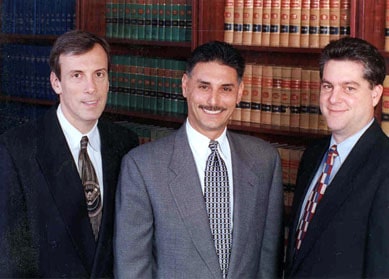
One of the firm’s founders wrote a two-volume treatise on Maryland workers’ compensation that continues to serve as the primary reference on the subject. That depth of knowledge is not decorative. It shows up in how cases are built, how disputes with insurers are handled, and how attorneys advise clients at each decision point.
The firm is the largest workers’ compensation firm in Maryland representing injured workers. It has offices in Lutherville, Baltimore, Gaithersburg, and Frederick, and serves clients throughout Prince George’s County and the Greenbelt area. Spanish-speaking attorneys and staff are available, which matters in an industry where a significant portion of the workforce communicates primarily in Spanish.
When you retain Berman | Sobin | Gross LLP, one attorney stays with you as your point of contact from the beginning to the resolution of your case. You will know who is handling your claim, and that attorney will know the specifics of what happened to you, what the medical records show, and what the employer and insurer are likely to argue.
Questions Warehouse Workers Ask About Injury Claims in Maryland
My employer says I need to use their designated physician. Do I have to?
Maryland workers’ compensation law includes provisions governing medical treatment and the role of employer-designated physicians. Whether you have the right to choose your own treating physician depends on the specifics of your situation. An attorney can clarify your rights early in the claim so that you are not inadvertently locked into a medical arrangement that disadvantages you.
What if I was injured while working for a staffing agency placed at a warehouse?
Temporary staffing arrangements create layered employer relationships. Depending on the facts, coverage may fall to the staffing agency, the host employer, or both. These situations are worth analyzing carefully, because misidentifying the responsible party can delay or jeopardize your benefits.
I have a prior back injury. Does that mean I cannot recover for my current injury?
Not necessarily. Maryland law accounts for aggravation of pre-existing conditions. If your work activities worsened a prior condition or triggered a new episode of an underlying problem, that can still be a compensable injury. The evidentiary fight over causation is often significant in these cases, which is exactly why medical documentation and expert opinion matter so much.
Can I receive compensation if the warehouse injury was partly my own fault?
Workers’ compensation in Maryland operates on a no-fault basis. You do not need to prove the employer was negligent, and your own role in an accident generally does not bar you from receiving benefits. There are limited exceptions, but ordinary workplace mistakes do not disqualify a claim.
What benefits can I actually receive through workers’ compensation?
Maryland workers’ compensation covers medical treatment, temporary total or partial disability payments while you cannot work, permanent partial or total disability awards based on your level of impairment, and vocational rehabilitation in appropriate cases. The specific amounts and duration depend on your wage history, the nature of your injury, and how your medical condition resolves over time.
What if the insurance company cuts off my benefits before I have recovered?
Benefit termination disputes are among the most common and most damaging issues injured workers face. You have the right to contest a termination of benefits through the Workers’ Compensation Commission. Having an attorney represent you in that hearing, with the medical evidence properly presented, significantly affects the outcome.
How long do I have to file a workers’ compensation claim after a warehouse injury?
Maryland law sets filing deadlines that vary depending on the nature of the claim. Occupational disease claims and traumatic injury claims are treated differently, and the clock can run from the date of injury, the date symptoms became apparent, or the date the injury was diagnosed. Missing a deadline can forfeit your claim entirely, which is why getting legal advice promptly after an injury matters.
Warehouse Workers in Greenbelt Deserve Representation That Goes the Distance
A serious injury in a Greenbelt warehouse can upend a family’s finances, interrupt careers, and leave workers in prolonged pain while their claims are being disputed. Berman | Sobin | Gross LLP has spent 35 years representing the workers Maryland depends on, and warehouse employees throughout Prince George’s County are exactly the kind of clients this firm was built to serve. The attorneys here take hard cases and see them through, whether that means negotiating a fair resolution at the Commission level or pursuing an appeal when the result demands it. If you have been hurt on the job at a warehouse in or near Greenbelt, contact the firm for a confidential case analysis with an attorney who will stay with you from start to finish.