

Greenbelt Roofer Injury Attorney
Roofing is one of the most physically demanding and statistically dangerous trades in Maryland. Workers who install, repair, and maintain roofs in Greenbelt and across Prince George’s County face fall hazards, heat exposure, tool-related injuries, and structural collapses on a daily basis. When something goes wrong on a job site, the workers’ compensation system is supposed to provide a clear path to benefits. In practice, that path is often contested. For anyone looking for a Greenbelt roofer injury attorney, the real question is not just whether a claim can be filed, but whether the full value of that claim will actually be recovered.
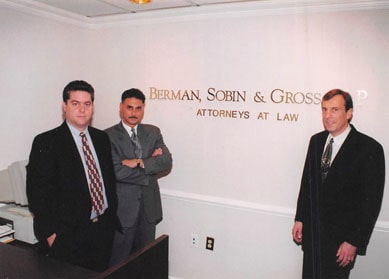
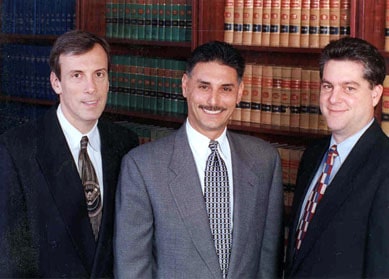
Berman Sobin Gross LLP has spent 35 years representing Maryland workers, including tradespeople in the construction and roofing industries, before the Workers’ Compensation Commission, in circuit courts, and before both of Maryland’s highest courts. The firm has grown to more than 20 attorneys with offices throughout the state, and it remains the largest workers’ compensation law firm in Maryland focused on representing injured workers.
What Roofers in the Greenbelt Area Are Actually Up Against
Prince George’s County has a substantial volume of residential and commercial roofing work, from the older neighborhoods near the University of Maryland to the denser commercial corridors along Route 1 and Greenbelt Road. Job sites in this area vary from older two-story rowhouses in established subdivisions to large flat-roof commercial buildings and institutional facilities. Each presents its own hazard profile.
Falls from height remain the leading cause of serious injury in roofing. A fall from a two-story residential roof often produces the same fractures, traumatic brain injuries, and spinal injuries as a fall from a higher commercial structure, depending on the landing surface. Ladder failures, unstable decking, improper scaffolding setup, and the absence or misuse of personal fall arrest systems are the most common mechanical causes. Heat-related illness is a serious and underreported hazard, especially during Maryland summers when roofers work extended hours on dark surfaces that absorb and radiate heat. Injuries also arise from nail guns and other pneumatic tools, from chemical exposure during bitumen or adhesive work, and from overexertion that produces cumulative damage to knees, shoulders, and lumbar discs over time.
Maryland’s workers’ compensation system covers injuries that arise out of and in the course of employment. For most roofers, the threshold issue is clear. But employers and their insurers routinely dispute whether an injury occurred as described, whether a pre-existing condition was aggravated rather than newly caused, or whether an employee was covered under a workers’ compensation policy at all. In roofing, the classification of workers as independent contractors rather than employees is one of the most commonly used tactics to deny benefits. Maryland law applies a specific test for employment status that goes beyond how a worker was labeled on paper, and the outcome of that determination can be the difference between full benefits and none.
The Benefit Structure That Applies to Injured Roofers and Why the Details Matter
Maryland workers’ compensation benefits cover medical treatment, temporary total disability while a worker cannot return to any employment, temporary partial disability when a worker can do light duty at reduced wages, and permanent partial or permanent total disability once maximum medical improvement is reached. Vocational rehabilitation services are also available in appropriate cases.
For a roofer with a back injury, a shoulder tear, or a fractured heel following a fall, the difference between a fair outcome and an inadequate one often comes down to the permanency rating assigned at the end of treatment. Insurance-side medical examiners frequently rate permanent impairments at levels that do not reflect the actual functional loss a worker experiences. A roofer who cannot safely return to work at heights, cannot carry heavy materials, and cannot perform the physical demands of the trade is not adequately compensated by a low impairment rating that assumes a more sedentary work capacity.
The same logic applies to temporary disability. Roofing is not light-duty work. If an injured roofer is cleared for sedentary activity but cannot perform any of the tasks their job actually requires, temporary total disability benefits should continue until genuine work capacity is restored. Disputes over this issue are common, and they require attorneys who understand both the medical record and the physical demands of the trade.
One of the firm’s landmark cases, Montgomery County v. Deibler, established that workers receiving full salary on light duty can still recover compensation for lost overtime wages they had been earning before the injury. While that case arose in the public safety context, it illustrates the kind of detailed benefit analysis that applies across industries. Injured roofers who worked significant overtime before their injuries should not simply accept a base-wage disability calculation without examining what their full pre-injury compensation picture looked like.
Third-Party Liability Claims That Roofing Injuries Can Produce
Workers’ compensation is not always the only avenue available to an injured roofer. When an injury is caused in whole or in part by a party other than the employer, a separate civil claim can run alongside the workers’ comp case. In the roofing context, potentially liable third parties include general contractors who controlled site safety on a project where the roofer was a subcontractor, manufacturers of defective ladders, scaffolding, harness equipment, or pneumatic tools, and property owners who created or failed to correct unreasonably dangerous conditions on a job site.
A third-party personal injury claim is governed by different legal standards than workers’ compensation. It can produce damages that workers’ comp does not cover, including pain and suffering, loss of enjoyment of life, and compensation for permanent limitations that go beyond what the Commission’s impairment schedule calculates. These claims have their own filing deadlines that run independently of the workers’ comp process, and they require a separate analysis of negligence, causation, and liability.
Berman Sobin Gross LLP handles both workers’ compensation and personal injury claims, which means the full scope of potential recovery for an injured roofer can be evaluated in one place rather than being divided between different attorneys with different pieces of the picture.
Answers to Questions Injured Roofers and Their Families Often Have
What if my employer says I was a subcontractor, not an employee?
Maryland uses a multi-factor test to determine worker status for compensation purposes. The label on a contract is not controlling. Courts and the Commission look at how work was actually performed, who provided tools and materials, whether the worker had the ability to work for others simultaneously, and other factors. Many workers labeled as independent contractors are actually statutory employees under Maryland law and are entitled to benefits accordingly.
I fell off a roof on a residential job. The homeowner hired the roofing company. Does that affect my claim?
It can. When a homeowner contracts directly with a roofing company that employs you, the general structure of your claim runs against your employer’s workers’ comp carrier. But if site conditions contributed to your fall, whether a rotted fascia board that was not disclosed or an unstable access point, there may be a basis for a premises liability claim against the property owner as well. The facts of each situation determine whether a third-party claim is viable.
My employer told me they would take care of everything and I did not need to report the injury formally. Is that a problem?
Maryland law requires injured workers to notify their employer and file with the Workers’ Compensation Commission within specific timeframes. Informal assurances from a supervisor do not substitute for that process, and relying on them can put your claim at risk. If you were injured recently, getting proper documentation in place as quickly as possible protects your rights going forward.
The workers’ comp doctor says I can return to work, but I cannot safely do roofing. What are my options?
A medical release to return to work does not end your claim automatically. If the return-to-work opinion does not account for the actual physical demands of roofing, that opinion can be challenged with evidence from treating physicians, vocational experts, or additional medical evaluations. The Commission considers the whole record, not just one doctor’s conclusion.
My injury happened months ago and I have been managing on my own. Is it too late to file?
Maryland has specific filing deadlines for workers’ compensation claims, and they are strictly enforced. Whether you are within the applicable timeframe depends on the nature of your injury and when it occurred. The sooner a claim is evaluated, the more options remain available. A delay does not automatically bar recovery, but it narrows the window for corrective action.
Can I choose my own doctor for treatment?
Maryland workers’ compensation law provides some ability for employees to select treating physicians, though insurers may also direct care in certain circumstances. Understanding which providers are covered, how to request a change if you are not satisfied with the employer-authorized provider, and how your treatment choices affect the long-term value of your claim are all questions worth discussing with an attorney early in the process.
What does it cost to hire a workers’ comp attorney for a roofing injury claim?
Workers’ compensation attorneys in Maryland generally work on a contingency fee basis, meaning fees come from any benefits recovered on your behalf. The fee structure in workers’ compensation cases is subject to Commission approval. For most injured workers, there is no upfront cost to retaining counsel.
Roofing Injury Representation in Greenbelt and Prince George’s County
Berman Sobin Gross LLP’s attorneys represent roofers, construction workers, and tradespeople throughout Prince George’s County and the surrounding region. Whether your injury occurred on a residential job in Greenbelt, at a commercial site near the Beltway, or at a worksite anywhere in the surrounding area, the firm has the resources and the litigation record to take on the cases that require serious advocacy, including those that other attorneys have turned down or declined to take past a Commission hearing. Injured roofers in this region can speak directly with an attorney about the specifics of their situation through a confidential case analysis, with no obligation, and with Spanish-language services available for clients who need them. If your claim has been denied, disputed, or undervalued, a Greenbelt roofer injury lawyer at Berman Sobin Gross LLP can review what happened and give you a straightforward assessment of where things stand.