

Greenbelt Pedestrian Accident Attorney
Pedestrians struck by vehicles in Greenbelt face a recovery process that is far more complicated than most people expect when they leave the hospital. Medical bills arrive before any insurer has accepted responsibility. Insurers contact injured people quickly, often before the full picture of injuries is understood, and the statements made in those early conversations can shape what compensation looks like months later. A Greenbelt pedestrian accident attorney at Berman | Sobin | Gross LLP works to make sure that the people who depend on full and fair compensation actually receive it, not a figure that reflects what an insurer decided was acceptable to offer.
Where Pedestrian Accidents Happen in Greenbelt and Why
Greenbelt’s road network blends suburban residential streets with high-traffic commercial corridors and the transit patterns surrounding the Greenbelt Metro station. Cherrywood Lane, Greenbelt Road, and the approaches to the Beltway create conditions where foot traffic and vehicle traffic regularly mix at crossings that are not always well-marked or well-lit. The area around the mall and the commercial strip on Greenbelt Road sees heavy turning movement that creates real danger for pedestrians in crosswalks. Near the Metro station, commuter patterns bring large numbers of pedestrians into contact with buses, rideshare vehicles, and commuter traffic in ways that can quickly go wrong.
Pedestrian accidents in this area are not random bad luck. Many follow patterns tied to specific road designs, inadequate crosswalk infrastructure, poorly timed signals, and driver behavior that would not pass even a basic standard of care. Maryland’s traffic laws require drivers to yield to pedestrians in crosswalks, but that obligation is frequently ignored, and the consequences fall entirely on the person on foot. Understanding the actual location and circumstance of the collision matters because it informs which parties bear legal responsibility and what evidence needs to be preserved immediately.
What Pedestrian Accident Injuries Actually Cost Over Time
A pedestrian struck by a vehicle absorbs the full force of that impact without any protective barrier. Traumatic brain injuries, spinal fractures, internal organ damage, pelvic injuries, and severe orthopedic trauma are common outcomes, and they carry consequences that extend well beyond an initial hospitalization. Surgeries are often staged over months. Rehabilitation for serious neurological or orthopedic injuries can take years. People who worked physically demanding jobs may find that they cannot return to those roles at all, even after extensive treatment.
The full financial cost of a serious pedestrian accident is rarely visible at the time of the initial settlement conversations. Lost earning capacity, the cost of ongoing care, the need for home modifications or assistive equipment, and the long-term impact on daily functioning all contribute to a damages picture that requires careful development. Maryland law allows injured pedestrians to pursue compensation for past and future medical expenses, past and future lost wages, and non-economic damages including pain, suffering, and permanent impairment. Permanent impairment, in particular, is often undervalued in early settlement discussions when the final extent of recovery is still unknown.
One of the most important things an attorney does in a pedestrian accident case is manage the timing of settlement. Resolving a claim before the treating physicians have provided a clear prognosis can leave an injured person holding medical bills that should have been part of the settlement. The attorneys at Berman | Sobin | Gross LLP understand how to build and present a damages case that accounts for what an injury will actually cost, not just what it has already cost.
Liability in Maryland Pedestrian Accident Cases Is Not Always Straightforward
Maryland follows contributory negligence rules, which means that an injured person who is found to bear any share of fault for the accident is barred from recovering compensation entirely. This is one of the harshest liability standards in the country, and insurers know it well. When a driver or their insurer argues that a pedestrian contributed to the accident by crossing outside a crosswalk, wearing dark clothing, or stepping into traffic unexpectedly, they are attempting to invoke this bar. Even a small allocation of fault can eliminate a claim under Maryland law.
This makes the facts of the accident critically important. Surveillance footage from nearby businesses or traffic cameras, witness statements gathered close in time to the collision, physical evidence at the scene, and accident reconstruction analysis can all speak to what actually happened and who bears responsibility. In pedestrian accidents, this evidence can be time-sensitive. Traffic camera recordings are overwritten on a rolling basis. Skid marks fade. Witnesses become harder to locate. Preserving the record of what happened requires prompt attention.
Liability may extend beyond the individual driver. If a vehicle had a defect that contributed to the accident, a manufacturer may bear responsibility. If the accident occurred in a location where road design or signal timing created a foreseeable hazard, a government entity may share liability. These claims involve different procedural requirements, including notice deadlines that apply to claims against government defendants and that can arrive much sooner than the general statute of limitations. Missing them forecloses the claim entirely.
Questions People Ask After a Pedestrian Accident in Greenbelt
What should I do at the scene if I am able?
If you are physically able to do so, document the scene with photographs before leaving. Get the driver’s contact and insurance information, note the vehicle’s license plate, and identify any witnesses. Do not agree to any arrangement that bypasses a police report. Even if you feel relatively uninjured at the scene, seek medical evaluation quickly, as many serious injuries do not produce immediate symptoms.
The driver’s insurer has already contacted me with an offer. Should I accept?
No. Early settlement offers are typically made before the full extent of injuries is known and before lost wages and long-term care needs can be accurately calculated. Accepting a settlement releases the insurer from further liability, regardless of what additional costs arise. Speaking with an attorney before responding to any offer preserves your options.
What if the driver who hit me did not have insurance?
Maryland requires drivers to carry uninsured motorist coverage, and your own auto policy may provide a source of compensation if you have one. Even without a vehicle of your own, other avenues may exist depending on the circumstances of the accident. An attorney can identify all available sources of compensation in your specific situation.
How long do I have to file a claim in Maryland?
Maryland’s general statute of limitations for personal injury claims is three years from the date of the accident. However, claims against government defendants require a notice of claim to be filed much sooner, often within one year or less. If a government entity may bear any responsibility for the accident, those deadlines take priority and require immediate attention.
Does it matter that the accident happened in a parking lot rather than on a public road?
The location of the accident affects questions of liability, traffic law applicability, and potentially who owns the property and whether a premises liability claim exists alongside the auto negligence claim. Parking lots are common sites for pedestrian accidents and are governed by their own set of legal considerations. The analysis is worth doing carefully.
What if I was partly at fault for the accident?
Maryland’s contributory negligence rule makes this question especially consequential. If a court finds that you bore any percentage of fault, your recovery is barred. Insurers and opposing attorneys often try to establish partial fault for exactly this reason. How the facts of the accident are documented and presented matters enormously, and a pedestrian accident attorney can help develop the account of what happened in a way that is well-supported by the evidence.
How does Berman | Sobin | Gross LLP handle pedestrian accident cases?
The firm’s personal injury attorneys work directly with clients through every stage of the claim, from initial investigation through resolution. The firm handles complex cases and is prepared to take a case to trial when a fair result cannot be reached through settlement. Clients work with a consistent attorney who remains their point of contact throughout the process.
Talk to a Greenbelt Pedestrian Injury Lawyer About Your Situation
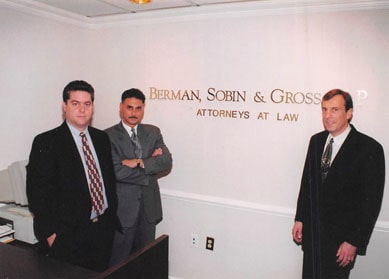
Berman | Sobin | Gross LLP has served Maryland residents for 35 years, growing to more than 20 attorneys with offices throughout the state, including locations in the communities that make up the greater D.C. suburbs. The firm represents people who have been seriously hurt and whose recovery depends on getting the full compensation the law allows. If you have been hurt in a pedestrian accident in Greenbelt or anywhere in Prince George’s County, speaking with a Greenbelt pedestrian injury lawyer from our firm costs nothing upfront and gives you a clear picture of what your claim may be worth and what steps to take next. Contact Berman | Sobin | Gross LLP to schedule a confidential case analysis.