Greenbelt Manufacturing Worker Injury Attorney
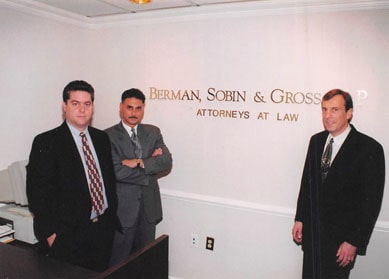
Manufacturing work in Greenbelt carries real physical risk, and the workers who run production lines, operate heavy machinery, and handle industrial materials every day know that better than anyone. When an injury happens on a factory floor or in a processing facility, the consequences extend far beyond the immediate physical harm. Lost wages, medical bills, disputes about the cause and severity of the injury, and pressure from employers or insurers can pile up quickly. A Greenbelt manufacturing worker injury attorney at Berman | Sobin | Gross LLP represents workers who need more than a form filed at the Commission. We have spent 35 years handling workers’ compensation throughout Maryland, including the manufacturing and industrial sector in Prince George’s County, and we know how these claims actually develop.
What Makes Manufacturing Injuries Distinct Under Maryland Workers’ Compensation Law
Manufacturing injuries rarely look like a single clean event. Some are traumatic and sudden, a crush injury from a press, a fall from a loading dock, a laceration from unguarded equipment. But many develop over time in ways that complicate the claims process considerably.
Repetitive stress injuries, occupational hearing loss from sustained exposure to industrial noise, respiratory conditions from inhaled chemicals or particulates, and back damage accumulated over years of heavy lifting all require a different approach than a broken bone from a one-time accident. Maryland’s workers’ compensation system has specific provisions for occupational diseases and hearing loss claims, including the occupational deafness statute that addresses how the age deduction is calculated. Berman | Sobin | Gross LLP has actually argued that issue before Maryland’s appellate courts and shaped the law that governs how hearing loss claims are calculated for industrial workers.
For workers at Greenbelt manufacturing facilities, the distinction between a traumatic injury and an occupational disease matters because it affects filing deadlines, the evidence required to prove your claim, and how the Commission evaluates what benefits you are owed. Misclassifying your own injury type, or allowing an employer or insurer to do so, can undermine an otherwise valid claim from the start.
The Fight Over Medical Evidence in Industrial Injury Claims
Manufacturing employers and their insurers routinely engage medical experts to contest the connection between workplace conditions and a worker’s injuries. This is especially common when the injury involves gradual onset conditions, chemical exposure, or any pre-existing condition the employer believes it can point to as the real cause.
Maryland law limits what those employer-retained experts can actually say. In a case Berman | Sobin | Gross LLP brought before the courts, City of Frederick v. Shankle, the court established that employer medical experts who give opinions that the presumption for public safety occupational diseases is not scientifically sound cannot testify to that effect. While that case arose in the public safety context, it reflects a broader principle that shapes how contested medical testimony is handled in Maryland workers’ compensation proceedings.
For manufacturing workers, the implication is practical. When an employer’s doctor says your shoulder injury predates the workplace incident, or that your pulmonary condition comes from smoking rather than the fumes in the facility, the strength of your own medical evidence and how it is presented becomes decisive. Our attorneys build those records and challenge opposing experts, not just at the Commission level, but through circuit court and appellate proceedings if that is what the case requires.
Wage Loss and Permanent Impairment: What Manufacturing Workers Are Actually Owed
A manufacturing worker who is injured and cannot return to the production line at full capacity is facing more than temporary lost wages. Maryland workers’ compensation provides for temporary total disability, temporary partial disability, permanent partial disability, and permanent total disability depending on the nature of the injury and its long-term effects. Understanding which category applies, and fighting for the correct classification, can mean the difference between benefits that cover a short recovery period and compensation that accounts for a lasting change in your earning capacity.
Vocational rehabilitation is another benefit that manufacturing workers often overlook or do not know to pursue. If a worker’s injury prevents them from returning to industrial labor, Maryland law provides vocational rehabilitation services to help transition into other employment. Berman | Sobin | Gross LLP’s appellate work in Fikar v. Montgomery County established that workers receiving service-connected disability retirement can also receive vocational rehabilitation, expanding access to this benefit for injured workers.
For workers injured at Greenbelt manufacturing operations whose injuries involve overtime loss, the wage calculation is also contested territory. Maryland law addresses how overtime factors into the wage loss calculation, and employers frequently try to base compensation on base wages alone. Our attorneys know these disputes and how to document pre-injury earnings properly to get the full picture before the Commission.
Questions Greenbelt Manufacturing Workers Ask About Injury Claims
My employer says my injury happened because I was not following safety procedures. Does that bar my workers’ comp claim?
No. Maryland workers’ compensation is a no-fault system. An injured worker’s own conduct, including a failure to follow a safety rule, does not generally bar a claim. The question is whether you were injured in the course of your employment, not whether your employer believes you share responsibility for the incident. There are narrow exceptions, including intentional self-harm and intoxication in some circumstances, but employer safety arguments do not eliminate a valid claim.
I was hurt by a piece of equipment manufactured by a third party. Is workers’ comp my only option?
Not necessarily. If defective equipment made by a manufacturer other than your employer contributed to your injury, a separate product liability claim may be available alongside your workers’ compensation claim. These claims involve different legal standards and run through the civil court system rather than the Workers’ Compensation Commission. They are worth evaluating carefully because they can provide damages not available through workers’ comp, including pain and suffering.
How long do I have to file a workers’ compensation claim after a manufacturing injury in Maryland?
For most traumatic injuries, the filing window under Maryland law is two years from the date of the accident or the date disability first manifested. For occupational diseases, the time runs from when the worker has knowledge that the disease is work-related or should have reasonably discovered it. These deadlines are strictly enforced, and missing them can permanently bar a claim regardless of its merits. If you are unsure whether you are within the filing period, get the question answered as soon as possible.
My employer is classifying my injury as minor and the insurance company is offering a quick settlement. Should I accept?
Early settlements in workers’ compensation claims, particularly for manufacturing injuries that involve anything more than a superficial wound, deserve serious scrutiny. A settlement that closes your claim can eliminate your right to future medical benefits and additional wage loss compensation if your condition worsens or requires further treatment. Before signing anything, have an attorney review what you would be releasing and whether the offer reflects the actual value of your claim given its long-term trajectory.
I developed a respiratory condition after years of working in a Greenbelt manufacturing plant. Can I still file a workers’ comp claim?
Occupational disease claims, including respiratory conditions caused by prolonged exposure to industrial substances, are covered under Maryland workers’ compensation law. The challenge in these claims is documenting the connection between your workplace exposures and your diagnosis, which typically requires medical evidence and a detailed occupational history. These cases are more complex than traumatic injury claims, but they are not unwinnable, and Berman | Sobin | Gross LLP regularly handles them.
What happens if the Workers’ Compensation Commission denies my claim or awards less than I believe I am entitled to?
A Commission decision is not the end of the road. Maryland law allows appeals to the circuit court, where a jury trial is available in some cases, and further appellate review before Maryland’s higher courts. Berman | Sobin | Gross LLP has handled hundreds of workers’ compensation jury trials and appeals before both of Maryland’s highest courts. If your claim has been undervalued or denied, there are real options beyond the Commission.
Does it matter which law firm I choose if my injury seems straightforward?
What looks straightforward at the outset of a manufacturing injury claim can become complicated quickly when employers dispute causation, when a prior injury becomes an issue, or when a permanent impairment rating comes back lower than expected. Having attorneys who have litigated these issues at every level of Maryland’s legal system, and who have changed the law through appellate decisions that now protect workers across the state, means you are not navigating any surprises alone.
Representation for Injured Manufacturing Workers Across the Greenbelt Area
Berman | Sobin | Gross LLP serves workers throughout Prince George’s County and the surrounding region from offices across Maryland, including locations in Lutherville, Baltimore, Gaithersburg, and Frederick. For workers in Greenbelt and the broader corridor that includes Lanham, College Park, Beltsville, and Hyattsville, our attorneys handle the full range of manufacturing and industrial injury claims from initial filing through trial and appeal. We have Spanish-speaking attorneys and staff to serve clients for whom language access matters, and we make sure every client has a single attorney who stays with them through the entire claim.
If you were injured working in a Greenbelt manufacturing facility, Berman | Sobin | Gross LLP is prepared to evaluate your claim and tell you honestly what it involves. Contact our firm to speak with a Maryland manufacturing worker injury attorney about what happened and what your options look like from here.