

Greenbelt Landscaping Worker Injury Attorney
Landscaping work in the Greenbelt area keeps commercial properties, residential communities, and the corridors around major routes like Greenbelt Road and Kenilworth Avenue looking their best. It is also one of the most physically demanding and injury-prone occupations in Prince George’s County. Workers operate heavy mowing equipment, climb trees, handle pesticides and fertilizers, and spend long hours in heat that can quickly become dangerous. When something goes wrong, the injuries are often serious. A Greenbelt landscaping worker injury attorney at Berman Sobin Gross LLP can help you understand your rights and work to make sure the workers’ compensation system actually delivers what it is supposed to deliver.
What Makes Landscaping Injuries Different from Most Workers’ Comp Claims
Most workers’ compensation cases start with a single incident: a fall, a machine accident, a slip. Landscaping cases can involve those same sudden accidents, but they also generate a category of claim that gets far more complicated: injuries that develop over time. Repetitive strain to the back and shoulders from equipment vibration, hearing loss from prolonged exposure to mowers and chippers, heat stroke after working in direct sun through a Maryland summer, and chemical exposure injuries from herbicide or pesticide contact are all real and documented occupational hazards in this industry.
These gradual-onset conditions matter for one specific legal reason. Maryland workers’ compensation law requires you to report an injury and file a claim within a certain window. For sudden accidents, most workers know to report promptly. For occupational diseases and conditions that develop over weeks or months, workers often do not realize there is a formal deadline tied not to when symptoms started, but to when they knew or should have known the condition was connected to their work. Missing that deadline can close the door on benefits entirely.
Landscaping employers and their insurance carriers know this. It is not unusual for a carrier to contest the causal link between a repetitive stress injury and a worker’s job duties, or to argue that exposure to a chemical did not occur at the levels claimed. Having an attorney who understands how these disputes play out before the Maryland Workers’ Compensation Commission matters more in these cases than in a straightforward accident claim.
The Range of Harm That Shows Up in These Claims
Landscaping work in the Greenbelt area runs year-round in various forms, and the injury patterns shift by season. Spring and summer bring the highest volume of equipment accidents and heat-related illness. Fall tree work generates a disproportionate share of the industry’s most catastrophic injuries, since tree trimming and removal put workers at height with power equipment. Winter maintenance work, including snow and ice removal, produces its own pattern of overexertion and slip-and-fall claims.
Back injuries are the most common claim, ranging from disc herniation requiring surgery to chronic lumbar strain. Traumatic brain injuries from falls or struck-by incidents are among the most serious. Amputations and crush injuries involving mowers, chippers, and tillers occur with regularity across the industry. Eye and skin injuries from chemical exposure are frequently underreported because workers do not connect them to a compensable occupational condition.
The severity of the injury affects what benefits are in play. Lost wage replacement through temporary total or temporary partial disability, permanency awards for lasting impairment, and coverage for all related medical treatment are the core of a workers’ compensation claim. When an injury is severe enough that a worker cannot return to their former position, vocational rehabilitation becomes relevant, and Berman Sobin Gross LLP has established precedent at Maryland’s appellate level confirming that workers receiving service-connected disability retirement are still entitled to those rehabilitation services.
When a Third Party, Not Just Your Employer, May Be Responsible
Workers’ compensation is generally the exclusive remedy against an employer, but landscaping work in the Greenbelt area frequently puts workers in situations where someone other than the employer contributed to the injury. A property owner who failed to maintain safe site conditions, a manufacturer of defective equipment, a chemical supplier who provided inadequate safety information, or a driver who struck a worker along a roadside landscaping job could all be liable under theories that exist outside workers’ compensation entirely.
This matters because workers’ compensation benefits, while important, are capped. Lost wages are paid at a percentage of your pre-injury rate. Pain and suffering are not compensable under workers’ comp. A third-party personal injury claim can pursue the full measure of damages that workers’ compensation leaves on the table. Many workers in landscaping never learn they had a viable third-party claim because their workers’ comp case settled and they assumed that concluded everything. It does not have to work that way.
Identifying whether a third-party claim exists requires a close look at the accident circumstances, not a quick read of the incident report. The attorneys at Berman Sobin Gross LLP handle workers’ compensation and personal injury work, which means they are positioned to evaluate both angles of a landscaping injury claim from the beginning rather than treating them as separate problems.
Questions Greenbelt Landscaping Workers Often Ask
My employer says I got hurt because I wasn’t following safety procedures. Does that bar my claim?
Generally, no. Maryland’s workers’ compensation system is a no-fault system, which means a worker’s own negligence, and even a worker’s violation of safety rules, does not automatically bar a claim. There are narrow exceptions, but an employer’s assertion that you caused your own injury is not typically a complete defense to a workers’ comp claim.
I work for a landscaping company that sometimes subcontracts jobs out. Who is responsible if I get hurt on one of those jobs?
The answer depends on how the subcontracting arrangement is structured and who actually controls the work. Maryland law has provisions addressing liability in multi-employer situations, and sorting out which employer’s carrier is responsible is something an attorney needs to evaluate based on the actual contract terms and work conditions.
I was diagnosed with skin cancer and my doctor thinks it may be connected to years of chemical exposure. Can I file a workers’ comp claim now?
Occupational disease claims have their own rules in Maryland, and the statute of limitations runs from the date of disablement, which is when you became disabled and knew or reasonably should have known the cause was work-related. If the diagnosis is recent, you may still be within the filing window. This is worth evaluating promptly with an attorney rather than assuming the opportunity has passed.
The insurance company’s doctor says my back injury pre-existed my work accident. What can I do?
Pre-existing conditions are one of the most common reasons carriers dispute or reduce claims. Under Maryland law, if a work accident aggravated, accelerated, or combined with a pre-existing condition to produce your current disability, the claim is still compensable. The medical evidence in these cases becomes the center of the dispute, and having legal representation at that stage significantly affects the outcome.
My employer never gave me any safety training. Does that matter for my claim?
It matters in different ways depending on what you are pursuing. In a workers’ compensation claim, the absence of training does not increase what benefits you can receive, since workers’ comp is a no-fault system. However, if a third-party claim exists, inadequate training that contributed to the injury can be relevant to establishing liability and damages in that separate proceeding.
I am worried about losing my job if I file a claim. Is that legal?
Maryland law prohibits employers from firing or retaliating against workers for filing a workers’ compensation claim. This is not a gray area. If termination follows a claim filing, that creates its own legal issue separate from the underlying compensation claim.
Can I choose my own doctor for treatment?
Maryland law gives injured workers the right to choose their own medical provider within the workers’ compensation system. The employer and carrier do not control your medical care, although disputes over the necessity or relatedness of treatment are common and sometimes require a hearing before the Commission to resolve.
Counsel for Injured Landscaping Workers in and Around Greenbelt
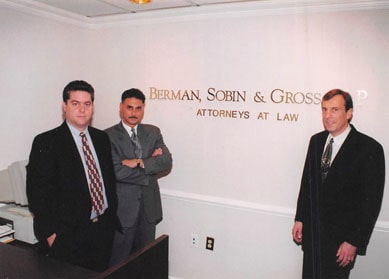
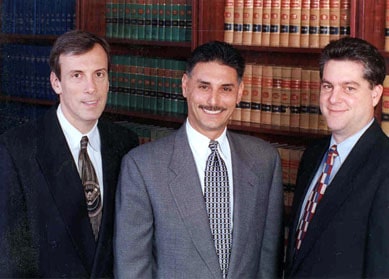
Berman Sobin Gross LLP has spent 35 years representing the workers who keep Maryland running, and that includes the men and women doing physical outdoor labor in Prince George’s County and throughout the state. The firm is the largest workers’ compensation law firm in Maryland representing injured workers, with offices in Lutherville, Baltimore, Gaithersburg, Frederick, and other locations across the state. Attorneys and staff members who are fluent in Spanish are available to assist clients without language barriers. One of the firm’s founders authored the definitive treatise on Maryland workers’ compensation law, and the firm has represented clients through tens of thousands of Commission hearings as well as hundreds of jury trials and appeals before Maryland’s highest courts. If you were injured doing landscaping work in or near Greenbelt, contact Berman Sobin Gross LLP for a confidential case analysis from an attorney who will stay with you throughout the process, not hand you off once you walk in the door.