

Glen Burnie Transit Worker Injury Attorney
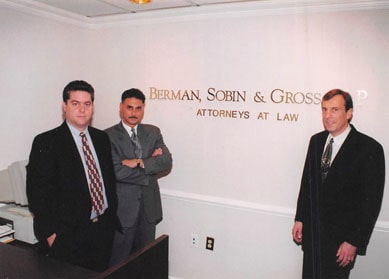
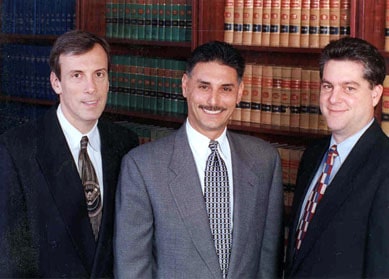
Transit workers in Glen Burnie and across Anne Arundel County face workplace conditions that most people never have to think about. Bus operators navigating Route 14 and the 77 corridor deal with aggressive traffic on Crain Highway and Ritchie Highway every shift. Light rail and commuter rail workers at the BWI Marshall station area handle equipment, track maintenance, and passenger emergencies under significant physical and time pressure. When an injury happens in this environment, the workers’ compensation claim that follows is often far more complicated than a standard workplace injury claim. Glen Burnie transit worker injury attorneys at Berman | Sobin | Gross LLP have spent 35 years representing Maryland workers in exactly these situations, including the ones other firms turn down.
Why Transit Work in Glen Burnie Creates Distinct Injury Patterns
The physical demands of transit work differ from most jobs in ways that matter legally and medically. A bus operator spends hours in a fixed seat absorbing road vibration while managing a vehicle that can weigh over 40,000 pounds in full service. The repetitive motion of steering, braking, and operating doors produces cumulative injuries to the lower back, shoulders, and knees that do not announce themselves with a single dramatic incident. By the time a driver notices serious pain, the injury may have been developing for years.
Track and maintenance crews working along the MTA Maryland Light Rail line face a different set of hazards. They work around energized rail systems, heavy equipment, and uneven terrain, often at night or in weather that reduces visibility and footing. Slip-and-fall injuries, crush injuries from equipment, and electrical exposure are all documented categories in transit maintenance work. These injuries tend to be severe when they happen.
Passenger-facing transit employees also experience injuries through assaults, which occur at measurable rates on urban transit systems. An assault on a transit worker is a compensable injury under Maryland workers’ compensation, but documenting those claims properly and fighting any attempt to deny them requires legal preparation that starts immediately after the incident.
One additional complication specific to transit work: MTA Maryland employees and Anne Arundel County transit workers may have different benefit structures depending on whether they are classified as state employees, county employees, or employees of a contracted transit operator. That classification shapes which compensation systems apply and what benefits are available.
Occupational Disease Claims and the “Single Incident” Problem
Transit work generates a significant number of occupational disease claims, not just single-incident injury claims, and this distinction has real consequences in Maryland workers’ compensation proceedings.
When a bus operator develops severe lumbar disc disease after years of whole-body vibration, the employer and its insurance carrier almost always argue that the condition is degenerative, not occupational. They will present medical opinions claiming the work did not cause or materially contribute to the impairment. Fighting those opinions requires a legal team that understands how to counter them with credible medical evidence and the right legal framework. Maryland law allows injured workers to pursue occupational disease claims when the work environment materially contributed to the condition, but building that record takes preparation.
The same issue arises for transit workers who develop hearing loss from engine noise over many years of service. Maryland’s occupational deafness statute has specific provisions governing how benefits are calculated, and a 2006 case argued by Berman | Sobin | Gross LLP, Collins v. Montgomery County, established important protections for how those calculations are handled for injured workers statewide. The firm’s attorneys have litigated these issues before the Workers’ Compensation Commission and through the Maryland appellate courts, producing decisions that changed the law for transit and public safety workers across the state.
What Transit Workers in Glen Burnie Should Know About Filing a Claim
Maryland requires workers to give their employer written notice of a work-related injury within a certain period, and to file a claim with the Workers’ Compensation Commission within a separate deadline period. Missing either deadline can result in losing benefits entirely. For occupational disease claims, those deadlines run differently than they do for sudden-onset injuries, and the starting point can be contested.
Transit employers and their insurance carriers often move quickly after a serious injury claim is filed. Independent medical examinations are scheduled, surveillance is conducted, and recorded statements are requested from injured workers who have not yet spoken with an attorney. A worker who agrees to a recorded statement without legal representation can inadvertently say something that is later used to limit or deny their claim.
Workers’ compensation benefits in Maryland can include payment of medical expenses, temporary total disability payments while a worker cannot return to their job, and permanent partial or permanent total disability awards based on impairment. For transit workers with physically demanding jobs, the question of whether a worker can return to their specific position, as opposed to some other theoretical job, becomes central to how much compensation they recover.
Berman | Sobin | Gross LLP represents injured workers through every stage of this process. When you work with one of the firm’s attorneys, that attorney stays with your case from start to finish. For complex transit injury cases, that continuity matters. A case that begins as a soft-tissue injury claim can evolve into a permanent disability claim, a vocational rehabilitation dispute, or a contested medical treatment authorization over the course of months or years.
Questions Glen Burnie Transit Workers Ask About Their Claims
I was hurt while operating a bus, but I feel partly responsible because I was rushing. Does that affect my workers’ comp claim?
Maryland workers’ compensation is a no-fault system. Contributory negligence, meaning any fault on your part in how the injury occurred, is not a basis for denying a workers’ compensation claim. Your employer and its insurer cannot defeat your claim by arguing you were partly to blame for what happened.
The MTA has its own medical provider it wants me to see. Do I have to use that doctor?
Maryland workers’ compensation law gives employers and their insurers the right to direct initial medical care in some situations, but injured workers also have specific rights regarding medical treatment, including the ability to request authorization for additional treatment and the right to have their own treating physician’s opinions considered. An attorney can help you navigate those rights without jeopardizing your claim.
My injury happened gradually, not in one accident. Can I still file a claim?
Yes. Maryland workers’ compensation covers occupational diseases and repetitive-stress injuries, not just sudden accidents. The claim process and the applicable deadlines differ from single-incident claims, which is one reason it is worth discussing your situation with an attorney before filing.
My employer says my back pain is pre-existing and not covered. How do I respond to that?
A pre-existing condition does not disqualify a workers’ compensation claim if the work aggravated, accelerated, or combined with the pre-existing condition to produce the current disability. Maryland law has well-developed rules on this point, and employers’ arguments about pre-existing conditions are a standard tactic that experienced workers’ compensation attorneys address routinely.
Can I receive workers’ compensation and also sue a third party for my transit injury?
In some transit injury situations, a third party, such as a negligent driver who struck your bus or a manufacturer of defective equipment, may bear responsibility for your injury separate from the workers’ comp claim. Maryland law allows both claims to proceed simultaneously in appropriate circumstances, though the coordination between the two requires attention to avoid affecting your workers’ compensation benefits.
What if the Workers’ Compensation Commission rules against me?
Commission decisions can be appealed. Cases can proceed to circuit court, where either party may request a jury trial, and from there to Maryland’s appellate courts. Berman | Sobin | Gross LLP has handled hundreds of workers’ compensation jury trials and has argued appeals before both of Maryland’s highest courts. The firm does not stop at the Commission level when continuing is the right move for a client.
How does vocational rehabilitation work for a transit worker who cannot return to driving?
Maryland’s workers’ compensation system includes vocational rehabilitation benefits for workers who cannot return to their previous position due to their injury. A case from the firm’s appellate record, Fikar v. Montgomery County, established that injured workers receiving service-connected disability retirement can still receive vocational rehabilitation services, a protection that extends to many public transit employees.
Talking With a Glen Burnie Transit Injury Lawyer
Berman | Sobin | Gross LLP is the largest workers’ compensation firm in Maryland representing injured workers, with attorneys and staff serving clients throughout the state from offices in Lutherville, Baltimore, Gaithersburg, and Frederick. The firm represents bus operators, rail workers, maintenance crews, and other transit employees facing disputes that range from initial claim denials to complex permanent disability litigation. Spanish-speaking attorneys and staff are available. If your transit injury claim has been denied, undervalued, or complicated by your employer’s medical arguments, the attorneys at Berman | Sobin | Gross LLP are available to evaluate your situation and tell you honestly what your options are. The firm takes on the cases that other firms decline. Reach out to a Glen Burnie transit worker injury attorney to schedule a confidential case analysis.