

Glen Burnie Hospital Employee Injury Attorney
Hospital work in Glen Burnie is demanding in ways that most industries never approach. Anne Arundel Medical Center draws patients from across the county, and the staff who move through those hallways, lift patients, respond to emergencies, and work rotating shifts carry real physical risk every shift they clock in. When a hospital employee gets hurt at work, the path to compensation is rarely as straightforward as it should be. The workers’ compensation system has procedural demands, tight deadlines, and employer-side pressures that can derail a legitimate claim before it ever gets properly heard. Berman | Sobin | Gross LLP has spent 35 years representing the working people of Maryland, including the healthcare workers who give their health to care for others, and the firm’s attorneys understand exactly what it takes to bring a hospital worker’s claim to a successful resolution. If you work at a Glen Burnie hospital and have been hurt on the job, you need a Glen Burnie hospital employee injury attorney who will stay with you through every phase of your case, not hand you off to a paralegal after the intake meeting.
What Hospital Workers in Glen Burnie Actually Face on the Job
The injury patterns that show up in hospital workers’ compensation claims are distinct from what happens in construction or manufacturing, and they require a different lens when building a case. Patient handling is consistently one of the leading causes of serious injury across the healthcare sector. Nurses, CNAs, orderlies, and patient transport staff regularly move individuals who cannot assist with their own repositioning, and even with mechanical lift equipment available, the moments when that equipment is unavailable or when a patient becomes unstable can produce sudden, severe back and shoulder injuries. These are not small strains. They are often herniated discs, rotator cuff tears, and spinal injuries that require surgery and extended recovery time.
Needle-stick injuries and exposure to bloodborne pathogens represent a separate category entirely, one that creates immediate anxiety about serious illness and may require ongoing monitoring for months. Slips and falls on wet floors in patient care areas, in kitchens, and in laundry facilities injure housekeeping and dietary staff at rates that rarely make headlines but are well documented within the workers’ compensation system. Laboratory and pharmacy workers face chemical exposure risks. Security and behavioral health staff at hospitals face a genuine risk of assault from patients in crisis. Glen Burnie’s hospital and long-term care facilities employ people across all of these roles, and each worker’s claim requires an understanding of how that specific injury type is handled under Maryland’s workers’ compensation framework.
Why Hospital Employers Push Back Hard on These Claims
Hospitals are large employers with active risk management departments and established relationships with insurance carriers. When a worker files a claim, the response on the employer’s side is typically coordinated and often fast. Adjusters reach out quickly, sometimes before an injured worker has even spoken to an attorney, and the questions they ask are designed to create a record that limits the employer’s liability, not to help the worker understand their rights. Recorded statements made in those early conversations can be used to dispute the severity of an injury or to suggest that the injury did not happen at work.
Maryland law requires injured workers to report injuries promptly, and hospitals often have their own internal reporting procedures that employees must follow as well. When a worker does not report immediately, perhaps because the pain seemed manageable at first or because the shift environment made stopping difficult, that delay becomes a talking point for the insurer. Disputes over whether a repetitive motion injury happened at work, or whether a pre-existing condition is truly being aggravated by work duties, are especially common in healthcare settings. Berman | Sobin | Gross LLP’s attorneys have handled tens of thousands of workers’ compensation hearings in Maryland and understand how these arguments are built by the defense, which means they also know how to dismantle them.
Medical Benefits, Wage Replacement, and What Getting “Covered” Really Means
Workers’ compensation in Maryland is supposed to provide medical treatment for the work-related injury and a portion of lost wages when the injury prevents the worker from doing their job. In practice, what that looks like for a hospital employee can depend heavily on how the claim is handled from the beginning. Authorized treating physicians, independent medical examinations selected by the employer or insurer, and disputes over what treatment is “necessary and causally related” to the injury are regular sources of conflict. A worker who accepts the insurer’s selected doctor without question may find that physician’s opinions conveniently minimize the injury’s severity or recommend a return to work before the worker is actually ready.
Wage replacement through temporary partial or temporary total disability benefits is calculated based on the worker’s average weekly wage, and for hospital employees who work irregular hours, multiple part-time positions, or significant overtime, that calculation matters enormously. Getting it wrong, or allowing the employer to use a narrow calculation that excludes regular overtime, can cost a worker thousands of dollars over the course of a recovery. Permanent impairment awards, vocational rehabilitation when a worker cannot return to their previous role, and the possibility of a full and final settlement are all part of the picture that an attorney should be discussing with a client from early on, not presenting as a surprise at the end of the process.
Questions Glen Burnie Healthcare Workers Ask About Workers’ Compensation
I work at a hospital in Glen Burnie and hurt my back lifting a patient. Does it matter that I had a prior back injury?
A prior injury does not disqualify you from receiving workers’ compensation benefits. Maryland law recognizes that an employer takes a worker as they find them, meaning that if your work activity aggravated, accelerated, or combined with a pre-existing condition to produce your current disability, you still have a valid claim. The challenge is that insurers routinely argue that prior conditions explain the current injury, and having an attorney who can counter that argument with proper medical evidence is important.
The hospital had me file an incident report but told me I did not need to file a separate workers’ compensation claim. Is that true?
No. An internal incident report is not the same as a claim filed with the Maryland Workers’ Compensation Commission. Filing an internal report preserves your employer’s records but does not start the workers’ compensation clock or give you access to benefits under the system. You need to file separately, and the deadlines for doing so are real. Missing them can forfeit your right to benefits.
My employer is telling me I have to use their designated doctor. Do I have that choice?
In Maryland, the employer and insurer do have significant influence over which physicians are authorized to treat a compensable injury, particularly at the outset of a claim. This does not mean you have no options. There are mechanisms for changing physicians, seeking additional opinions, and contesting the findings of employer-selected doctors. An attorney can help you navigate those options without inadvertently compromising your benefits.
I am a per diem or contract employee at the hospital. Am I covered under workers’ compensation?
Employment status can affect coverage, and the answer depends on how your work arrangement is structured. Employees, including part-time and per diem workers, are generally covered under Maryland’s workers’ compensation law. Independent contractors are not, but misclassification of workers as independent contractors when they function as employees is something the courts and the Commission do scrutinize, and it is worth having an attorney evaluate your specific situation.
Can I be fired for filing a workers’ compensation claim?
Maryland law prohibits employers from retaliating against workers who file workers’ compensation claims. If you experience adverse employment action, termination, reduced hours, or a demotion that appears connected to your claim, that raises a separate legal issue that should be discussed with an attorney promptly.
How long does a workers’ compensation case in Maryland typically take?
There is no single answer, because it depends on whether there are disputes, what kind of injuries are involved, and whether the case proceeds through hearings at the Commission or further. Straightforward claims that are not contested can resolve relatively quickly. Claims that involve permanent disability determinations, disputes over causation, or appeals can take considerably longer. What the firm can tell you is that Berman | Sobin | Gross LLP does not push clients toward premature settlements just to close files, and has the resources to stay with a case as long as it takes.
What if my workers’ compensation claim was denied?
A denial from the Maryland Workers’ Compensation Commission is not the end of the road. Berman | Sobin | Gross LLP has handled hundreds of workers’ compensation jury trials and has argued before Maryland’s highest courts on behalf of injured workers. Attorneys at the firm have reversed decisions that other firms were not willing to take further. If your claim has been denied or undervalued, that determination can be challenged.
Representing Glen Burnie Hospital Workers Through Every Stage of a Claim
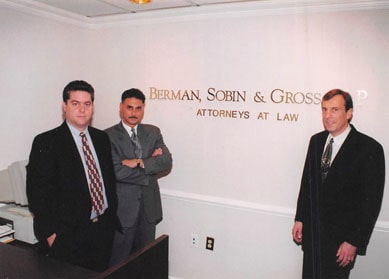
Berman | Sobin | Gross LLP is the largest workers’ compensation law firm in Maryland representing injured workers, with attorneys and staff throughout the state, including the communities of Anne Arundel County. The firm’s attorneys do not rotate cases between staff members as they progress. The attorney who starts with you stays with you. That matters in a workers’ compensation case because the facts, the medical record, and the history of the claim all accumulate over time, and a lawyer who knows that history is in a fundamentally different position than one reviewing a file for the first time before a hearing. For Glen Burnie hospital and healthcare workers who have been injured on the job, the attorneys at Berman | Sobin | Gross LLP are ready to evaluate your claim and put 35 years of Maryland workers’ compensation experience to work on your behalf.