

Glen Burnie Factory Worker Injury Attorney
Factory work in Glen Burnie and the surrounding Anne Arundel County industrial corridor is physically demanding in ways that most people outside manufacturing never fully appreciate. Assembly lines, press operations, chemical handling, loading docks, heavy equipment, confined spaces, repetitive motion tasks performed thousands of times a week. When something goes wrong in that environment, the injuries are rarely minor. A Glen Burnie factory worker injury attorney at Berman | Sobin | Gross LLP understands how these claims develop, what employers and their insurance carriers typically argue, and what it takes to push a manufacturing injury case to a result that actually reflects what a worker has lost.
What Makes Factory Injuries Different From Other Workplace Claims
Manufacturing facilities carry a particular constellation of risks that set them apart from office environments, construction sites, or service-industry workplaces. Glen Burnie’s industrial base, which includes distribution warehouses, food processing operations, fabrication shops, and logistics facilities clustered near the Route 2 and I-97 corridor, generates a steady volume of serious workplace injuries every year. These are not slip-and-fall cases in the ordinary sense. They are crush injuries from presses and rollers, amputations at unguarded machinery, chemical burns and respiratory damage from industrial solvents, hearing loss from prolonged noise exposure, and musculoskeletal disorders that develop over years of repetitive strain before finally becoming disabling.
The legal and evidentiary issues in a factory injury claim reflect that complexity. Establishing the full medical picture often requires vocational experts, orthopedic or occupational medicine specialists, and industrial hygienists who can speak credibly about what a worker was actually exposed to. When an injury involves cumulative trauma rather than a single incident, employers and insurers routinely challenge whether the condition is truly work-related at all. The claim that a repetitive stress injury predates employment, or that a worker’s hearing loss is age-related rather than noise-induced, is one of the most common defenses raised in manufacturing claims. Those defenses require a direct, well-documented response, and the strength of that response often determines what benefits a worker ultimately receives.
Benefits That Can Be at Stake in a Serious Manufacturing Injury
Maryland’s workers’ compensation system provides several categories of benefits to injured workers, and in a serious factory injury, more than one category may be available simultaneously. Temporary total disability benefits replace a portion of lost wages while a worker is unable to return to any employment. Temporary partial disability benefits apply when a worker can perform some work but not at their prior earning level. Permanent partial or total disability benefits compensate for lasting impairment that affects earning capacity, and they represent some of the most contested territory in the entire workers’ compensation system.
Medical benefits cover treatment, surgery, hospitalization, prescription medication, and rehabilitation, and they remain available as long as the authorized medical provider considers treatment necessary and causally related to the injury. Vocational rehabilitation services can be critical for a factory worker whose injury prevents a return to physical labor, since retraining opens access to a different class of work entirely. In cases where a worker is killed on the job, death benefits are available to surviving dependents. The attorneys at Berman | Sobin | Gross LLP have litigated each of these benefit categories before the Maryland Workers’ Compensation Commission and in the courts, and the firm has appellate decisions on the books that have expanded rights for injured workers throughout the state.
When a Third Party Shares Responsibility for a Factory Injury
Workers’ compensation covers injuries caused by employer negligence as well as accidents with no clear fault, and it does so without requiring a worker to prove anything about how the injury happened. That is the trade-off at the heart of the system. But workers’ compensation is not the only avenue for recovery when a factory injury occurs. When a piece of equipment fails because of a manufacturing defect, when a contractor working on the same floor causes an accident, or when a chemical product was defectively designed or inadequately labeled, a separate civil claim against a third party may be available alongside the workers’ compensation case.
These third-party claims are significant because they can recover categories of damages that workers’ compensation simply does not provide, including compensation for pain and suffering, loss of life enjoyment, and full lost wages rather than the partial wage replacement the compensation system offers. A factory worker who loses a hand to an unguarded press may have a workers’ compensation claim against the employer and a product liability claim against the press manufacturer. Those two cases have to be coordinated carefully, because settlements and judgments in the third-party case affect how certain workers’ compensation liens are handled. Getting that coordination right matters enormously to the amount of money a worker actually receives in the end.
Questions Factory Workers in Glen Burnie Frequently Ask
My employer says my injury is pre-existing. Does that end my claim?
No. Maryland law does not require that work be the sole cause of an injury. If the work activity aggravated, accelerated, or combined with a pre-existing condition to produce a disability, the claim can still be compensable. The employer’s argument about pre-existing conditions is common and often overstated. Medical evidence about the nature and progression of the condition, and the role that specific work activities played, is what actually resolves that dispute.
How long do I have to report a factory injury and file a claim in Maryland?
For most traumatic injuries, you are required to report the injury to your employer within ten days and file a claim with the Maryland Workers’ Compensation Commission within 60 days, though the statute of limitations for filing is generally two years from the date of injury or last compensation paid. For occupational diseases, which are common in manufacturing, the timeline runs differently, from the date of disablement or when the worker knew or should have known the condition was work-related. Getting the notice and filing requirements right is something an attorney should help you work through early.
Can I choose my own doctor after a factory injury in Maryland?
Maryland workers’ compensation law gives employees some ability to select treating physicians, but the rules are specific and the employer or insurer has certain rights to direct treatment initially. If you have concerns about whether the employer’s chosen provider is giving you adequate care, or if you believe an independent medical evaluation is painting an inaccurate picture of your condition, that is exactly the kind of issue that requires legal attention before you lose the opportunity to address it.
What if my claim is denied?
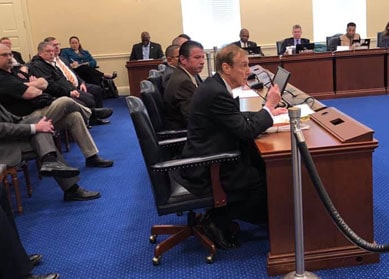
A denial by the employer or insurer is the beginning of a process, not the end of a case. Claims are denied for procedural reasons, disputed causation, or contested extent of disability, and denials can be challenged through hearings before the Maryland Workers’ Compensation Commission. From the Commission, appeals go to the circuit court, and cases can be tried before a jury. Berman | Sobin | Gross LLP has handled hundreds of workers’ compensation jury trials and has argued cases before Maryland’s appellate courts, so the firm does not treat a Commission hearing as the outer limit of what can be done.
I was injured because a coworker was being careless. Does that affect my claim?
No. Workers’ compensation in Maryland is a no-fault system, which means that your right to benefits generally does not depend on proving that your employer or a coworker did something wrong. Coworker negligence does not disqualify your claim. However, if the coworker was actually an employee of a different company working at the same site, that may open the door to a third-party negligence claim in addition to the workers’ compensation case.
What happens to my health insurance and job while I am out on a workers’ comp claim?
Workers’ compensation law does not independently protect your job in the way that FMLA or other statutes might, and employers are not prohibited from filling positions. However, Maryland law does prohibit retaliation against employees for filing workers’ compensation claims, and if you are fired or demoted in connection with a claim, that may give rise to a separate legal action. Whether your health insurance continues during a leave depends on the terms of your employment and any applicable federal protections.
Is there a difference in how union and non-union factory workers pursue these claims?
The Maryland workers’ compensation system applies equally to union and non-union employees, and the benefit structure is the same. Union members may have access to union-provided legal assistance, but the quality and depth of that representation varies considerably. A worker is free to retain independent counsel regardless of union membership. For a serious injury with permanent consequences, having an attorney whose practice is devoted entirely to workers’ compensation litigation is worth considering carefully.
Injured Factory Workers in Anne Arundel County Deserve Thorough Representation
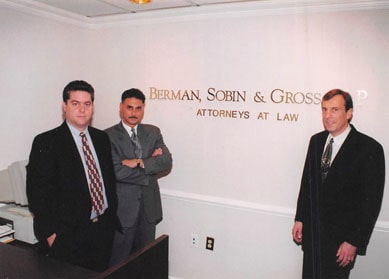
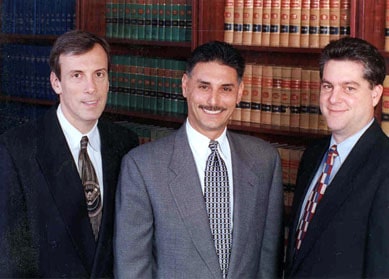
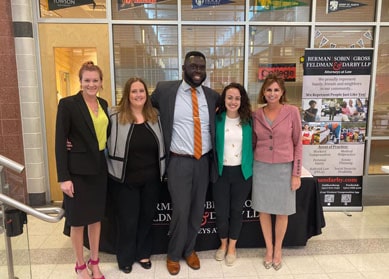
Berman | Sobin | Gross LLP has represented injured workers throughout Maryland for 35 years, growing from a three-attorney firm to more than 20 attorneys with offices across the state. The firm’s attorneys have litigated tens of thousands of hearings, tried hundreds of workers’ compensation jury trials, and secured appellate decisions that changed Maryland law for the benefit of working people. For a Glen Burnie factory injury attorney who will stay with your case from the first hearing through any appeal that becomes necessary, contact Berman | Sobin | Gross LLP for a confidential case analysis. Factory worker injury claims in Anne Arundel County are not routine, and they should not be handled as if they are.