

Glen Burnie Electrician Injury Attorney
Electrical work is among the most technically demanding and physically hazardous trades in Maryland. Electricians who work in commercial construction, residential retrofits, industrial facilities, and public infrastructure projects around Glen Burnie face a category of risk that most workers never encounter. When a high-voltage exposure, a fall from a ladder, a trench collapse, or a crush injury ends a shift in an emergency room rather than a truck, the workers’ compensation system is what stands between a full recovery and a financial crisis. A Glen Burnie electrician injury attorney at Berman | Sobin | Gross LLP has been representing the tradespeople of Anne Arundel County and the surrounding region for 35 years, and the firm understands precisely what these claims require to succeed.
The Specific Hazards That Put Glen Burnie Electricians at Risk
Glen Burnie’s mix of industries creates a distinctive injury profile for electrical workers. The Ritchie Highway corridor, BWI Business District, and the industrial stretches near the Port of Baltimore generate steady demand for commercial and industrial electricians. Residential electricians work through sprawling neighborhoods with older housing stock that frequently requires panel upgrades and rewiring. Each of these environments carries its own set of serious hazards.
Electrocution and electrical burns represent the most severe injuries, but they are far from the only ones. Electricians work at elevation constantly, and falls from scaffolding, aerial lifts, or ladders account for a significant share of serious injuries in the trade. Working in crawl spaces, attics, and confined areas produces repetitive strain injuries, joint damage, and back injuries that develop over time. Contact with energized lines while working near overhead utilities is an ongoing risk on Anne Arundel County job sites. So is arc flash, which generates a thermal explosion capable of causing third-degree burns across a wide area of the body in a fraction of a second.
The long-term picture matters too. Electricians with decades in the trade sometimes develop occupational illnesses from sustained exposure to asbestos in older buildings, chemical solvents, or electromagnetic fields. Maryland workers’ compensation covers occupational disease as well as traumatic injury, and understanding the difference between the two, and the different filing timelines each triggers, is critical to preserving your claim.
How Maryland Workers’ Compensation Actually Works for Trade Injuries
Maryland requires virtually all employers to carry workers’ compensation coverage, and that coverage applies to electricians regardless of how complex or contested the claim becomes. But the system is not self-executing. An employer or its insurance carrier has both the incentive and the resources to minimize what gets paid, and the steps taken in the first days after an injury have a lasting effect on the outcome.
The claim begins with notice to the employer and a filing with the Maryland Workers’ Compensation Commission. Medical treatment flows through the approved provider system, and the insurance carrier has significant influence over which physicians evaluate your condition. This matters because independent medical examinations conducted at the carrier’s request are designed to generate opinions favorable to the insurer, not to the injured worker. When the carrier disputes the extent of your injury, your functional limitations, or whether your condition is causally related to your work, the dispute goes before a Commissioner at a formal hearing.
For electricians, the most commonly disputed issues involve the severity of burn injuries and whether secondary complications are work-related, whether a fall was caused by a safety violation or by the worker’s own conduct, whether a cumulative trauma injury to the shoulder, back, or knee is job-caused or degenerative, and the appropriate disability rating once maximum medical improvement is reached. Permanent partial disability awards, which compensate an electrician for lasting functional loss, are calculated using a schedule tied to specific body parts and a percentage of impairment. These ratings are frequently contested, and the difference between a well-supported and a poorly supported claim can be tens of thousands of dollars.
When an injury is severe enough to prevent an electrician from returning to any kind of work, permanent total disability benefits come into play. The Commission’s determination of permanent total disability involves medical evidence, vocational evidence, and often testimony about the claimant’s transferable skills and the realistic job market for someone with those limitations. This is not territory where an unrepresented worker is on equal footing with a carrier’s legal team.
Third-Party Liability When a Contractor or Manufacturer Is Responsible
Workers’ compensation provides benefits without requiring proof of fault, but it also limits recovery. Lost wages, medical expenses, and disability payments do not cover everything. Pain and suffering, full lost earning capacity, and other categories of damage that would be available in a civil lawsuit are not part of workers’ comp. For electricians injured on multi-contractor job sites, or because of defective equipment, a third-party personal injury claim can run alongside the workers’ compensation claim and recover what workers’ comp leaves out.
Glen Burnie’s active commercial construction market means that electricians frequently work alongside subcontractors from other trades, under general contractors who bear responsibility for overall site safety. If a fall results from a general contractor’s failure to maintain safe scaffolding, or if a defective circuit breaker or tool causes an electrical injury, the party responsible for that condition may be liable beyond the workers’ compensation framework. Berman | Sobin | Gross LLP handles both the workers’ compensation claim and the third-party case, which matters because the two interact in ways that require careful coordination to maximize the overall recovery.
Questions Electricians and Their Families Ask After a Serious Injury
Can I choose my own doctor after a work injury in Maryland?
Maryland’s workers’ compensation system allows injured workers to select their own treating physician, but there are procedures that must be followed and timelines that apply. Insurance carriers will often direct you to their preferred providers early in the claim. Having an attorney involved early helps ensure that your medical treatment is documented by providers who give an honest assessment of your condition, not one designed to minimize your claim.
What happens if my employer says the injury was my fault?
Workers’ compensation in Maryland is a no-fault system, which means that contributory negligence by the worker generally does not bar recovery. There are exceptions involving willful misconduct and intoxication, but an employer simply claiming that you made a mistake on the job is not sufficient to defeat a valid claim. The insurance carrier may still try to use such arguments to reduce benefits, which is precisely why representation matters.
My injury happened because another subcontractor on the site caused the problem. Can I still file workers’ compensation?
Yes. Workers’ compensation applies regardless of which company on the job site was responsible for the condition that caused your injury. You may also have a separate civil claim against that subcontractor or the general contractor, depending on the facts. These claims can proceed at the same time, but they require careful management to avoid a situation where one recovery offsets the other in ways that reduce your overall compensation.
How long do I have to file a workers’ compensation claim in Maryland?
The general rule for traumatic injuries is that a claim must be filed within 60 days of the date of injury, with an outside limit of two years. For occupational diseases, the clock typically runs from the date you knew or should have known that the disease was work-related. Missing these deadlines can forfeit your right to benefits entirely, so filing promptly and correctly is essential.
What if the insurance carrier’s doctor says I am fine and can return to work, but my own doctor disagrees?
Conflicting medical opinions are one of the most common disputes in workers’ compensation cases. The Commission weighs the credibility and basis of each opinion, and the outcome often turns on how well the medical evidence is developed and presented. An attorney can help you obtain an independent medical evaluation that thoroughly documents your limitations and connects them to your work injury in a way that holds up under scrutiny.
Does workers’ compensation cover job retraining if I cannot go back to electrical work?
Maryland workers’ compensation includes vocational rehabilitation benefits for workers who cannot return to their previous occupation due to a work-related injury. One of the firm’s appellate victories, Fikar v. Montgomery County, confirmed that injured workers who receive service-connected disability retirement can still receive vocational rehabilitation services. Electricians facing permanent restrictions that prevent them from returning to the trade should ask specifically about these benefits.
What if my employer does not have workers’ compensation insurance?
Maryland law requires coverage, and employers who fail to carry it face penalties. Injured workers in this situation are not without recourse. The Uninsured Employers’ Fund exists specifically to provide a mechanism for workers injured by non-compliant employers to recover benefits. The process is different from a standard workers’ compensation claim and requires specific procedural steps to navigate properly.
Glen Burnie Electricians Have an Advocate With Decades of Real Experience
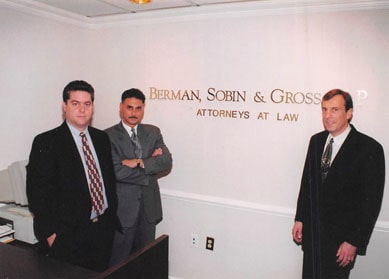
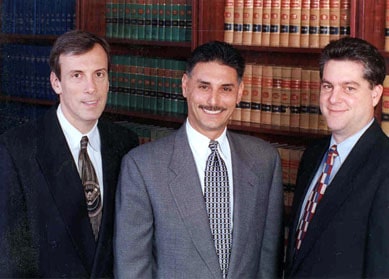
Berman | Sobin | Gross LLP is the largest workers’ compensation law firm in Maryland representing injured workers, with offices across the state and attorneys who have handled tens of thousands of hearings and hundreds of jury trials in workers’ compensation cases. One of the firm’s founders literally wrote the treatise that Maryland attorneys and judges use as the primary reference on workers’ compensation law in this state. That depth of knowledge shapes how the firm approaches every claim, including the straightforward ones and especially the contested ones.
For electricians in Glen Burnie and throughout Anne Arundel County, having that level of preparation behind your claim changes the dynamics with the insurance carrier and at the Commission. If another attorney has declined your case or suggested it cannot go further than an administrative hearing, Berman | Sobin | Gross LLP evaluates those cases and takes the ones worth fighting for. The firm has the resources to pursue complex claims, retain expert witnesses, and take cases into circuit court and beyond when the Commission’s decision warrants an appeal.
If you have been hurt on a job site and need to understand what your claim is actually worth, contact Berman | Sobin | Gross LLP to speak with a Glen Burnie electrician injury lawyer who will give you an honest assessment of where your case stands and what it takes to get the result you need.