

Gaithersburg Worker Injury Attorney
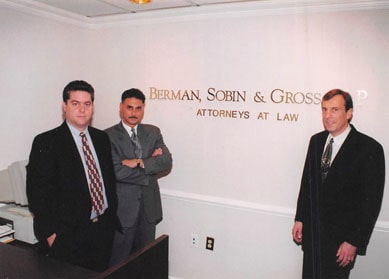
Work injuries in Gaithersburg happen across every sector of the local economy, from the construction projects reshaping the I-270 corridor to the hospitals and government offices that employ thousands of Montgomery County residents. When one of those injuries sidelines a worker, the question that follows almost immediately is whether the workers’ compensation system will actually deliver the support the law promises. For many injured workers, the honest answer is: not without a fight. Berman | Sobin | Gross LLP has been representing Maryland workers through that fight for 35 years, and the firm’s Gaithersburg office puts those decades of experience directly within reach of workers across Montgomery County and the surrounding communities.
What the Montgomery County Workers’ Compensation System Looks Like From the Inside
Workers’ compensation claims in Maryland all funnel through the Workers’ Compensation Commission, but the path a Gaithersburg worker takes through that system looks different depending on the employer, the insurer, and the nature of the injury. Montgomery County’s economy includes a dense concentration of public sector employers, healthcare systems, federal contractors, and construction firms, and each brings its own insurer relationships and claims-handling tendencies. Public safety employees, in particular, face a distinct set of rules. Firefighters, EMTs, police officers, and corrections officers working in Montgomery County are entitled to occupational disease presumptions under Maryland law, but insurers and employers regularly contest those presumptions. Berman | Sobin | Gross LLP has taken cases involving those very presumptions all the way to Maryland’s appellate courts, including Montgomery County v. Pirrone, which established that the heart, lung, and hypertension presumption applies to public safety workers even after retirement or while off duty, and City of Frederick v. Shankle, which blocked employers from using medical experts to argue the scientific soundness of the occupational disease presumption.
For workers in private employment, the dynamics are different but the stakes are just as real. A warehouse worker injured along the Shady Grove industrial strip, a construction laborer hurt on a Germantown site, or a truck driver dealing with a repetitive stress injury from routes through Rockville and Gaithersburg all have valid claims, but valid claims still require documentation, timely filing, and often a willingness to challenge an insurer’s initial response. Maryland law sets firm deadlines for reporting injuries and filing claims. Missing those deadlines can bar a worker from benefits entirely, which is one reason early legal involvement matters as much as it does.
The Injuries That Generate the Most Contested Claims in This Region
Not all workers’ compensation claims meet resistance. Straightforward fractures with clear workplace causes and clean medical records tend to move through the system without much friction. The claims that get complicated are the ones where causation is disputed, where a pre-existing condition is used as a shield by the insurer, or where the injury involves cumulative trauma rather than a single identifiable event.
Cumulative trauma claims are especially common in the industries concentrated around Gaithersburg. Repetitive motion injuries in manufacturing and distribution, degenerative joint conditions in workers who have spent years in physically demanding roles, and hearing loss in workers exposed to industrial noise over time are all injuries that develop gradually. Insurers routinely argue that these conditions are not job-related, that they predate the employment, or that they reflect ordinary aging. Maryland law does not bar compensation for cumulative trauma, and in certain occupational categories it creates legal presumptions that shift the burden to the employer, but extracting those benefits often requires a lawyer willing to develop the medical evidence and take the case through litigation.
Occupational disease claims follow a similar pattern. A Gaithersburg construction worker with asbestos-related disease, a first responder with a cardiac condition, or a healthcare worker with a work-related infectious illness may find that the workers’ compensation insurer immediately contests the relationship between the condition and the employment. These are the cases Berman | Sobin | Gross LLP specifically takes on, including ones other firms have declined to pursue past the administrative hearing stage.
How Vocational Rehabilitation and Wage Loss Benefits Actually Work for Montgomery County Workers
Workers who cannot return to their pre-injury job face a secondary set of questions that the workers’ compensation system addresses through wage loss benefits and vocational rehabilitation. Understanding how those pieces interact matters more than most workers initially realize.
Temporary total disability benefits compensate a worker for lost wages while they are completely unable to work. Temporary partial disability benefits apply when a worker can return in a limited capacity but earns less than before the injury. Permanent partial disability benefits are paid based on the nature and extent of the lasting impairment. The Commission uses specific formulas to calculate these amounts, and the rated impairment assigned by a medical examiner has a direct dollar-and-cents effect on what a worker receives. Insurers frequently arrange for their own medical evaluations, and those evaluations often produce lower impairment ratings than an independent examiner would assign. Workers who accept those ratings without challenge may permanently undervalue their claims.
Vocational rehabilitation adds another layer. Maryland law provides injured workers with access to rehabilitation services designed to help them return to suitable employment when returning to their former position is not possible. For workers receiving service-connected disability retirement, Berman | Sobin | Gross LLP helped establish through the case Fikar v. Montgomery County, Maryland that those workers can still access vocational rehabilitation services. Montgomery County workers who think those options are unavailable to them because of their retirement status may have more choices than they know.
Questions Gaithersburg Workers Ask Before Calling an Attorney
Do I have to report my injury to my employer before I can file a workers’ compensation claim?
Yes. Maryland law requires that an employee notify their employer of a work-related injury within 10 days, though the Workers’ Compensation Commission may consider late notice depending on the circumstances. The formal claim itself must be filed with the Commission within two years of the date of the accidental injury or, for occupational disease, within two years of when the worker knew or should have known the disease was related to their employment. Missing these deadlines is one of the most common ways workers lose access to benefits they would otherwise be entitled to.
Can I choose my own doctor, or does my employer control my medical care?
This is one of the most frequently misunderstood parts of the Maryland workers’ compensation system. Maryland does give employers and insurers some control over authorized treating physicians in the early stages of a claim. However, workers retain the right to seek evaluation with an independent physician, and disputes about the adequacy or direction of medical treatment can be brought before the Commission. A worker who is unhappy with an employer-directed doctor’s treatment plan is not necessarily stuck with that plan forever.
The insurance company told me my injury is pre-existing. Does that end my claim?
Not automatically. Maryland workers’ compensation covers injuries that aggravate, accelerate, or combine with a pre-existing condition, as long as the work activity is a contributing cause. An insurer’s initial position on a pre-existing condition is not the final word. Whether that argument holds depends on the specifics of the medical evidence and how the claim is presented.
My employer says I should come back to light duty, but the light duty job isn’t something I can physically do. What happens?
A worker who refuses suitable light duty work can face a reduction in their temporary disability benefits. But the key word is suitable. If the light duty offered genuinely exceeds the worker’s current medical restrictions or requires work that the treating physician has not cleared, the refusal may be legally justified. These disputes frequently end up before the Commission, and having clear documentation from a treating physician is critical.
What if another party other than my employer caused my injury?
Workers’ compensation is not always the only avenue available. If a third party, such as a negligent driver who caused a delivery truck accident, a defective piece of equipment, or a subcontractor on a construction site, contributed to the injury, a separate personal injury claim may be available alongside the workers’ compensation claim. Berman | Sobin | Gross LLP handles both workers’ compensation and personal injury matters, which means clients with potential third-party claims get a full analysis of every avenue for recovery.
Can my employer retaliate against me for filing a workers’ compensation claim?
Maryland law prohibits retaliation against workers for filing workers’ compensation claims. An employer who terminates, demotes, or otherwise penalizes a worker for exercising workers’ compensation rights may be subject to a separate legal claim. Workers who believe they are experiencing retaliation should document everything and speak with an attorney without delay.
How does Berman | Sobin | Gross LLP charge for workers’ compensation cases?
Workers’ compensation attorneys in Maryland are compensated through fees that are regulated by the Workers’ Compensation Commission. There is no upfront cost to retaining the firm. Attorney fees in these cases are typically tied to the outcome, which means the firm only gets paid when the client does.
Injured Workers in Gaithersburg Have Access to the Firm’s Longest-Standing Maryland Office
Berman | Sobin | Gross LLP has maintained a Gaithersburg office as part of its statewide network for years, making it one of the firm’s established anchors in the Montgomery County market. Workers from Germantown, Rockville, Shady Grove, Derwood, and across the county have consistent access to attorneys who handle nothing but Maryland workers’ compensation and related matters. The firm is the largest workers’ compensation law firm in Maryland representing injured workers, and that scale translates into resources for complex cases: independent medical experts, vocational consultants, and the litigation infrastructure to take cases to trial or appeal when that is what the outcome demands. The firm also has attorneys and staff fluent in Spanish, which matters in a county as linguistically diverse as Montgomery.
Workers in Gaithersburg who have had a claim denied, received a settlement offer that seems too low, or been told their case is too complicated to pursue should contact Berman | Sobin | Gross LLP for a case analysis. The firm’s record of appellate victories in Maryland workers’ compensation law reflects what happens when cases get the level of commitment they deserve.
Talk to a Work Injury Lawyer Serving Gaithersburg and Montgomery County
Berman | Sobin | Gross LLP represents injured workers across Montgomery County and has done so for three and a half decades. Whether your claim involves a traumatic injury, a cumulative condition, an occupational disease, or a dispute over benefits already in pay, the firm’s Gaithersburg work injury attorneys are ready to evaluate what you are owed and pursue it. Reach out to the firm today to schedule a confidential case analysis with a Maryland worker injury attorney who will stay with your case from the first conversation through its resolution.