

Essex Retail Worker Injury Attorney
Retail work looks straightforward from the outside. You stock shelves, help customers, run a register, manage the stockroom. What most people outside the industry do not see is the physical toll: the repetitive lifting, the hours on hard concrete floors, the loading docks, the slip-and-fall hazards that multiply during every busy season. Workers at Essex’s big-box stores, grocery chains, hardware retailers, and shopping centers get hurt at rates that would surprise most shoppers. When that happens, the workers’ compensation system in Maryland is supposed to provide a safety net, but collecting those benefits without legal help is harder than it should be. If you work in retail in Essex and you have been hurt on the job, an Essex retail worker injury attorney at Berman | Sobin | Gross LLP can help you understand what you are entitled to and what it actually takes to get it.
What Retail Work in Essex Actually Looks Like From an Injury Standpoint
Essex sits along the eastern edge of Baltimore County, with a retail corridor along Eastern Avenue and surrounding areas that includes grocery stores, discount retailers, auto parts shops, home improvement stores, and smaller strip mall businesses. These workplaces share common injury patterns that are worth naming specifically, because the type of injury a worker sustains shapes the entire workers’ compensation claim that follows.
Repetitive strain injuries are among the most common problems retail workers face, and they are also among the most frequently contested by employers and insurers. Carpal tunnel syndrome from constant scanning and bagging, chronic low back injuries from daily stocking and lifting, knee problems from prolonged standing on concrete, and shoulder injuries from overhead reaching all develop gradually. Because there is no single dramatic event to point to, some employers argue these injuries are not work-related. That argument is often wrong, and it should not go unchallenged.
Acute injuries happen too. Forklifts and pallet jacks in stockrooms create real hazards. Wet floors near entrances and refrigerator sections cause falls. Workers get hurt during deliveries, while breaking down cardboard, while cleaning, and during seasonal setup and teardown when store layouts change rapidly. Retail workers at facilities that also handle fuel or chemical products face additional exposure risks that can turn into occupational disease claims.
The common thread across all of these is that the injury happened at work, during work, because of work. That is the legal standard in Maryland, and it covers a lot of ground that employers sometimes try to narrow.
Why Retail Injury Claims Run Into Problems
Retail employers and their insurance carriers have experience with workers’ compensation claims. That experience is not neutral. They have seen what happens when workers do not have legal representation, and the outcome is typically faster, cheaper settlements that do not reflect the full value of the claim.
Gradual onset injuries face the first hurdle: proving the injury is occupational in nature rather than something that would have developed anyway. Insurers routinely send workers to their own physicians, whose evaluations often understate the severity of the condition or attribute it to non-work factors. A worker who accepts those findings without pushing back may end up with minimal benefits and no treatment coverage for conditions that are genuinely disabling.
Temporary total disability benefits, which replace a portion of your wages while you cannot work, are sometimes cut off earlier than they should be, often based on a premature return-to-work opinion from an employer-selected doctor. Permanent partial disability ratings, which determine long-term compensation, can be significantly undervalued if the evaluation is not thorough. And if your injury requires surgery or extended rehabilitation, the question of who authorizes and pays for ongoing treatment becomes contentious in ways that workers rarely anticipate when they first file a claim.
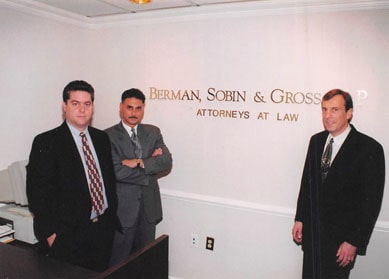
Berman | Sobin | Gross LLP takes the cases that require real advocacy, including those where an insurer has already denied a claim, cut off benefits, or offered a settlement that does not come close to covering what the worker has lost. The firm’s attorneys have handled hundreds of workers’ compensation jury trials and appeals before Maryland’s highest courts, which is not a credential most firms can claim.
How Maryland’s Workers’ Compensation System Applies to Retail Employees
Maryland requires virtually all employers to carry workers’ compensation insurance, which means most retail workers in Essex are covered from their first day on the job. This is true whether you work full-time, part-time, or as a seasonal hire. The coverage extends to both sudden injuries and conditions that develop over time due to the nature of your work.
After a workplace injury, you have an obligation to notify your employer in a timely manner. For sudden injuries, that should happen as soon as possible. For gradual onset conditions, the clock generally starts when you know, or should know, that your condition is work-related. Missing the notice requirements can jeopardize your claim, which is one reason early legal consultation matters.
Benefits available under Maryland workers’ compensation include coverage for medical treatment, temporary wage replacement while you are unable to work, permanent disability compensation if your injury has lasting effects, and vocational rehabilitation services in appropriate cases. The firm’s attorneys have successfully argued in Maryland appellate courts that injured workers who are already receiving disability benefits can also qualify for vocational rehabilitation, which is a ruling that expanded rights for workers across the state.
If your employer is retaliating against you for filing a claim, that is a separate violation of Maryland law. Retaliation in retail settings sometimes takes the form of reduced hours, reassignment to difficult shifts, or termination shortly after an injury report. These situations need to be documented and addressed quickly.
Questions Retail Workers in Essex Ask About Their Claims
I only work part-time at a retail store. Am I still covered by workers’ compensation?
Yes. Maryland workers’ compensation coverage applies to part-time employees as well as full-time ones. Your wage replacement benefits will be calculated based on your actual earnings, but you are entitled to the same medical coverage and disability determinations as any full-time worker.
My injury developed slowly over years of lifting and standing. Can I still file a claim?
You can. Repetitive stress injuries and occupational conditions that develop gradually are compensable under Maryland workers’ compensation law. The challenge is establishing that your work conditions caused or materially contributed to the condition, which is where medical documentation and legal support matter most.
The employer’s doctor said my injury is not that serious. What can I do?
You have the right to be evaluated by your own physician, and your attorney can help you get a thorough independent medical evaluation. The employer’s chosen doctor does not have the final word. Disputed medical findings are regularly resolved through the Workers’ Compensation Commission, and in some cases, through the courts.
My employer says the injury happened because I was not following safety procedures. Does that affect my claim?
In most cases, no. Maryland’s workers’ compensation system is a no-fault system, which means that except in situations involving intentional self-injury or intoxication, fault is generally not a factor in determining whether you are covered. Employers sometimes raise procedural arguments to discourage claims, but these arguments usually do not hold up.
My workers’ compensation claim was denied. Is there anything I can do?
Yes. A denial is not the end of the process. You can request a hearing before the Maryland Workers’ Compensation Commission, and if that does not produce the right result, the matter can be taken further. Berman | Sobin | Gross LLP has a history of taking cases beyond the Commission level when that is what the situation requires.
Can I be fired for filing a workers’ compensation claim in Maryland?
Maryland law prohibits employers from retaliating against workers who file workers’ compensation claims. If you believe your termination or adverse treatment at work is connected to your claim, that needs to be documented and addressed as a separate legal matter from the compensation claim itself.
How long do I have to file a workers’ compensation claim in Maryland?
Generally, Maryland law allows two years from the date of the accident to file a claim. For occupational diseases or gradually developing conditions, the timeline is calculated from the date you knew or should have known the condition was work-related. Waiting shortens your options, so consulting an attorney soon after an injury makes sense.
Retail Worker Injury Representation Rooted in Essex and Baltimore County
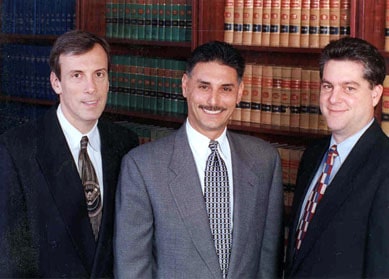
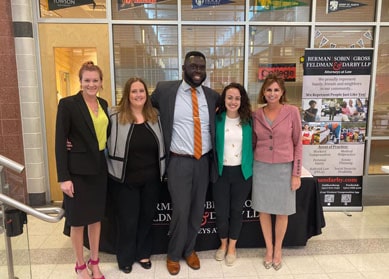
Berman | Sobin | Gross LLP has been representing injured workers throughout Maryland for 35 years, growing from a small firm to more than 20 attorneys with offices across the state, including locations in Baltimore and Lutherville that serve Baltimore County communities including Essex. The firm represents workers across a wide range of industries, including the retail and service workers who keep everyday commerce running in communities throughout the Baltimore metro area.
For retail workers specifically, the firm brings the kind of depth that matters when a claim gets complicated: attorneys who know how to contest employer medical opinions, who have handled appeals before the full range of Maryland courts, and who have pushed the law forward in ways that benefit workers throughout the state. Spanish-speaking staff are available for clients who need them.
If your claim is straightforward, the firm can help it move efficiently. If your claim has already been denied or is turning into a fight, the firm is built for that too.
Retail workers in Essex dealing with a job-related injury should not have to figure out the workers’ compensation system on their own while also managing medical appointments, wage loss, and everything else an injury puts on a person’s plate. Berman | Sobin | Gross LLP’s Essex retail worker injury lawyers are ready to evaluate your claim, explain your options clearly, and handle the advocacy your case requires. Reach out to the firm today for a confidential consultation.