

Essex Electrician Injury Attorney
Electrical work is among the most hazardous trades in Maryland. Electricians who wire commercial buildings, service industrial equipment, or maintain utility infrastructure face risks that most workers never encounter: arc flash burns, electrocution, falls from elevated work areas, and crush injuries from heavy conduit and equipment. When one of those risks becomes a reality on the job, the workers’ compensation system is supposed to step in. In practice, getting the full benefits an electrician is owed often requires knowing how to push back. Berman | Sobin | Gross LLP has spent 35 years representing injured workers across Maryland, and our firm understands the specific challenges that come with Essex electrician injury claims.
The Injury Patterns That Define Electrical Trade Claims in Essex
Essex sits in Baltimore County along the Middle River waterfront, with a mix of industrial facilities, commercial construction, and older residential neighborhoods that keep electricians busy year-round. The work environments vary considerably, and so do the injuries.
Arc flash incidents are one of the most catastrophic events an electrician can survive. The energy released in an arc flash can cause severe third-degree burns in a fraction of a second, along with hearing damage and eye injuries. These accidents happen when safety protocols break down or when employers fail to properly de-energize circuits before maintenance. The aftermath typically involves extensive hospitalization, multiple surgeries, and a long recovery that may prevent the worker from returning to the trade at all.
Falls are equally common. Electricians routinely work from ladders, scaffolding, lift equipment, and rooftops. A fall from even moderate height can cause traumatic brain injuries, spinal fractures, shoulder tears, and orthopedic damage that requires surgery and extended rehabilitation. In some cases, the fall is caused by a defective piece of equipment or a hazardous condition created by a general contractor or property owner rather than the electrician’s own employer. That distinction matters significantly when it comes to what compensation is available.
Repetitive stress injuries develop more slowly but are just as real. Electricians who spend years pulling wire, bending conduit, and working in confined overhead spaces often develop rotator cuff damage, carpal tunnel syndrome, and cervical disc problems. These claims are sometimes disputed more aggressively by employers and insurers because the connection to the job is not always obvious from a single incident report.
When a Third Party Shares Responsibility for an Electrician’s Injury
Maryland workers’ compensation covers medical treatment and a portion of lost wages regardless of fault. But the workers’ comp system limits what an injured worker can recover. It does not compensate for pain and suffering, full lost earning capacity, or losses that go beyond the statutory benefit schedule.
Many electrician injuries involve a third party whose negligence contributed to what happened. On a commercial construction site in Essex, the general contractor controls the site and bears safety obligations independent of whatever subcontracting arrangement brought the electrician to the job. Equipment manufacturers bear responsibility when a defective power tool, a malfunctioning lift, or a faulty breaker panel contributes to an injury. Property owners who allow hazardous conditions to persist on their premises can also face liability.
Where a third-party claim exists alongside a workers’ compensation claim, the injured electrician can potentially recover both sets of benefits. The two claims run on different legal tracks, but the coordination of them matters. Berman | Sobin | Gross LLP handles both, which means nothing falls through the gap between the administrative workers’ comp process and civil litigation when a case calls for both approaches.
What Electricians in Essex Need to Know About Occupational Disease Claims
Not every workers’ comp claim for an electrician comes from a traumatic accident. Long-term exposure to asbestos-containing materials is a genuine occupational hazard for electricians who worked on older buildings, industrial sites, or shipyard-adjacent facilities. Essex and the broader Baltimore County area have significant industrial history, and electricians who worked in those environments decades ago may now be developing asbestos-related illnesses including mesothelioma and asbestosis.
Maryland workers’ compensation law covers occupational diseases as well as traumatic injuries, but these claims present their own complications. The latency period between exposure and diagnosis can be substantial, and establishing the occupational connection often requires medical and industrial hygiene evidence that goes beyond what a standard accident claim requires. Berman | Sobin | Gross LLP’s attorneys are experienced with these claims and know how to build the evidentiary record they require.
Chemical exposure is another occupational disease concern for electricians. Solvents, flux compounds, and other materials used in electrical work can cause respiratory conditions, neurological damage, and skin disorders after repeated or high-level exposure. These cases require attention to medical evidence that directly links the diagnosis to workplace exposure, and the claim may need to go beyond an administrative hearing if the employer or insurer contests the connection.
Questions Injured Essex Electricians Ask
I was hurt on a job site in Essex but I work for a union out of Baltimore. Where do I file my workers’ compensation claim?
Your claim is filed with the Maryland Workers’ Compensation Commission, regardless of which jurisdiction the job site falls within. Maryland law governs your claim if your employment relationship is based in Maryland. Where your union hall is located and where you were dispatched from are both relevant to establishing Maryland jurisdiction. An attorney can confirm this quickly based on the specifics of your employment.
My employer says my burn injury was my own fault. Does that mean I cannot collect workers’ comp?
Maryland workers’ compensation is a no-fault system. Your employer does not need to have done something wrong, and you do not need to have been completely blameless. The question is whether the injury arose out of and in the course of your employment. Fault is generally not a defense to a workers’ comp claim. There is a narrow exception for intentional self-injury, but employer negligence arguments are not a bar to your benefits.
The workers’ comp insurer has sent me to their own doctor. Do I have to accept that doctor’s conclusions?
No. You have the right to be examined by your own treating physician, and you can obtain an independent medical evaluation. Insurer-selected doctors frequently produce reports that minimize injuries or shorten the projected recovery period. Those reports can be challenged with competing medical evidence. The Commission weighs the evidence from all medical sources, and having strong documentation from your own treating doctors is important to protecting your claim.
I was working as an apprentice when I got hurt. Does my status as an apprentice affect my benefits?
Apprentices are employees covered under Maryland workers’ compensation. Your benefit rate is calculated based on your actual wages, including any overtime you regularly worked before the injury. The fact that you are in an apprenticeship program rather than a journeyman does not reduce or eliminate your entitlement to benefits.
My injury happened because of a defective piece of equipment. Can I sue the manufacturer and also collect workers’ comp?
Yes. A product liability claim against the manufacturer of defective equipment is a third-party claim that is separate from your workers’ compensation claim. You can pursue both. If you recover through the third-party lawsuit, there may be a lien or subrogation interest from the workers’ comp insurer that needs to be addressed, but this does not prevent you from filing both claims. An attorney can help you maximize the recovery from both tracks.
How long do I have to file a workers’ compensation claim after an electrical injury?
Maryland law generally requires that a claim be filed within 60 days of the date of injury, though there are circumstances where that period can be extended. For occupational disease claims, the timeline runs from when you knew or should have known that the disease was work-related. Missing the deadline can forfeit your right to benefits entirely, which is why getting an attorney involved early matters.
I received workers’ comp benefits for a few months and then the insurer stopped paying. What are my options?
An insurer cannot simply stop paying benefits without going through the Commission. If benefits have been suspended or terminated without your agreement, you have the right to request a hearing before the Commission. That hearing is an adversarial proceeding where both sides present evidence, and having legal representation significantly affects the outcome. Berman | Sobin | Gross LLP handles contested benefit hearings and is prepared to take them to circuit court when necessary.
Representing Electricians and Trade Workers Across Baltimore County
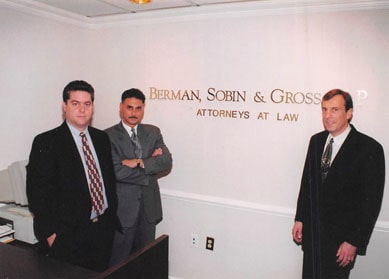
Berman | Sobin | Gross LLP is Maryland’s largest workers’ compensation law firm representing injured workers. Our offices serve clients throughout Baltimore County and across the state, and our attorneys have handled the full range of electrical trade injury claims, from single-incident traumatic injuries to complex occupational disease cases with decades of exposure history. One of our firm’s founders wrote the definitive treatise on Maryland workers’ compensation law, and our attorneys have appeared before both of Maryland’s highest appellate courts on workers’ compensation matters. If you are an electrician in Essex who has been hurt on the job and you want attorneys who know this area of law from the ground up, contact Berman | Sobin | Gross LLP for a confidential case analysis.
As an Essex electrician injury lawyer, Berman | Sobin | Gross LLP works with clients throughout the claims process, from the initial filing through Commission hearings and, when the case demands it, through circuit court and beyond. You will work with one attorney who stays with you throughout your case and who can answer your questions directly. Reach out today to talk through what happened and what your claim may be worth.