

Ellicott City Retail Worker Injury Attorney
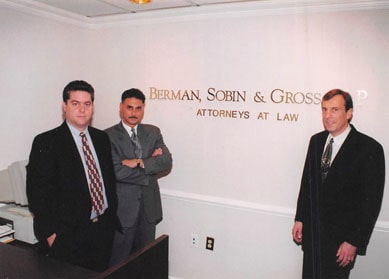
Retail work in Howard County looks manageable from the outside. Shelves get stocked, registers get run, deliveries get unloaded. What that picture leaves out is the physical reality of the job: hours on hard floors, repetitive lifting, crowded stockrooms, loading docks shared with forklifts, and the constant pressure to move fast. When something goes wrong in that environment, the injury can be serious and the road back to work can be longer than anyone expected. Workers at Ellicott City shopping centers, big-box stores, and strip mall businesses who are hurt on the job have legal rights under Maryland’s workers’ compensation system, and getting those rights enforced often requires knowing where the obstacles are before you hit them. The attorneys at Berman | Sobin | Gross LLP have spent 35 years representing Maryland workers through exactly this kind of case, and they understand what retail workers face when they file a claim.
What Retail Work in Ellicott City Actually Looks Like From a Injury Standpoint
The Route 40 corridor, the Long Gate and Snowden River areas, the Columbia Pike commercial strips, the retailers clustered near Maryland Route 103, these are not light-traffic workplaces. Retail workers in these stores handle significant physical demands every shift. A warehouse associate pulling pallets at a home improvement store off Route 40 is not doing the same job as someone at an office desk, and the injury profile reflects that difference.
Back injuries from repetitive lifting or a single overexertion event are the most common claims, but retail workers also deal with knee and ankle injuries from falls on wet tile or uneven flooring, shoulder injuries from overhead stocking, and cumulative trauma conditions like carpal tunnel syndrome from scanning and bagging thousands of items per shift. Slips in loading areas, cuts from box cutters and broken merchandise, and injuries from falling product are all regular occurrences that generate legitimate workers’ compensation claims.
What makes retail worker injuries sometimes more complicated than they look is the involvement of part-time status, scheduling across multiple locations within the same employer, and the fact that cumulative injuries develop over time rather than in a single dramatic event. Maryland workers’ compensation law covers all of these scenarios, but insurers sometimes dispute claims where the injury does not fit the classic “one incident, one date, one diagnosis” mold.
When Retail Employers and Insurers Push Back on Claims
A retail worker who reports a back injury after years of lifting and is told the injury is “pre-existing” or “not work-related” is encountering one of the most common resistance strategies in occupational injury claims. The same applies to someone whose carpal tunnel developed gradually over months of repetitive work and who struggles to point to a single day it started. Maryland law does provide coverage for occupational diseases and cumulative injuries, not only sudden traumatic accidents. But making that case often requires medical documentation and, in some situations, expert testimony about how the work actually caused or significantly aggravated the condition.
Retailers also employ large numbers of part-time workers, seasonal workers, and workers who have been on the job for a short time. None of those factors disqualify someone from workers’ compensation. Maryland law does not require a minimum employment period or a minimum number of hours worked per week for coverage to apply. If you were employed when the injury occurred, you are generally covered.
Another pressure point in retail injury cases is the return-to-work process. An employer may attempt to offer light duty that does not actually fit the worker’s medical restrictions, or push for a faster return than the treating physician recommends. How those situations are handled can affect both your medical recovery and the compensation you are entitled to receive for temporary disability.
The Layers of a Retail Injury Claim Worth Understanding
Maryland workers’ compensation covers medical expenses and, when the injury prevents you from working, a portion of your lost wages through temporary total or temporary partial disability benefits. If the injury leaves a lasting impairment, there is also the possibility of a permanent partial disability award once your condition reaches maximum medical improvement. In cases of catastrophic injury, permanent total disability benefits may apply.
For retail workers who are on their feet all day or who rely on their physical capacity to do their jobs, a permanent impairment rating is not an abstract calculation. It has real consequences for how long you can stay in your trade, whether you need vocational retraining, and what financial support you can expect going forward. Maryland law provides a framework for all of these outcomes, but arriving at the right result requires presenting the medical evidence correctly and understanding how the Workers’ Compensation Commission evaluates permanent impairment.
There are also situations where a third party bears responsibility for a retail worker’s injury alongside the workers’ compensation system. A delivery driver injured by a negligent motorist on the way to a store, a worker hurt by defective equipment manufactured by a third party, or a worker injured on property maintained by a company separate from their employer may have claims outside the workers’ compensation system that run concurrent with the comp claim. Identifying whether those additional avenues exist requires looking at the full picture of how the injury happened, not just the employer-employee relationship.
Questions Retail Workers in Ellicott City Frequently Ask
I work part-time at a retail store. Am I covered by workers’ compensation if I get hurt?
Yes. Maryland workers’ compensation coverage is not limited to full-time employees. Part-time workers, seasonal employees, and workers who were recently hired are all generally covered as long as they were employees of the business at the time of the injury.
My injury developed over time from repetitive work. Can I still file a claim?
Cumulative trauma injuries and occupational conditions are covered under Maryland law. The filing process is somewhat different from a sudden-accident claim, and documenting the connection between your work activities and the diagnosed condition becomes more important, but you are not disqualified simply because the injury developed gradually.
My employer is pressuring me to return to work before my doctor says I’m ready. What are my options?
Your treating physician’s medical restrictions are meaningful in a workers’ compensation context. An employer who offers light duty that exceeds those restrictions, or who pressures a return before restrictions are lifted, is creating a situation that an attorney should evaluate. How the return-to-work process unfolds can affect your ongoing benefits and your overall claim.
The insurer had their own doctor examine me, and his opinion was different from my treating physician’s. Which one matters?
Both opinions will be presented and weighed, but they are not automatically equal. The Workers’ Compensation Commission evaluates the credibility and basis of conflicting medical opinions. Having strong documentation from your own treating physician, and in some cases an independent medical expert, is often essential to countering an insurer’s medical evidence.
I was hurt by a piece of equipment at the store, not by any negligence of my own. Does that matter?
Maryland workers’ compensation is a no-fault system, so your own conduct generally does not prevent you from receiving benefits. Whether the equipment manufacturer could bear separate liability is a different question that may warrant its own analysis depending on the circumstances of the injury.
How long do I have to file a workers’ compensation claim after a retail job injury?
Maryland law imposes specific deadlines on workers’ compensation claims. Missing those deadlines can seriously compromise your ability to recover benefits. Consulting with an attorney as soon as possible after the injury is the straightforward way to make sure you do not run into that problem.
What if my employer tells me not to report the injury or suggests it won’t be covered?
An employer’s characterization of what is covered does not control the outcome of a workers’ compensation claim. That determination belongs to the Maryland Workers’ Compensation Commission. A retail worker who is discouraged from reporting should speak with an attorney independently before accepting any assurances from the employer or its insurer.
Reaching the Right Legal Support for a Retail Injury in Howard County
Berman | Sobin | Gross LLP is the largest workers’ compensation law firm in Maryland representing injured workers, with offices across the state and attorneys who have handled tens of thousands of hearings, hundreds of jury trials, and appeals before Maryland’s highest courts. One of the firm’s founders authored a two-volume treatise that remains the definitive reference on workers’ compensation in Maryland. That depth of knowledge matters in retail worker cases because the issues that arise, cumulative trauma, disputed causation, return-to-work pressure, insurer-selected medical examinations, are not simple, and the way they get resolved depends on how well the case is built and presented. If another attorney has turned down your case or declined to take it past an initial hearing, the attorneys at Berman | Sobin | Gross LLP will evaluate what you have and give you an honest assessment. For an Ellicott City retail worker injury attorney, contact Berman | Sobin | Gross LLP to speak with someone about what your claim involves and how to move it forward.