

Ellicott City Postal Worker Injury Attorney
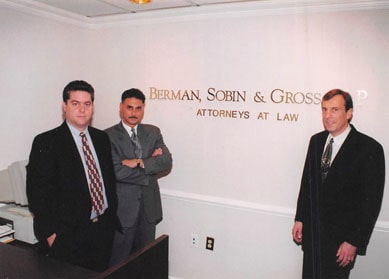
Postal workers in Ellicott City put in long hours on routes that wind through some of Howard County’s busiest neighborhoods and commercial corridors. The physical demands of the job are relentless: walking miles daily, lifting heavy parcels, operating vehicles on congested roads, and working in weather that does not accommodate a sick day. When something goes wrong, the path to compensation does not run through Maryland’s standard workers’ compensation system. It runs through federal law, and that distinction changes nearly everything about how an injured postal worker needs to proceed. The attorneys at Berman | Sobin | Gross LLP have spent 35 years representing Maryland workers in complex injury claims, and they understand the specific framework that governs injuries suffered by federal postal employees.
Why the Federal Employees’ Compensation Act Governs Your Claim
United States Postal Service workers are federal employees. That status means Maryland’s workers’ compensation statutes, administered by the Maryland Workers’ Compensation Commission, do not apply to your injury. Instead, your claim is governed by the Federal Employees’ Compensation Act, commonly known as FECA, which is administered by the Office of Workers’ Compensation Programs within the U.S. Department of Labor.
This is not a technical footnote. It is a structural difference that affects which deadlines apply, which forms must be filed, who reviews your claim, how medical treatment gets authorized, and what categories of compensation are available. FECA has its own rules for wage-loss compensation, schedule awards for permanent impairment, vocational rehabilitation, and continuation of pay. A claim that might be straightforward under Maryland’s system can become complicated under FECA if the initial filing is mishandled or if the agency’s physicians dispute the connection between your injury and your job duties.
Injured postal workers in Ellicott City frequently discover this difference the hard way. They assume that a supervisor’s report or a visit to urgent care sets everything in motion. In reality, the burden falls on the injured worker to establish a formal record, submit the right documentation in the right timeframes, and respond effectively if the claim is challenged. Having legal representation that understands FECA from the outset is not a luxury. It is often the difference between a successful claim and a prolonged dispute.
The Injuries Postal Workers in Howard County Actually Sustain
Howard County’s mix of suburban neighborhoods, dense Route 40 commercial strips, and older residential streets creates a specific injury environment for local letter carriers and parcel delivery workers. Dog attacks remain one of the most frequently reported injuries among postal workers nationwide, and routes in Ellicott City’s residential communities are no exception. Bites can cause serious soft tissue damage, nerve injuries, and infections that require extended medical treatment and time away from work.
Repetitive stress injuries accumulate over careers spent carrying mail satchels on one shoulder, sorting packages in confined spaces, or gripping steering wheels for hours on routes with frequent stops. Conditions like carpal tunnel syndrome, rotator cuff tears, and lumbar disc problems often develop gradually. Under FECA, occupational disease claims arising from repetitive work require clear documentation linking the condition to the specific duties of the position, which is why the medical evidence piece of these cases demands careful attention.
Slip and fall accidents on icy walkways during Maryland winters, vehicle accidents while driving postal trucks through Ellicott City traffic, and injuries from malfunctioning postal equipment all generate FECA claims regularly. Each injury type has its own evidentiary considerations, its own challenges at the Office of Workers’ Compensation Programs, and its own range of potential outcomes.
What Happens When the OWCP Denies or Disputes a Claim
A denial from the Office of Workers’ Compensation Programs is not the end of the road, but many postal workers treat it that way. The OWCP has a defined reconsideration and appeals process, and there are additional layers of review available through the Employees’ Compensation Appeals Board. These administrative avenues have their own procedural requirements, and the window to respond is often narrower than injured workers expect.
Disputes frequently arise when the OWCP’s medical examination produces a different conclusion than the treating physician’s findings. The agency may argue that the injury was not caused by employment duties, that the worker has reached maximum medical improvement, or that the claimed wage loss exceeds what the records support. Each of these challenges requires a substantive response, often built around independent medical evidence, vocational assessments, and a clear record of the claimant’s work history and job demands.
Berman | Sobin | Gross LLP has handled cases that other attorneys declined to pursue and has taken difficult workers’ compensation matters beyond administrative hearings when the evidence and the law supported doing so. That same commitment to working through a full appellate process applies to FECA claims when the facts warrant it. The firm has argued before Maryland’s highest courts in workers’ compensation appeals and brings that depth of litigation experience to complex federal employment injury matters.
Questions Postal Workers in Ellicott City Often Ask About Injury Claims
I reported my injury to my supervisor. Is that enough to start my FECA claim?
Reporting to a supervisor documents that an incident occurred, but it does not substitute for filing a formal claim with the Office of Workers’ Compensation Programs. You will need to submit the appropriate FECA claim forms depending on whether your injury was traumatic or resulted from an occupational disease. The deadlines for formal filing are distinct from internal postal service reporting requirements, and missing them can jeopardize your claim.
What is continuation of pay and am I automatically entitled to it?
Continuation of pay allows federal employees, including postal workers, to receive their full salary for up to 45 calendar days following a traumatic injury without using sick or annual leave. It is not automatic. The USPS can controvert continuation of pay under certain circumstances, and the employee may need to contest a controversion. Understanding this process early matters because losing continuation of pay can create immediate financial pressure on injured workers and their families.
Can I choose my own doctor for treatment under FECA?
FECA does allow injured workers to select their own treating physician, but there are rules about how treatment is authorized and paid. The OWCP must authorize ongoing care, and using non-authorized providers can result in the agency refusing to cover medical costs. This creates a tension between the worker’s right to choose their doctor and the agency’s control over the treatment process that often needs active management.
My injury happened over years of repetitive work, not one single incident. Can I still file a claim?
Yes. FECA covers occupational diseases and conditions caused by the nature of federal employment, not just traumatic accidents. However, occupational disease claims are typically scrutinized more heavily because they require medical evidence clearly connecting the condition to the specific physical demands of the job. Documentation of work duties, medical history, and the timeline of symptom development all become important parts of building that connection.
I was injured in a vehicle accident while driving a postal truck. Does FECA cover that, or is there a separate claim against another driver?
FECA covers you regardless of how the work-related injury occurred. If another driver was at fault, you may also have a third-party personal injury claim against that driver. Berman | Sobin | Gross LLP handles both workers’ compensation and personal injury matters, so the firm can assess whether a third-party claim exists alongside your federal employment injury claim and how to pursue both appropriately.
What if the OWCP says I can return to a different type of work even though I cannot do my postal job anymore?
The OWCP may determine that a claimant is capable of performing different work and reduce or terminate wage-loss benefits on that basis. This often happens through a formal vocational rehabilitation process. These determinations can be contested, and the medical and vocational evidence supporting the agency’s position can be challenged. How this plays out depends heavily on the specifics of the claimant’s injury, work history, and the strength of the medical record.
How long do FECA claims take to resolve?
There is no single answer. A straightforward traumatic injury claim with clear documentation and no medical dispute may proceed relatively quickly. Claims involving occupational disease, OWCP denials, or appeals before the Employees’ Compensation Appeals Board can extend for considerably longer. Having legal representation helps move the process forward by ensuring that required documentation is submitted correctly and that responses to the agency are handled promptly and substantively.
Legal Representation for Ellicott City Postal Employees Ready to Pursue What They Are Owed
Berman | Sobin | Gross LLP has been the largest workers’ compensation law firm in Maryland representing injured workers for 35 years. The firm serves clients across Howard County and throughout the state from offices in Lutherville, Baltimore, Gaithersburg, and Frederick. One of the firm’s founders authored the definitive legal treatise on Maryland workers’ compensation, and the firm has shaped the law through appellate victories that changed how benefits are calculated and awarded for working people across the state. For postal workers in Ellicott City dealing with a federal employment injury claim, that depth of experience translates directly into representation that takes the claim seriously from the first filing through any challenge the OWCP may raise. Contact Berman | Sobin | Gross LLP to discuss your situation with an attorney who works on these cases and can tell you honestly where your claim stands.