

Ellicott City Healthcare Worker Injury Attorney
Healthcare workers in Ellicott City and the surrounding Howard County area face physical demands that most people outside the profession rarely consider. Lifting and repositioning patients, working through overnight shifts in facilities that stay operational around the clock, handling needles and biohazardous materials, managing aggressive or confused patients during crises: these are the daily realities of hospital staff, home health aides, nursing home workers, paramedics, and medical technicians. When those realities produce a serious injury, the workers’ compensation system in Maryland becomes the arena where the outcome of a worker’s financial and physical recovery gets decided. The attorneys at Berman | Sobin | Gross LLP have spent 35 years representing the workers who keep Maryland’s healthcare infrastructure functioning, and they understand what it takes to build and pursue a claim in this specific occupational context.
What Drives Injury Claims Among Ellicott City’s Healthcare Workforce
Howard County’s healthcare sector is substantial. Facilities along Route 40, the medical offices clustered near Dobbin Road, and the long-term care and assisted living campuses spread throughout the Ellicott City and Columbia corridor collectively employ thousands of workers in direct patient care. That concentration of healthcare employment means Howard County sees a steady volume of workplace injury claims rooted in conditions that are specific to the industry.
Musculoskeletal injuries dominate the landscape. Safe patient handling has improved in some facilities, but nurses, aides, and orderlies still sustain back, shoulder, and knee injuries from transferring patients who cannot bear their own weight. These injuries often do not announce themselves through a single dramatic incident. Instead, they accumulate, appearing first as soreness or reduced range of motion and worsening over months of continued physical demand. That gradual onset creates complications under Maryland workers’ compensation law, because an employer or insurer may dispute whether the injury is occupational in origin or whether it predates employment.
Needlestick injuries and bloodborne pathogen exposures introduce a different category of claim, one that involves potential long-term health monitoring and treatment. Home health aides working throughout Ellicott City’s residential neighborhoods face additional hazards specific to in-home environments: staircases in older homes, unpredictable patients, and the absence of the equipment infrastructure that a hospital floor provides. EMTs and paramedics responding to calls in Howard County operate in circumstances where the risk of physical confrontation, exposure to communicable illness, and musculoskeletal strain from field operations are all elevated.
How Employer and Insurer Responses Shape These Claims
Healthcare employers in Maryland range from large hospital systems with in-house risk management departments to smaller assisted living operators whose approach to claims may be less systematic but no less adversarial. In either case, a healthcare worker who files a workers’ compensation claim should expect that the employer’s insurer will examine the claim critically, particularly when the injury involves a body part with any prior history of treatment or when the onset was gradual rather than tied to a specific accident date.
Insurers in these cases frequently retain their own medical experts to evaluate whether an injury is work-related. The legal standards governing when an employer’s medical expert may testify have been shaped significantly by decisions from Maryland’s highest courts. Berman | Sobin | Gross LLP has litigated those standards directly, including obtaining an appellate ruling that prevents employers from offering expert testimony designed to undermine the legally recognized presumption that certain occupational diseases are job-related. For healthcare workers whose conditions develop over time rather than from a single event, that kind of litigated expertise matters.
When a healthcare employer maintains a light duty program and assigns an injured worker to modified tasks, questions arise about wage differential benefits, overtime calculations, and whether the offered work is actually within the worker’s restrictions. Maryland appellate precedent that Berman | Sobin | Gross LLP helped establish addresses these wage issues directly, confirming that workers who had been earning overtime prior to an injury can still recover compensation for the loss of those earnings even when receiving full base salary on light duty. Healthcare workers who regularly rely on overtime pay to support their families are precisely the group this ruling was designed to protect.
Occupational Illness and Exposure Claims in Healthcare Settings
Not every workers’ compensation claim in the healthcare field involves a discrete physical injury. A nurse who develops a latex allergy from years of glove use, a respiratory technician who sustains lung damage from chemical exposure, a healthcare worker who contracts a serious illness following a documented patient exposure: these are occupational disease claims, and they operate under different procedural rules and filing requirements than traumatic injury claims.
Maryland’s workers’ compensation statute has specific provisions governing occupational diseases, and the deadlines for filing those claims do not necessarily run from the date of first exposure. Understanding when a claim accrues under the occupational disease framework requires careful analysis of when the worker knew or should have known that the condition was work-related. Missing that window because a worker assumed their condition was unrelated to employment is one of the more preventable outcomes in this area of practice, but only if the worker consults with someone who can evaluate the facts before the filing period closes.
Ellicott City healthcare worker injury claims that involve occupational illness also sometimes implicate the question of which employer or insurer is responsible when a worker has been employed at multiple facilities over a period of years. That apportionment question requires legal analysis that goes beyond the initial claim filing.
Questions Healthcare Workers in Howard County Frequently Ask
Does it matter that my injury built up gradually rather than happening in one accident?
Gradual onset injuries are compensable under Maryland workers’ compensation law, but they require a clearer medical record establishing the connection between work conditions and the resulting condition. An insurer is more likely to dispute causation in these claims, which is why documenting symptoms with your employer and seeking prompt medical evaluation matters from the earliest stages.
My employer offered me light duty work. Do I still have a claim?
Accepting light duty does not end your workers’ compensation claim. You may still be entitled to wage differential benefits if the modified position pays less than your pre-injury earnings, and you remain entitled to medical benefits for your ongoing treatment. If your pre-injury income included regular overtime, that history is relevant to your wage loss calculation.
I work for a home health agency and was injured at a patient’s home. Is that still covered?
Workers’ compensation coverage in Maryland extends to injuries that occur in the course of employment, which includes work performed at a patient’s home. The fact that the injury happened off-site does not remove it from coverage. The relevant question is whether you were performing work duties at the time.
The workers’ compensation insurer sent me to their doctor. Do I have to accept that doctor’s conclusions?
No. You have the right to present independent medical evidence, and a determination by the employer’s physician that your condition is not work-related or that you have reached maximum medical improvement is not the final word. These disputes are regularly adjudicated before the Maryland Workers’ Compensation Commission.
What if I was injured because of inadequate staffing or a lack of proper lifting equipment?
Workers’ compensation operates on a no-fault basis in Maryland, so you do not need to prove employer negligence to receive benefits. Whether the employer provided adequate resources is a separate question from your entitlement to compensation. However, if a third party, such as a faulty piece of medical equipment, contributed to your injury, there may be additional civil claims available outside of the workers’ compensation system.
Are mental health conditions that develop from workplace stress covered?
Maryland recognizes certain occupational mental health conditions under workers’ compensation, but these claims face higher legal thresholds than physical injuries. The standard of proof and the circumstances under which a mental health claim is compensable are more demanding, and the analysis depends significantly on the facts of the individual situation.
How long does a healthcare worker injury claim typically take to resolve?
There is no uniform timeline. Claims that are accepted by the insurer and involve clear treatment plans may resolve within months. Claims involving disputed causation, serious permanent injuries, or extensive medical treatment can take considerably longer, particularly if they proceed through Commission hearings, circuit court appeals, or both.
Working With Attorneys Who Have Taken These Cases to Maryland’s Highest Courts
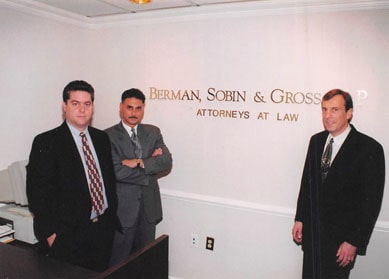
Berman | Sobin | Gross LLP is the largest workers’ compensation firm in Maryland representing injured workers. The firm has offices in Lutherville, Baltimore, Gaithersburg, and Frederick, which means Howard County healthcare workers have access to attorneys who know the Maryland Workers’ Compensation Commission and the circuit courts where claims are appealed. The firm’s attorneys have not only handled tens of thousands of Commission hearings, but have also tried hundreds of jury trials and argued before both of Maryland’s appellate courts. For a healthcare worker whose claim has been denied or underpaid, that depth of litigation experience is not incidental. It is the reason challenging claims get taken seriously from the outset. The firm has Spanish-speaking attorneys and staff available for clients who prefer to work in Spanish, reflecting the diverse workforce that Maryland’s healthcare industry employs.
If your workers’ compensation claim has been disputed, if a prior attorney declined to pursue it beyond an administrative hearing, or if you simply need a clear assessment of where you stand, contact Berman | Sobin | Gross LLP to speak with a Howard County healthcare worker injury attorney who will evaluate your claim and give you a direct answer about your options.