
Easton Motorcycle Accident Attorney
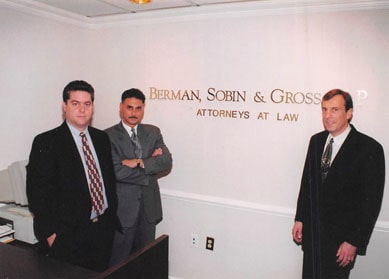
Motorcycle crashes on the Eastern Shore leave riders with injuries that are categorically different from what most car accident victims face. Broken bones, road rash, traumatic brain injuries, and spinal damage are not unusual outcomes when a motorcyclist is struck or forced off the road. The insurance dynamics are different too. Adjusters know that juries sometimes hold unconscious biases against riders, and they adjust their settlement offers accordingly. Riders in Talbot County and the surrounding Eastern Shore communities deserve legal representation that understands both the physical toll of these crashes and the tactics used to minimize what injured riders recover. The attorneys at Berman | Sobin | Gross LLP have spent 35 years handling the hard cases that other firms turn away, and that experience extends to motorcycle injury claims throughout Maryland.
What Actually Causes Serious Motorcycle Crashes in and Around Easton
Route 50, which runs directly through Easton and connects the Eastern Shore to the Bay Bridge, sees heavy commuter and tourist traffic throughout the year. The mix of tractor-trailers heading to and from the shore, passenger vehicles making sudden lane changes, and drivers distracted by the scenery creates real hazards for motorcyclists. Left-turn collisions are among the most common crash patterns, where a driver misjudges a rider’s speed or simply fails to see them and cuts across the lane.
Route 322 and the rural county roads connecting Talbot County to Caroline, Queen Anne’s, and Dorchester counties present different challenges. Loose gravel at intersections, unmarked road surface changes, and deer crossings all factor into crashes that initially look like single-vehicle incidents. A single-vehicle crash is not automatically the rider’s fault. When road conditions contributed, the entity responsible for maintenance may share liability.
Rear-end crashes in stop-and-go traffic on Washington Street and around the Route 50 corridor near the Easton Marketplace are more common than people expect. A distracted driver who does not brake in time creates catastrophic consequences for the motorcyclist stopped ahead of them.
The Gap Between What Insurers Offer Motorcyclists and What Cases Are Actually Worth
Insurance companies that handle motorcycle claims operate from a calculated position. They know that some jurors arrive with the assumption that a rider somehow contributed to their own crash, and they use that assumption as leverage in negotiations. Offers made in the weeks immediately after a crash often arrive before the full scope of injuries is understood, before surgery is completed, and long before anyone knows what lasting impairment will look like.
Medical expenses for serious motorcycle injuries accumulate quickly. Emergency transport, trauma center care, orthopedic surgery, neurological evaluation, rehabilitation, and ongoing therapy all factor into the actual cost of recovery. Lost income matters too, especially for riders whose physical work makes returning to the same job uncertain or impossible while injuries heal. A settlement that closes the case before those numbers are clear leaves riders without recourse when future medical costs arrive.
Maryland’s contributory negligence rule adds another layer of complexity. Under this rule, a plaintiff who bears any percentage of fault for a crash is barred from recovering damages entirely. Insurers use this rule aggressively in motorcycle cases, looking for any basis to assign some portion of blame to the rider. Speed, lane positioning, gear choices, and visibility all become points of dispute. Having counsel who understands how Maryland courts apply contributory negligence in motorcycle cases is not optional. It is central to whether a claim survives at all.
Proving Liability When the At-Fault Driver Disputes the Facts
Motorcycle crashes are frequently disputed more intensely than comparable car accidents. Without a vehicle surrounding the rider, physical evidence is concentrated on the road surface, the motorcycle itself, and the clothing the rider was wearing. Skid marks, gouge marks, final rest positions, and damage patterns on both vehicles tell a story that can corroborate or contradict what the at-fault driver reports to their insurer.
Witness statements are critical and must be gathered quickly. Bystanders move on, memories fade, and surveillance footage from nearby businesses or traffic cameras gets overwritten. The physical evidence degrades or disappears. These are not abstract concerns. They are practical realities that shape what can be proven months later when a case reaches the point of formal dispute.
When crashes involve road defects, vehicle mechanical failures, or negligent entrustment by employers whose employees were driving company vehicles, the liable parties expand beyond the obvious driver. Investigating and preserving claims against those parties requires moving promptly. At Berman | Sobin | Gross LLP, our attorneys take on the challenging cases that require this kind of multi-party analysis, including those that other firms have declined to pursue past an initial evaluation.
Questions Riders Ask After a Motorcycle Crash on the Eastern Shore
Do I have a claim if I was not wearing a helmet?
Maryland requires helmet use, and not wearing one may be raised by the defense in a contributory negligence argument. However, the absence of a helmet is most relevant to head injuries specifically, not to the overall crash liability. Whether that argument succeeds, and how much weight it actually carries in your case, depends on the specific circumstances. An attorney can assess how this issue affects your particular claim.
The other driver’s insurer contacted me right away. Should I speak with them?
You are not required to give a recorded statement to the at-fault driver’s insurance company, and doing so before speaking with an attorney carries real risk. Adjusters ask questions designed to produce answers they can use later to limit or deny your claim. Your own insurer is different, and your policy may require cooperation with them. Before speaking with anyone, it is worth at least a brief consultation to understand which conversations are required and which are not.
What if the other driver claims I came out of nowhere?
This is one of the most common defenses raised in motorcycle crash cases. It is not a legal defense. Drivers have a duty to see what is on the road around them. The argument can still be used to push contributory negligence claims, which is why evidence preservation and eyewitness accounts matter so much in the early stages. Physical evidence, including traffic camera footage if it exists, can directly counter this narrative.
How long do I have to file a motorcycle accident claim in Maryland?
Maryland’s statute of limitations for personal injury claims is generally three years from the date of the crash. Claims involving government vehicles or road maintenance failures may have much shorter notice requirements. Waiting to consult an attorney until that window is nearly closed limits the investigation and preparation work that can be done on your behalf.
What if I can return to work, but not to the same type of job I had before?
Lost earning capacity is a distinct category of damages from lost wages. If a motorcycle crash leaves you able to work, but unable to perform the type of work you were doing before, the long-term income difference is a recoverable loss. Demonstrating that difference requires documentation of your prior earnings, your current limitations, and what the medical evidence shows about how permanent those limitations are likely to be.
Can I still recover damages if the crash was partly my fault?
Maryland’s contributory negligence standard is among the strictest in the country. If any portion of fault is assigned to you, recovery is barred. This is why how fault is framed and defended matters so much before a settlement is agreed to or a case proceeds to trial. The threshold question is whether liability can be established cleanly in your favor, and that analysis is worth doing before any decisions are made.
What types of damages can a motorcycle accident claim include?
A claim may include current and future medical expenses, lost income during recovery, lost earning capacity for long-term impairments, property damage to the motorcycle and gear, and non-economic damages such as pain, suffering, and the loss of activities that were part of your life before the crash. In cases involving particularly reckless conduct, punitive damages may also be available, though they require meeting a higher standard of proof.
Talk to an Easton Motorcycle Crash Lawyer Before Making Decisions
Berman | Sobin | Gross LLP is Maryland’s largest law firm representing injured workers and accident victims, with offices in Lutherville, Baltimore, Gaithersburg, and Frederick and the ability to serve clients throughout the state, including Talbot County and the broader Eastern Shore. Our attorneys have handled hundreds of jury trials and appeals before both of Maryland’s highest courts, and one of our founding attorneys literally wrote the two-volume treatise that serves as the authoritative reference on Maryland injury law. For anyone involved in a motorcycle crash near Easton, consulting with an attorney before speaking further with insurers or accepting any offer is the most consequential step you can take. Contact Berman | Sobin | Gross LLP to have your case evaluated by an Easton motorcycle accident lawyer who will give you a clear-eyed assessment of what your claim is actually worth and what it will take to pursue it.