

Dundalk Landscaping Worker Injury Attorney
Landscaping work is physically demanding under any conditions, and in Dundalk’s mix of residential neighborhoods, commercial corridors, and industrial-adjacent properties, the hazards multiply quickly. Workers operating mowers, trimmers, chippers, and hauling equipment face real exposure to crush injuries, lacerations, heat illness, and equipment-related trauma every shift. When those injuries happen, the workers’ compensation system in Maryland is supposed to provide a path to medical treatment and wage replacement, but that path is rarely straightforward. A Dundalk landscaping worker injury attorney at Berman Sobin Gross LLP can help injured workers understand what they are actually entitled to and pursue it effectively.
What Makes Landscaping Injuries Different in a Workers’ Comp Claim
Not all workers’ compensation claims present the same challenges. Landscaping work creates a specific category of complications that can affect whether a claim is accepted, how benefits are calculated, and how long treatment continues.
Landscaping crews frequently move between multiple job sites in a single day. When an injury occurs away from a fixed workplace, some employers argue the circumstances fall outside covered employment. Maryland law governs how these situations are analyzed, and the location of the injury at the time of the incident, the nature of the task being performed, and the degree of employer control over the work all factor into the determination. Workers who are hurt while driving between properties, loading equipment, or working at a client’s home or business are often entitled to benefits even if their employer disputes it.
Many landscaping companies rely heavily on seasonal or part-time workers, and some misclassify employees as independent contractors to avoid carrying workers’ compensation insurance. This is one of the more common disputes in landscaping injury cases. Maryland law defines who qualifies as an employee for workers’ compensation purposes based on how the work relationship actually functions, not solely on what a contract says. Workers who have been told they are contractors but who work under a company’s direction, use company equipment, and follow set schedules may well qualify as employees under Maryland’s standards.
Finally, landscaping injuries often involve equipment manufactured by third parties. A defective blade guard, a chipper with a faulty safety mechanism, or a riding mower with a known design problem can create a separate product liability claim alongside a workers’ comp filing. These parallel claims are worth exploring because they can recover damages, including pain and suffering, that workers’ compensation alone does not provide.
The Types of Injuries That Generate Complex Claims in This Industry
Back and spine injuries are common in landscaping work due to the combination of heavy lifting, repetitive bending, and operating equipment that vibrates through the operator’s body over long shifts. These injuries are frequently contested by employers and insurers because they can develop gradually and are not tied to a single, documented incident. Maryland workers’ compensation covers both acute traumatic injuries and conditions that develop over time as a result of work activities, but gradual-onset claims require documentation connecting the condition to specific job duties.
Hand and finger amputations and crush injuries happen with regularity in this industry. Trimming equipment, chippers, and mowers operate at speeds and force levels that allow very little margin for error. These injuries often require surgery, extended rehabilitation, and in some cases result in permanent impairment ratings that affect long-term benefits. Maryland’s workers’ compensation system provides permanent partial disability benefits calculated in part based on those impairment ratings, and how those evaluations are conducted and by whom matters significantly to the outcome.
Heat-related illness is a serious and sometimes fatal risk for outdoor workers, particularly during Maryland summers. Dundalk’s climate produces periods of high heat and humidity that create genuine physiological danger for workers who spend full days outdoors. If an employer fails to provide adequate breaks, hydration, or shade, and a worker suffers heat stroke or a related condition, that illness qualifies as a compensable occupational condition under Maryland law.
Pesticide and herbicide exposure raises a different category of claim. Workers who apply chemicals without adequate protective equipment, or who are not properly informed of the substances they are handling, may develop respiratory conditions, skin disorders, or longer-term systemic health problems. These claims can be more complex to connect to occupational exposure, but they are not outside the scope of Maryland workers’ compensation when the connection between work duties and the condition can be established.
Questions Dundalk Landscaping Workers Ask About Their Claims
My employer says I am a contractor, not an employee. Does that mean I cannot file a workers’ comp claim?
Not necessarily. Maryland law looks at how the working relationship actually operates, not just what it is labeled on paper. Factors like whether the company controls how and when you work, whether you use their equipment, and whether you work exclusively or primarily for them can support an employee classification regardless of what any contract says. This is a fact-specific determination, and it is worth having your situation evaluated before accepting that you have no recourse.
The injury happened at a customer’s property, not at my employer’s yard. Does that affect my claim?
It should not. Maryland workers’ compensation covers injuries that arise out of and in the course of employment, which includes work performed at a client’s location. The question is whether you were doing something your employer directed you to do at the time of the injury, not whether you were at a company-owned property. Off-site injuries are covered in the vast majority of landscaping work situations.
My employer’s insurance company sent me to their doctor. Do I have to keep treating with that doctor?
Maryland’s workers’ compensation process involves specific rules about medical treatment authorization and provider selection. The insurer does have rights in this process, but those rights are not unlimited. If the treating physician’s conclusions seem inconsistent with your actual condition, or if you are being pushed toward a quick discharge or low impairment rating, these are concerns worth discussing with an attorney.
I was injured months ago and my benefits were recently cut off. What can I do?
Benefit terminations can be challenged before the Maryland Workers’ Compensation Commission. There are filing deadlines that apply to these disputes, so acting promptly matters. The grounds for termination and the medical evidence supporting your continued disability both factor into how these challenges are handled.
Can I receive workers’ comp and also sue the company that made the defective equipment that hurt me?
Yes. Workers’ compensation and a third-party product liability claim are legally separate. If your injury was caused or worsened by defective equipment, you can pursue the equipment manufacturer through civil litigation without forfeiting your workers’ compensation benefits. These parallel claims require coordinated handling, but they are commonly pursued together.
What if my employer doesn’t have workers’ compensation insurance?
Maryland has mechanisms for injured workers whose employers are uninsured, including the Uninsured Employers’ Fund. Additionally, an employer who operates without required coverage may face individual liability. Being uninsured does not leave an injured worker without options, though pursuing those options requires navigating a different process than a standard claim.
How long does a landscaping injury claim typically take to resolve in Maryland?
Timeline varies significantly based on the severity of the injury, whether the employer disputes the claim, and how long medical treatment continues. Straightforward claims with clear liability and limited injuries can resolve in months. Claims involving permanent disability, ongoing treatment disputes, or employer-insurer resistance can take considerably longer, particularly if they require hearings before the Commission or appeals into the courts.
How Berman Sobin Gross LLP Approaches These Cases
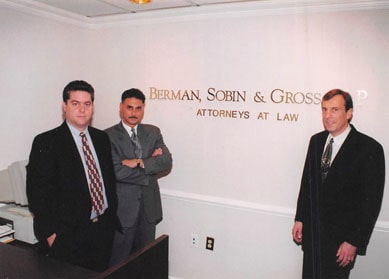
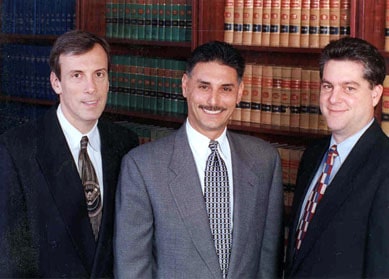
Berman Sobin Gross LLP has spent 35 years representing injured workers throughout Maryland, growing from a three-attorney firm to more than 20 attorneys with offices across the state. The firm represents workers across many industries, including the outdoor labor and construction-adjacent workforce that makes up a significant portion of Dundalk’s employment base. The firm’s attorneys have handled thousands of workers’ compensation hearings and hundreds of jury trials, and they have argued cases before both of Maryland’s highest appellate courts, including cases that changed the law for injured workers across the state.
One of the firm’s founders authored a two-volume legal treatise on Maryland workers’ compensation that practitioners across the state continue to use as a primary reference. That depth of understanding is applied directly to client cases. When insurers dispute claims, minimize injuries, or misclassify employment relationships, the attorneys at Berman Sobin Gross LLP know the law well enough to push back effectively. The firm also has Spanish-speaking attorneys and staff, which matters in an industry where a substantial portion of the workforce communicates primarily in Spanish.
Clients at this firm work with one attorney throughout their case, rather than being handed off between staff members. That continuity matters when a claim becomes complicated and decisions need to be made quickly based on a complete understanding of the file.
Talking to a Dundalk Landscaping Injury Lawyer at No Cost
Workers injured in the landscaping industry around Dundalk deserve a clear-eyed assessment of what their claim is actually worth and what obstacles are likely to arise. The attorneys at Berman Sobin Gross LLP offer confidential case evaluations without charge, and they take on challenging cases that other firms may have already declined. If you have been hurt on the job as a landscaping worker and are trying to understand your options under Maryland’s workers’ compensation system, contact Berman Sobin Gross LLP to speak with a Dundalk landscaping worker injury lawyer who handles exactly these types of claims.