

Dundalk HVAC Worker Injury Attorney
HVAC work is physically demanding in ways that don’t always show up on paper. Technicians in Dundalk climb rooftops at industrial facilities along the Patapsco River corridor, crawl through confined spaces in aging commercial buildings, handle refrigerants and electrical systems under time pressure, and work in temperatures that swing from one extreme to the other depending on the season. When something goes wrong on a job like that, the injuries tend to be serious. A Dundalk HVAC worker injury attorney at Berman | Sobin | Gross LLP understands the physical realities of this work and knows how to build the kind of workers’ compensation claim that reflects what you’ve actually been through.
What HVAC Work in Dundalk Actually Looks Like, and Where Injuries Happen
Dundalk sits in a part of Baltimore County that still carries the weight of its industrial history. The shipyards, manufacturing plants, and heavy commercial operations in this area have supported generations of tradespeople. HVAC technicians here service everything from large warehouse systems near the terminal facilities to residential units packed into older housing stock throughout North Point Road and Merritt Boulevard.
The injury patterns in this trade are consistent. Falls are the most common cause of severe HVAC injuries. Technicians work on rooftops, on elevated platforms, and on equipment mounted at height. A slick surface from condensation, a degraded access ladder, or a misstep on uneven commercial roofing can put a worker on the ground in seconds. The results are often fractures, spinal injuries, and traumatic head injuries.
Heat illness is underreported but genuinely serious. Technicians working inside unconditioned attics, mechanical rooms, and industrial spaces during summer months regularly push into conditions that would trigger safety shutdowns in other contexts. Dehydration, heat exhaustion, and heat stroke are occupational hazards that don’t always get recognized as workers’ compensation injuries because they don’t leave visible marks.
Repetitive motion injuries develop more slowly but become just as disabling. Shoulder tears from repeated overhead work, knee damage from constant kneeling in tight spaces, and lower back deterioration from lifting compressors and air handling units are conditions that build over years of service and then suddenly prevent a technician from doing the job at all.
Refrigerant exposure, electrical contact injuries, and burns from welding and soldering round out the picture. Any of these can qualify as compensable injuries under Maryland workers’ compensation law, even when an employer or insurer initially disputes the claim.
Why HVAC Claims Get Disputed and What That Means for Your Case
Employers and their insurers look for reasons to minimize or deny workers’ compensation claims. In the HVAC trades, they have a few angles they use regularly.
Pre-existing conditions are the most common line of attack. If a technician has any prior history of back problems, shoulder issues, or knee treatment, the insurer will argue that the work injury is just an aggravation of something that was already there. Maryland workers’ compensation law does cover aggravation of pre-existing conditions, but making that case requires building a clear medical record that documents how the work made things measurably worse. That work has to start early.
Independent contractor misclassification is another issue that comes up in the HVAC trades more than in many other industries. Some workers who are functionally employees are classified as contractors to reduce the employer’s obligations. Whether that classification holds up under Maryland law depends on the actual facts of the working relationship, not the label on a contract.
Cumulative exposure injuries, like hearing loss from equipment noise or lung damage from refrigerant exposure, can face disputes about causation. Insurers argue that the connection between the condition and any specific job site or employer is too speculative. Attorneys who have handled these arguments before know what medical evidence is needed to establish that connection and which medical experts are prepared to make it credibly.
At Berman | Sobin | Gross LLP, the firm has handled cases that other attorneys turned away, including cases that required going beyond the Workers’ Compensation Commission and into Maryland’s courts. For HVAC workers whose claims have been denied or undervalued, that willingness to litigate past the administrative level is worth understanding before you choose who represents you.
The Benefits Available to Injured HVAC Workers Under Maryland Law
Maryland’s workers’ compensation system provides several categories of benefits to injured workers. Understanding what each one covers matters because insurance carriers will not always volunteer the full picture of what a claimant is entitled to receive.
Temporary total disability benefits replace a portion of your wages while you are unable to work. Temporary partial disability benefits apply when you can return to work in a limited capacity but cannot yet do your full job. Permanent partial disability applies when an injury leaves you with lasting functional loss, even if you eventually return to work. Permanent total disability applies when you cannot return to any gainful employment as a result of your injuries.
Medical benefits cover treatment directly related to the work injury, including surgery, physical therapy, and prescription medication. Vocational rehabilitation may be available for workers whose injuries prevent them from returning to HVAC work and who need to develop new skills. The firm has won a Maryland appellate ruling, Fikar v. Montgomery County, that established that workers receiving service-connected disability retirement can also access vocational rehabilitation services.
For HVAC workers who develop occupational diseases over time rather than through a single incident, there are specific filing windows and procedural requirements that differ from standard injury claims. Missing those deadlines can be fatal to an otherwise valid claim, which is one reason getting legal counsel early matters for this category of injury.
What an HVAC Injury Attorney at This Firm Will Actually Do in Your Case
Representation in a workers’ compensation claim is not a passive function. The attorney identifies early on whether there are disputed issues that will require medical evidence to resolve, coordinates with treating physicians to make sure medical records accurately document the work-relatedness of your condition, and challenges employer or insurer attempts to limit your treatment or push you back to work before you are medically ready.
When an insurer selects an independent medical examiner and that examiner produces a report designed to minimize your claim, the attorney analyzes that report carefully, identifies its weaknesses, and either deposes the examiner or retains a qualified medical expert who can provide an accurate assessment. The firm has challenged employer medical experts in cases before Maryland’s appellate courts, including City of Frederick v. Shankle, where the court ruled that employer experts who give opinions contradicting established presumptions will not be permitted to testify.
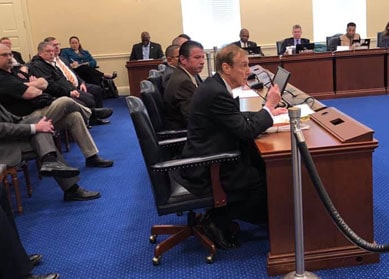
If your case requires a hearing before the Workers’ Compensation Commission, your attorney prepares you for that process and handles the presentation. If the Commission’s decision needs to be appealed, the firm handles that work as well. Berman | Sobin | Gross LLP has represented clients in hundreds of workers’ compensation jury trials and before both of Maryland’s highest courts.
Questions HVAC Technicians in Dundalk Ask About Workers’ Comp Claims
I was injured on a job site that wasn’t in Dundalk. Can I still file a Maryland workers’ compensation claim?
Maryland workers’ compensation jurisdiction depends on factors including where your employment is based and where your employer is located, not just where an individual injury occurred. Many HVAC technicians based out of Dundalk employers who get hurt elsewhere in Maryland or neighboring states still have strong grounds for a Maryland claim. The specific facts of your employment relationship determine this.
My employer said the injury was my fault. Does that bar my claim?
Maryland workers’ compensation is a no-fault system. Worker negligence does not disqualify a claim in most circumstances. The question is whether the injury arose out of and in the course of employment, not who was at fault for the incident.
I waited a few weeks before reporting my injury because I thought it would get better. Is my claim still viable?
Reporting delays happen frequently and do not automatically defeat a claim. However, Maryland law has reporting requirements, and delays can create complications that are easier to address when you have counsel involved. The sooner you take action, the better position you are in.
My injury developed over years of HVAC work, not from a single incident. Does workers’ comp cover that?
Yes. Cumulative exposure injuries and occupational diseases are covered under Maryland workers’ compensation, though the procedural requirements differ from single-incident claims. The specific filing deadlines and causation standards for occupational disease claims make legal guidance particularly important for this type of injury.
I was classified as an independent contractor on this job. Do I have any workers’ comp rights?
Contractor classification in the trades is frequently contested. Maryland courts look at the real nature of the working relationship rather than just the label the employer applied. If you worked under conditions that resemble employment, there may be grounds to challenge the classification and assert workers’ compensation rights.
Can I choose my own doctor, or does the insurer control my medical care?
Maryland law gives injured workers rights regarding medical treatment, but the specifics are nuanced and the insurer will often attempt to direct your care. An attorney can help you understand your rights regarding treating physicians and push back against attempts to limit appropriate medical care.
What does it cost to have Berman | Sobin | Gross LLP handle my claim?
Workers’ compensation representation at this firm operates on a contingency basis. Attorney fees in Maryland workers’ compensation cases are regulated and approved by the Workers’ Compensation Commission. There are no upfront costs to retain representation.
Talk to a Dundalk HVAC Injury Lawyer About Your Claim
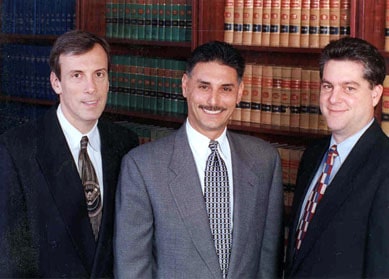
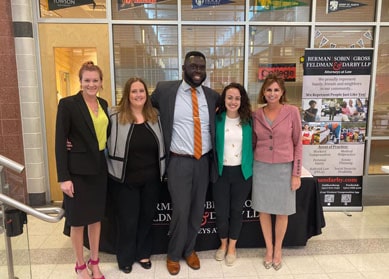
Berman | Sobin | Gross LLP has spent 35 years representing Maryland workers across every trade and industry, growing from three attorneys to more than twenty with offices throughout the state, including locations convenient to Baltimore County workers in Dundalk and the surrounding area. The firm represents Spanish-speaking clients and has staff fluent in Spanish available to handle claims without language barriers. If you have been hurt doing HVAC work in Dundalk and need to understand what your workers’ compensation claim is worth and what it will take to pursue it fully, contact Berman | Sobin | Gross LLP for a confidential case analysis with a Dundalk HVAC injury attorney who will stay with you throughout your case.