

Dundalk Hospital Employee Injury Attorney
Hospital workers in Dundalk and the surrounding communities carry some of the heaviest physical and occupational demands of any workforce in Maryland. Nurses, radiology technicians, housekeeping staff, patient transport aides, lab workers, and emergency department personnel face daily exposure to needle sticks, infectious disease, musculoskeletal injuries from patient handling, and workplace violence at rates that would alarm most people in office jobs. When a Dundalk hospital employee injury attorney is what you find yourself searching for, it usually means something went wrong at work and the road ahead feels uncertain. Berman | Sobin | Gross LLP has spent 35 years representing Maryland workers through exactly this kind of uncertainty, and healthcare workers are among the employees we know best.
What Makes Hospital Work in Dundalk Distinctly Hazardous
Dundalk sits in the eastern part of Baltimore County, and its residents rely on nearby hospitals and healthcare facilities ranging from large trauma centers to outpatient clinics and long-term care facilities. Workers in these settings deal with an injury profile that differs significantly from factory work or construction, even though the consequences can be just as disabling.
Patient lifting and repositioning is one of the leading causes of serious back injury among healthcare workers. Despite widespread adoption of lift equipment, the reality on busy floors is that workers often lift manually during emergencies, short staffing, or when equipment is unavailable. A single lift can herniate a disc. Repeated lifting over years can cause degenerative changes that accumulate until one incident makes it impossible to keep working.
Needle stick and sharps injuries create a different category of harm entirely. The immediate physical injury may be minor, but the downstream consequences, including months of post-exposure prophylaxis, blood testing, and the psychological burden of waiting to learn whether an exposure resulted in infection, can be significant and compensable under Maryland workers’ compensation law.
Workplace violence in healthcare is a documented problem. Emergency department staff, psychiatric unit workers, and home health aides who travel into patients’ homes face physical assault at rates that have increased over the last decade. Maryland law does not require an injured hospital employee to prove that violence was foreseeable. If the assault occurred in the course of employment, it is generally covered.
Exposure to hazardous chemicals, including chemotherapy agents, sterilants, and disinfectants, can cause occupational illness that develops gradually. These cases require careful documentation of exposure history, something an attorney who handles occupational disease claims regularly will know how to build.
How Maryland Workers’ Compensation Actually Works for Healthcare Employees
Maryland operates a no-fault workers’ compensation system administered by the Maryland Workers’ Compensation Commission. An injured hospital employee does not need to prove that the employer was careless, only that the injury arose out of and in the course of employment. For most acute injuries, that connection is straightforward. For occupational illness, repetitive strain injuries, or conditions that developed over time, establishing that connection requires medical evidence and sometimes expert opinion.
Filing a claim starts with notifying the employer. Maryland law requires notice within ten days of an accidental injury, though exceptions exist. Missing that window does not automatically bar a claim, but it creates complications that are easier to avoid by acting quickly. The employer and its insurer then have the ability to accept or contest the claim.
When an insurer contests a claim, the case goes before the Workers’ Compensation Commission. Hearings are held before Commissioners, not juries, and the rules of evidence are somewhat relaxed compared to circuit court. Even so, the outcome turns heavily on the quality of the medical evidence, how the injured worker presents and documents their limitations, and whether the attorney handling the case understands the Commission’s procedures and the relevant precedents.
If the Commission’s decision is unfavorable, Maryland workers do have the right to appeal into the circuit courts, and jury trials on workers’ compensation appeals are available. Berman | Sobin | Gross LLP has handled hundreds of workers’ compensation jury trials and appeals before Maryland’s highest courts. That matters when a case is worth fighting past the administrative level.
Benefits available under Maryland workers’ compensation include payment for medical treatment, temporary total or partial disability benefits while you are unable to work or working reduced hours, permanent partial or permanent total disability awards when the injury leaves lasting impairment, and vocational rehabilitation services if returning to your prior job is not possible.
Common Complications in Hospital Worker Claims
Insurance carriers for large hospital systems and healthcare employers tend to defend claims vigorously. They have in-house claims personnel and panel physicians who evaluate injured workers early and often reach conclusions that minimize the extent of injury or its connection to work. A worker who navigates this process alone may settle for a fraction of what the injury is worth, or have a legitimate claim denied without understanding that a denial is not the final word.
Pre-existing conditions are a frequent battleground. A nurse who has had some lower back issues in the past is not barred from recovering workers’ compensation benefits when a patient lift causes a new disc herniation. Maryland law distinguishes between aggravation of a pre-existing condition, which is compensable, and a condition that is entirely unrelated to work, which is not. The insurer’s physician may draw that line in ways that are convenient for the insurer rather than accurate about the worker’s actual medical history.
For conditions like occupational asthma, contact dermatitis from gloves or disinfectants, or hearing loss from working near certain equipment, the claimant must establish a causal link between the workplace exposure and the diagnosed condition. These cases benefit from attorneys who understand how to work with occupational medicine specialists and how to present that evidence effectively at a Commission hearing.
Questions We Hear From Dundalk Hospital Workers
Can I file a workers’ compensation claim if my injury happened gradually rather than in a single accident?
Yes. Maryland workers’ compensation law covers occupational diseases and cumulative trauma injuries alongside acute accidents. If your condition developed from repeated exposures or movements at work over time, you may have a compensable claim. The key is documenting both the diagnosis and the connection to your work activities.
My hospital employer’s insurer denied my claim. Is it worth pursuing further?
A denial at the initial claims stage is not the end. Many denied claims are ultimately approved or settled after a hearing before the Workers’ Compensation Commission. The strength of your medical documentation, the consistency of your account, and the specific basis for the denial all bear on whether further pursuit makes sense in your case.
Will filing a workers’ compensation claim affect my job at the hospital?
Maryland law prohibits employers from retaliating against employees for filing workers’ compensation claims. If you experience adverse employment action after filing, that may give rise to a separate legal claim. Concerns about retaliation should not stop an injured worker from filing a claim to which they are entitled.
Can I choose my own treating physician?
Under Maryland workers’ compensation law, injured workers generally have the right to select their own authorized treating physician. The insurer may also request an independent medical examination by a physician of its choosing, but the results of that examination are evidence, not a final determination of your medical status.
What if I was injured by a third party while working, such as a violent patient or a contractor on hospital property?
A third-party personal injury claim may exist alongside your workers’ compensation claim. These are separate legal remedies. A workers’ compensation attorney who also handles personal injury cases can evaluate whether a third-party claim is viable and how to pursue both without jeopardizing either.
Are temporary workers and staffing agency nurses covered by workers’ compensation?
This depends on how the employment relationship is structured, but temporary and agency workers are frequently entitled to workers’ compensation coverage. Whether it runs through the staffing agency, the host facility, or both is a question that requires looking at the specific arrangement. Do not assume coverage does not exist simply because you are not a direct employee of the hospital.
How long do I have to file a workers’ compensation claim in Maryland?
For an accidental injury, a claim must generally be filed with the Commission within two years of the date of accidental injury or the date of disablement. For occupational diseases, the deadline runs from when the worker knew or should have known that the disease was related to employment. Acting promptly protects your options.
Representing Dundalk Healthcare Workers Through Every Stage
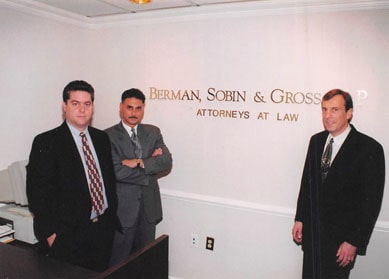
Berman | Sobin | Gross LLP is the largest workers’ compensation firm in Maryland representing injured workers, with offices throughout the state and attorneys who have handled tens of thousands of Commission hearings as well as hundreds of jury trials and appeals. One of the firm’s founders authored the definitive two-volume treatise on workers’ compensation in Maryland, the resource practitioners across the state still rely on. When a case requires going beyond an administrative hearing into the circuit courts or appellate courts, this firm has done it before and is prepared to do it again.
Hospital employees in the Dundalk area who have been injured at work deserve representation from attorneys who understand the specific hazards of healthcare work, the tactics insurance carriers for large medical employers tend to use, and the full range of benefits Maryland law makes available. If another attorney has turned down your case or declined to take it further after an initial hearing, Berman | Sobin | Gross LLP evaluates those cases too. The firm represents employees in Baltimore County, throughout the Baltimore metro area, and across Maryland, and has Spanish-speaking attorneys and staff for clients who prefer to communicate in Spanish.
Contact Berman | Sobin | Gross LLP for a confidential consultation with a Dundalk hospital employee injury lawyer who will review the facts of your situation and help you understand what your claim is actually worth.