

Dundalk Dock Worker Injury Attorney
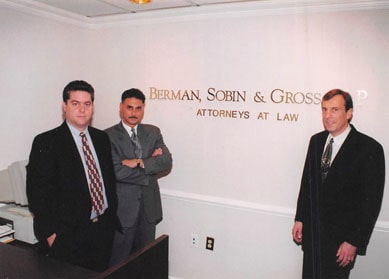
The waterfront along Dundalk’s marine terminal is one of the most physically demanding work environments in Maryland. Longshoremen, crane operators, riggers, freight handlers, and vessel crew members move millions of tons of cargo every year under conditions that combine heavy machinery, shifting loads, uneven surfaces, and constant time pressure. When that environment produces a serious injury, the legal questions that follow are anything but simple. A Dundalk dock worker injury attorney at Berman | Sobin | Gross LLP understands both the industrial realities of port work and the overlapping legal frameworks that govern how maritime and waterfront workers pursue compensation after they are hurt.
Why Dock Worker Injuries at the Port of Baltimore Involve Competing Legal Systems
Most Maryland workers rely on the state workers’ compensation system when they are injured on the job. For dock workers at the Dundalk Marine Terminal, that analysis is more complicated. Depending on where the injury happened, what the worker was doing at the moment, and the precise nature of their employment relationship, a claim might fall under Maryland workers’ compensation law, the federal Longshore and Harbor Workers’ Compensation Act (LHWCA), or general maritime law under the Jones Act. In some situations, more than one framework applies, and choosing the wrong one can mean leaving substantial compensation on the table.
The LHWCA is a federal statute that provides benefits to maritime workers who are not seamen, covering injuries that occur on the navigable waters of the United States or in adjoining areas used for loading, unloading, building, or repairing vessels. Because Dundalk’s terminal facilities fall squarely within that definition, many dock workers injured there have LHWCA claims rather than Maryland workers’ compensation claims. The benefits available under the LHWCA differ from state workers’ comp in meaningful ways, including different compensation rates, medical benefit structures, and procedures for contesting a claim denial. A worker who files under the wrong statute at the outset can face delays and disputes that an attorney familiar with both systems would have anticipated and avoided.
The Injuries That Define Port Work at Dundalk
The Port of Baltimore handles vehicles, bulk cargo, containers, and roll-on roll-off freight. The machinery required to move that volume of goods includes container cranes, forklifts, reach stackers, and heavy transport vehicles, all operating in close proximity to workers on the ground. The injuries that result from that environment tend to be severe, and the medical treatment required is often long-term.
Crush injuries involving dock equipment or cargo securing gear can cause permanent damage to hands, feet, and lower limbs. Falls from container stacks, vessel gangways, or elevated terminal structures regularly produce traumatic brain injuries, spinal fractures, and shoulder damage requiring surgical reconstruction. Exposure to diesel exhaust, chemical cargo residue, and cargo hold atmospheres generates occupational lung disease that develops over years and may not be diagnosed until a worker is well into their career. Repetitive stress injuries from loading and unloading operations accumulate gradually and are frequently disputed by employers and insurers who argue the condition predates the employment or reflects wear unrelated to any single job duty.
That last category, occupational disease and cumulative trauma, is where the legal work becomes especially important. A single traumatic accident is usually undisputed as work-related. A shoulder injury attributed to thousands of repetitive movements over a five-year career at the terminal is harder to establish, and carriers routinely challenge both causation and the extent of resulting disability. Building that kind of claim requires medical evidence, employment records, and an understanding of how the specific job tasks contributed to the condition over time.
Third-Party Liability When Terminal Contractors and Vessel Owners Are Involved
Dock work at a facility like the Dundalk terminal involves multiple employers, subcontractors, and vessel operators working in shared spaces under interconnected contracts. A stevedoring company may employ the longshoremen. The terminal itself may be operated by a separate entity. The vessel being worked may be owned by a shipping line that neither employs the workers nor controls the terminal. When an injury occurs in that environment, the party that caused it may not be the injured worker’s direct employer at all.
This matters because workers’ compensation and the LHWCA generally limit the direct employer’s liability. They do not necessarily limit liability for third parties whose negligence contributed to the injury. A vessel owner who maintains an unsafe gangway, a contractor who positions equipment recklessly, or a terminal operator who fails to maintain safe walking surfaces can each face a negligence claim that is separate from and in addition to any statutory compensation claim. Identifying all potentially liable parties and preserving the right to pursue those claims requires prompt action, because evidence at port facilities, including security footage, cargo records, and equipment logs, does not remain accessible indefinitely.
Berman | Sobin | Gross LLP has handled the challenging cases that other firms have declined. The attorneys here are not looking for the straightforward matters. They take on cases that require litigation, that involve multiple parties, and that require pushing past an initial administrative denial into the courts when that is what the evidence demands. For dock workers at Dundalk whose injuries involve a third-party component, having attorneys willing to pursue that claim aggressively matters significantly to the final outcome.
Questions Dock Workers at Dundalk’s Marine Terminal Often Ask
Am I covered by Maryland workers’ compensation or the federal LHWCA?
The answer depends on the nature of your work and where the injury occurred. Workers injured in areas used for maritime commerce, such as piers, wharves, and terminal facilities directly adjoining navigable waters, typically fall under the LHWCA. Workers injured in more landward locations may be covered by Maryland’s state system. Some workers qualify under both. An attorney familiar with both frameworks can analyze the facts of your situation and identify which avenue maximizes your available benefits.
What if I was hurt on a vessel rather than on the dock itself?
Injuries aboard a vessel introduce additional legal considerations. If you qualify as a seaman under the Jones Act, you may have rights to maintenance and cure from the vessel owner, as well as the ability to sue for negligence under federal maritime law. The distinction between a seaman and a maritime worker covered by the LHWCA turns on facts specific to your employment and is frequently disputed. This determination alone can significantly affect the compensation available to you.
Can I sue my employer directly for a dock injury?
Generally, the LHWCA and Maryland workers’ compensation law limit direct lawsuits against the employer who employs you. However, third-party claims against vessel owners, equipment manufacturers, subcontractors, or terminal operators are not barred. These third-party claims can be pursued alongside a workers’ compensation or LHWCA claim and can result in damages beyond what the statutory systems provide, including compensation for pain and suffering that workers’ comp does not cover.
How are permanent disability benefits calculated for dock workers?
Under the LHWCA, permanent disability benefits are calculated as a percentage of your pre-injury average weekly wage, subject to statutory maximums and minimums set by federal law. The extent of permanent impairment is typically established through medical evaluations, and disputes over the degree of disability are common. The process involves the Department of Labor’s Office of Workers’ Compensation Programs and, when claims are contested, the Office of Administrative Law Judges.
What happens if my injury was partly caused by my own actions?
Workers’ compensation systems generally do not bar a claim because a worker contributed to their own injury, though intentional self-inflicted injury or intoxication can be grounds for denial. In third-party negligence claims under general maritime law, contributory fault may reduce recovery but typically does not eliminate it entirely. The facts of how the injury occurred matter, and an honest evaluation of those facts early in the process helps set realistic expectations.
What if my employer says my injury is not work-related?
An employer or carrier’s initial denial of a claim is not the end of the process. Both the LHWCA and Maryland workers’ compensation systems have formal dispute resolution mechanisms, including hearings before administrative judges, and appeals that can reach Maryland’s circuit courts and appellate courts. Berman | Sobin | Gross LLP has argued workers’ compensation appeals before Maryland’s highest courts, and the firm does not treat an administrative denial as a reason to walk away from a claim supported by the evidence.
How long do I have to file a claim after a dock injury?
Under the LHWCA, the general rule is that a claim must be filed within one year of the injury or within one year from the time the worker knew, or should have known, the connection between the injury and the employment. For occupational diseases that develop over time, the clock typically runs from the date of last exposure or from when the condition was diagnosed as work-related. Missing these deadlines can permanently bar a valid claim, which is why early legal consultation matters.
Representing Dundalk’s Maritime Workforce for Over Three Decades
For 35 years, Berman | Sobin | Gross LLP has represented the workers who make Maryland’s transportation and logistics infrastructure function. Dock workers at the Dundalk Marine Terminal belong to that group. They perform physically demanding work under conditions where a single equipment failure or procedural shortcut can produce a life-altering injury, and they deserve representation that takes those injuries seriously and pursues every available avenue for compensation. The firm is the largest workers’ compensation law firm in Maryland representing injured workers, with attorneys and staff who reflect the diverse workforce they represent, including Spanish-speaking attorneys and staff. If a dock accident on the Baltimore waterfront has left you or someone in your family with serious injuries and unanswered questions about your legal options, contact Berman | Sobin | Gross LLP to speak with a Dundalk maritime injury attorney about your situation.