

Columbia Security Guard Injury Attorney
Security guards put themselves between the public and real danger every single day. They work overnight shifts at shopping centers along Route 175, patrol parking decks near the Mall in Columbia, stand post at corporate campuses in the Howard County corridor, and respond to situations that most employees would walk away from. When something goes wrong and a security guard gets hurt on the job, the workers’ compensation system in Maryland is supposed to be there. In practice, getting the benefits you are owed takes more effort than most injured workers expect. A Columbia security guard injury attorney at Berman | Sobin | Gross LLP can help you understand what your claim is actually worth and push back if your employer or its insurer tries to minimize it.
Why Security Guard Injuries Are More Complicated Than They Look
Security work is physically demanding and unpredictable. The injuries that show up in these claims run a wide range, and the nature of the job creates complications that do not arise in more conventional workplace injury cases.
Consider the settings where Columbia-area security officers work: large retail operations in the Columbia Town Center area, warehouse and logistics facilities near the interchange of I-95 and Route 32, healthcare campuses, schools, government buildings. Each setting carries its own hazard profile. Retail security officers face confrontations with shoplifters that can turn physical. Guards at logistics facilities deal with slip and fall risks in loading areas, forklift traffic, and extreme temperatures. Officers assigned to patrol on foot or by vehicle develop cumulative musculoskeletal injuries that build over years before they become disabling.
The complication most security guards run into is that they are often employed through a contractor or staffing agency, not directly by the property owner or business they are protecting. This creates real ambiguity about which employer is responsible for workers’ compensation coverage, and it sometimes means there is more than one party whose negligence contributed to the injury. Maryland workers’ compensation law covers employees, but when the employment relationship is unclear, insurers exploit that ambiguity.
There is also the question of assault. Security guards in Maryland are injured in physical altercations at a rate far above most other occupations. Workers’ compensation generally covers injuries from assaults that arise out of and in the course of employment. But employers and their insurers sometimes argue that a guard provoked a situation, deviated from their duties, or was injured outside the scope of employment. These defenses need to be answered with facts and legal argument, not just a filed claim form.
What the Workers’ Compensation System Provides, and Where It Falls Short
Maryland workers’ compensation covers medical treatment for work-related injuries and, when the injury prevents you from working, a portion of your lost wages. For security guards, the benefits that matter most often fall into a few categories.
Temporary total disability benefits kick in when you cannot work at all while you are recovering. The rate is two-thirds of your average weekly wage, subject to a state-mandated cap. For security guards who were working multiple jobs or picking up overtime regularly, getting the average weekly wage calculated correctly is not a small issue. Pay stubs from a second employer, shift records, and documentation of regular overtime all factor into the calculation. If this is not handled carefully at the beginning of the claim, the benefit rate gets set too low and adjusting it later requires additional hearings.
Permanent disability benefits become relevant when an injury leaves lasting limitations. A shoulder torn during a confrontation, a knee damaged in a fall from a loading dock, a back injury from repeated heavy lifting over years of security work: these can carry permanent impairment ratings that entitle you to a lump sum or scheduled benefits. The rating process involves medical evaluations, and the employer’s insurer will typically have its own doctor conduct an independent medical examination. These examinations are often brief and their findings consistently favorable to the insurer. Having legal representation before that examination and during any dispute about impairment ratings matters.
Workers’ compensation does not cover everything. It does not compensate for pain and suffering. It does not provide the full value of lost wages. If a third party’s negligence contributed to your injury, a separate personal injury claim may run alongside the workers’ comp case. For example, if inadequate lighting at a property contributed to an assault, or if defective equipment caused an injury, a claim against the property owner or manufacturer could provide damages that workers’ comp leaves off the table entirely.
Questions Columbia Security Guards Often Ask About Injury Claims
I was hurt while working a shift through a staffing agency. Do I still have a workers’ compensation claim?
Yes, in most situations. Maryland workers’ compensation covers employees, and staffing agency workers are generally considered employees of the agency. In some arrangements, the business where you were placed may also have obligations. The key is to identify who your actual employer was under Maryland law, which is a fact-specific question depending on who controlled your work, set your hours, and had the power to dismiss you.
My employer says I was injured because I got into a situation I was not supposed to be in. Does that end my claim?
Not automatically. Maryland workers’ compensation covers injuries that arise out of and in the course of employment. Even if your employer disputes the circumstances, the Maryland Workers’ Compensation Commission decides the facts at a hearing. An employer’s version of events is not final. Evidence about what your duties actually required, what your training said to do, and what happened in the moments before the injury all goes into that record.
I reported my injury but my employer’s insurance company denied the claim. What are my options?
A denial is not the end of the process. You have the right to file a claim with the Maryland Workers’ Compensation Commission and request a hearing before a Commissioner. The burden is on you to prove that the injury occurred and was work-related, which is why having a clear record of medical treatment, witness statements, and documentation of how the injury happened is so important. Berman | Sobin | Gross LLP has handled contested claims at the Commission level and before Maryland’s appellate courts.
Can I file a lawsuit against the person who assaulted me?
If a third party, someone who is not your employer or a co-worker, assaulted you during your shift, you may have a civil personal injury claim against that individual in addition to your workers’ compensation claim. Maryland allows both to proceed simultaneously in certain circumstances, though the workers’ comp insurer may have a lien on any civil recovery. The analysis of whether a civil claim is worth pursuing depends on whether the responsible party has the assets or insurance coverage to pay a judgment.
My injury happened over time, not in one specific incident. Is it still covered?
Yes. Maryland workers’ compensation covers occupational diseases and repetitive trauma injuries as well as single-incident accidents. Security guards who develop chronic back conditions, knee problems, or hearing loss from prolonged exposure to loud environments are entitled to claim those as occupational injuries. The date of disablement and the role of work in causing the condition are issues that often require medical evidence, but these claims are recognized under Maryland law.
How long do I have to file?
Under Maryland workers’ compensation law, you generally have two years from the date of the accidental injury, or two years from the date of disablement for occupational diseases, to file a claim with the Workers’ Compensation Commission. Missing that window can bar your claim entirely. Reporting your injury to your employer as soon as possible is equally important, as late notice can create additional complications.
What if my employer retaliates against me for filing a workers’ compensation claim?
Maryland law prohibits employers from discharging or otherwise penalizing an employee for filing a workers’ compensation claim. If you are terminated, demoted, or subjected to adverse employment action after filing, that is a separate legal issue worth discussing with an attorney.
Representation Built Around How These Claims Actually Work
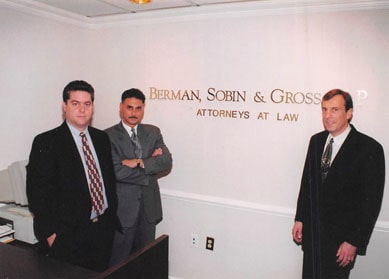
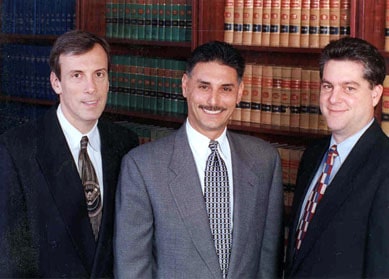
Berman | Sobin | Gross LLP has represented Maryland workers for 35 years, and the firm has grown to more than 20 attorneys handling workers’ compensation claims throughout the state. One of the firm’s founders authored the definitive two-volume treatise on workers’ compensation in Maryland, which continues to serve as the primary reference for practitioners across the state. The firm has appeared in hundreds of jury trials and before both of Maryland’s highest appellate courts, and its attorneys have changed Maryland workers’ compensation law through appellate decisions that protect injured workers’ rights.
For security guards in Columbia and the surrounding Howard County area, that depth of experience means your case is being handled by attorneys who understand the specific arguments insurers use to minimize these claims and how to counter them. The firm also has attorneys and staff fluent in Spanish, so language does not stand in the way of getting clear advice.
Talk to a Columbia Security Guard Workers’ Compensation Lawyer
If you were injured while working as a security officer in Columbia, Ellicott City, or elsewhere in Howard County, the attorneys at Berman | Sobin | Gross LLP are ready to review your situation. The firm handles claims throughout Maryland, including at offices in Baltimore, Lutherville, Gaithersburg, and Frederick. Getting a clear assessment of your claim costs you nothing, and knowing where you stand before you navigate the Commission process can make a real difference in the outcome. Reach out to a Columbia security guard injury lawyer at Berman | Sobin | Gross LLP for a confidential case analysis.