

Columbia Manufacturing Worker Injury Attorney
Columbia’s manufacturing sector runs deep. From Howard County’s industrial parks to the distribution and production facilities spread along Route 1 and the Maryland Route 108 corridor, workers in these plants operate machinery, handle materials, and perform physically demanding tasks that create real injury risk every shift. When something goes wrong on a factory floor, the workers’ compensation system is supposed to step in. But between employers who minimize claims, insurers who dispute medical treatment, and the complexity of Maryland’s Commission process, injured manufacturing workers often find themselves fighting for benefits they should have received without a fight. Berman | Sobin | Gross LLP has represented Columbia manufacturing worker injury claims and workers throughout Howard County and the surrounding region for 35 years, and we know the difference between a claim that gets handled and one that gets handled well.
What Manufacturing Injuries Actually Look Like in Howard County
Factory and production environments generate a specific pattern of injuries. Repetitive motion conditions are among the most common, and among the most contested. Assembly line workers who perform the same grip, lift, or reach motion hundreds of times per shift develop carpal tunnel syndrome, rotator cuff tears, and spinal disc problems that accumulate over months or years. Because no single incident caused the condition, employers often argue the injury predates employment or stems from activities outside of work. That argument does not hold up when the medical evidence is built properly, but building that evidence requires understanding how these claims work.
Acute traumatic injuries are a different story. Forklift accidents, falls from loading docks, entanglement injuries from conveyor or press equipment, and chemical exposures can cause broken bones, crush injuries, burns, and traumatic brain injuries within seconds. These cases tend to move more quickly through the workers’ compensation system because causation is harder to dispute. But “easier to prove” does not mean “easier to win” when insurers push back on the full scope of treatment, push for premature return to work, or dispute permanent impairment ratings after maximum medical improvement has been declared.
There is also a category that does not fit neatly into either box: occupational disease claims arising from long-term exposure to industrial chemicals, solvents, heavy metals, or airborne particulates. Workers who develop respiratory conditions, neurological symptoms, or systemic illness after years of workplace exposure face a claims process that is harder to navigate than a standard injury claim. The medical causation questions are complex, the latency between exposure and diagnosis can span years, and employers frequently contest whether the condition is work-related at all.
Maryland Workers’ Compensation and the Manufacturing Workplace
Maryland workers’ compensation covers virtually every manufacturing employee from day one of employment. There is no waiting period before you are protected, and you do not need to prove that anyone was negligent. The system is a no-fault structure, meaning you are entitled to benefits if your injury arose out of and in the course of your employment, regardless of how it happened.
What benefits are actually available matters a great deal to workers who are trying to plan their recovery. Medical treatment related to the work injury must be authorized and paid by the employer’s insurer. Temporary total disability benefits replace a portion of your average weekly wage while you are unable to work. If you return to a lighter duty position at reduced pay while you recover, temporary partial disability benefits can supplement that income. Once a treating physician declares that you have reached maximum medical improvement, a permanent disability evaluation determines whether you are entitled to additional compensation for lasting impairment to a body part or to your overall earning capacity.
Manufacturing workers in Columbia and throughout Howard County should understand that the insurer has legal counsel reviewing every step of your claim. That does not mean the process is adversarial by design, but it does mean that decisions about your medical care, your disability rating, and your return-to-work timeline are being evaluated through a lens other than your well-being. Having a Maryland workers’ compensation attorney who has handled these cases across the full range of hearing and litigation stages puts you in a position to respond to that effectively.
When a Third Party, Not Just Workers’ Comp, May Be on the Hook
Workers’ compensation is not always the only available avenue for an injured manufacturing worker. If the injury was caused by a defective piece of equipment, a contractor working on-site, or a negligent driver during a work-related delivery, there may be a separate civil claim against a party outside of the employment relationship. These third-party claims operate entirely outside of the workers’ compensation system and can produce compensation for losses that workers’ comp does not cover, including full lost wages, pain and suffering, and other damages.
The interaction between a workers’ compensation claim and a third-party civil claim is legally complicated. Maryland law allows both, but a recovery in the civil case will affect what the workers’ comp insurer can recover through a lien, and timing decisions in one proceeding can affect the other. This is not a situation where handling one claim at a time is necessarily the right strategy. Both paths need to be evaluated together, with a clear picture of where the maximum recovery lies and how to pursue it without creating avoidable conflicts between the two.
Berman | Sobin | Gross LLP handles both workers’ compensation and personal injury claims. For manufacturing workers whose injury involved a third party, having that dual capacity under one roof matters in a concrete way.
Questions Columbia Manufacturing Workers Ask About Their Claims
My employer said my injury was caused by a pre-existing condition. Does that end my claim?
Not necessarily. Maryland workers’ compensation law recognizes that a work injury can aggravate or accelerate a pre-existing condition. If your job made an existing problem significantly worse, the resulting disability may still be compensable. The key is how the medical evidence is developed and presented. Employers and insurers commonly raise this defense, but it does not automatically defeat a claim.
How long do I have to report a manufacturing injury in Maryland?
For a traumatic injury, you generally need to notify your employer within ten days of the accident. The deadline to file a claim with the Maryland Workers’ Compensation Commission is two years from the date of injury. For occupational diseases, the timeline is calculated differently, typically running from when the disabling condition was diagnosed or when you became aware it was work-related. Missing these deadlines can bar your claim, which is why getting advice early is important.
Can I choose my own doctor for a work injury in Maryland?
Maryland workers’ compensation law gives injured workers the right to select their own treating physician after an injury. You are not required to see only employer-designated doctors. That said, there are procedural steps involved in changing providers or disputing medical decisions, and how you handle those steps affects your claim. Unauthorized treatment may not be covered, so understanding the process before you act matters.
What happens if I disagree with the permanent impairment rating my doctor gave?
Permanent disability ratings are frequently contested. You have the right to obtain your own independent medical evaluation, and the Workers’ Compensation Commission will consider competing opinions from multiple physicians when determining your award. This is one of the more consequential stages of a manufacturing injury claim because the outcome directly affects how much compensation you receive for lasting impairment. How your attorney prepares for and presents at that hearing can make a significant difference in the result.
My employer is pressuring me to return to work before my doctor has released me. What can I do?
An employer cannot force you to return to full duty before you are medically cleared. If there is a legitimate light-duty assignment available that your physician says you can perform, you may be required to accept it or risk losing temporary disability benefits. But if the employer is pressuring you to return to full duty work your treating physician has not cleared, or is retaliating against you for filing a claim, those are situations that need immediate attention from a workers’ compensation attorney.
Does it matter that my manufacturing facility is self-insured rather than covered by a private carrier?
Larger manufacturers sometimes self-insure their workers’ compensation obligations rather than purchasing a commercial policy. The substantive law is the same, but the claims handling dynamic can differ. Self-insured employers have more direct control over claims decisions and often have their own dedicated claims administrators or third-party administrators handling the file. Understanding who you are actually dealing with on the other side of your claim is relevant to how your attorney approaches it.
I was injured while working a temporary or staffing agency assignment at a Columbia facility. Who is responsible?
Temporary and contract workers are covered under Maryland workers’ compensation, though questions about which employer’s policy applies can arise. The staffing agency is typically the employer of record, but depending on the circumstances, there may also be a third-party claim against the facility where the injury occurred. Sorting out the employment relationship and identifying all potentially liable parties early is critical for temporary workers whose injuries are otherwise handled the same way as direct employees.
Representing Injured Manufacturing Workers Throughout Howard County and Maryland
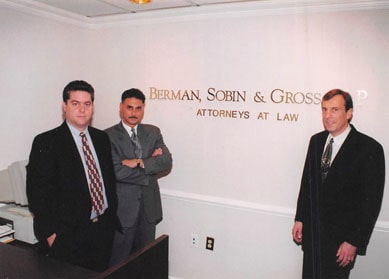
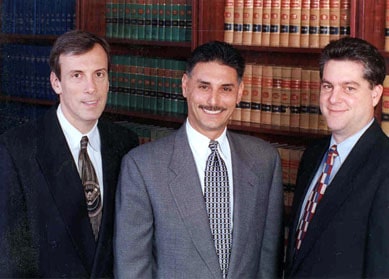
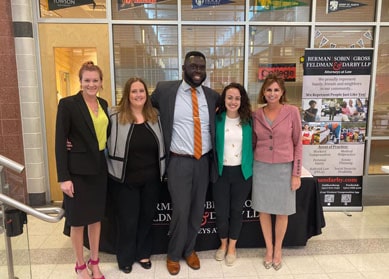
Berman | Sobin | Gross LLP is the largest workers’ compensation law firm in Maryland representing injured workers. The firm’s attorneys have handled tens of thousands of hearings and hundreds of jury trials, including appeals before both of Maryland’s highest courts. One of the firm’s founders wrote the definitive two-volume treatise on workers’ compensation in Maryland, the reference that practitioners throughout the state rely on. That depth of knowledge is not incidental. It shows up in how claims are built, how medical evidence is developed, and how disputes are argued before the Commission and beyond it. Columbia manufacturing workers who need counsel for a serious workplace injury, a disputed claim, or a case other attorneys have declined to take, can reach our office in Columbia, or at our offices throughout Maryland including Lutherville, Baltimore, Gaithersburg, and Frederick.
If a manufacturing injury in the Columbia area has left you out of work, in treatment, or uncertain about what your claim is actually worth, Berman | Sobin | Gross LLP is ready to evaluate your situation and give you a direct assessment of where things stand. Contact us to speak with a Howard County manufacturing injury attorney about your case.