

Columbia Janitorial Worker Injury Attorney
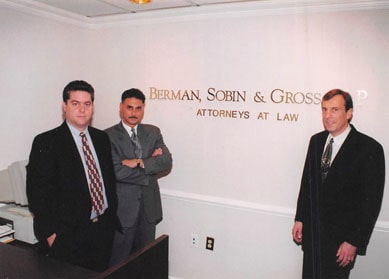
Janitorial and custodial workers take on more physical risk than most people realize. Wet floors, heavy equipment, industrial cleaning chemicals, poorly lit stairwells, loading docks, and overnight shifts in buildings where no one else is around. For workers in Columbia’s commercial offices, schools, hospitals, and retail centers, an injury on the job is not a remote possibility. It is an occupational reality. When it happens, the workers’ compensation system is supposed to provide relief, but getting those benefits is rarely as simple as filing a form. The attorneys at Berman | Sobin | Gross LLP have spent more than 35 years representing Maryland’s working people, including the Columbia janitorial worker injury claims that get complicated fast.
What Makes Custodial Work in Columbia Particularly Hazardous
Columbia is a large planned community with a dense commercial core, major healthcare facilities, distribution operations, and a significant number of office parks and educational institutions. That means a wide range of worksite environments for custodial and janitorial employees, and a wide range of injury patterns that follow from them.
Slip and fall injuries are the most visible, but they are far from the only ones. Janitorial workers lift, push, and pull heavy equipment every shift. They perform repetitive motions that accumulate into shoulder tears, herniated discs, and carpal tunnel syndrome over time. They work with chemical cleaning agents that cause respiratory damage, skin conditions, and eye injuries, sometimes acutely and sometimes through long-term exposure. They climb ladders. They work in confined spaces. They use industrial floor buffers and carpet machines that vibrate through the hands and arms with effects that mount over years.
The workers who clean hospitals and clinical settings face an additional layer of exposure risk. Those who service schools deal with the physical demands of large, multi-floor buildings often with inadequate staffing. Overnight shifts mean reduced supervision and delayed emergency response when something goes wrong.
Maryland workers’ compensation covers all of this, but the path from injury to approved benefits is rarely automatic. Employers and their insurers frequently challenge claims involving repetitive stress injuries, chemical exposures, or injuries that did not result in a single dramatic incident. A Columbia janitorial worker injury attorney at Berman | Sobin | Gross LLP understands how to document and present these claims effectively.
When an Employer or Insurer Pushes Back
Workers’ compensation in Maryland operates through the Workers’ Compensation Commission. Employers and their insurance carriers have every incentive to limit what they pay out, and they employ medical experts and legal counsel to do exactly that. Janitorial workers face particular skepticism when their injuries develop gradually rather than from a single moment someone can point to on a calendar.
Disputes arise over causation. An insurer might argue that a worker’s back injury predates the job, or that a respiratory condition has nothing to do with workplace chemical exposure. They might challenge the nature or extent of the disability. They might dispute whether a worker’s restrictions prevent them from doing specific job tasks. These are not simple disagreements that resolve on their own.
Berman | Sobin | Gross LLP does not limit its practice to straightforward claims. One of the firm’s founders literally wrote the book on Maryland workers’ compensation law, a two-volume treatise that remains the definitive resource in the state. The firm has handled hundreds of workers’ compensation jury trials and appeals before both of Maryland’s highest courts. If an insurer or employer is contesting your claim, having attorneys with that level of experience in your corner changes the dynamic of the case.
The firm also does not walk away from claims that require more time or resources to pursue. If other attorneys have told you your case is too complicated, or declined to take it past an initial administrative hearing, that is the kind of case Berman | Sobin | Gross LLP is built to handle.
Benefits a Columbia Custodial Injury Claim May Cover
Maryland’s workers’ compensation system provides several categories of benefits for injured workers. Medical treatment is one of the most immediate. If a janitorial employee is hurt, workers’ comp should cover necessary medical care, but disputes over what treatment is authorized are common. Employers and insurers often have their own approved medical providers, and those providers do not always align with what the injured worker actually needs.
Wage replacement is another major component. Temporary partial disability and temporary total disability benefits replace a portion of wages lost while a worker recovers and cannot perform their full duties. For janitorial workers who cannot afford weeks or months without income, getting these benefits in place quickly matters enormously.
Permanent disability benefits come into play when an injury leaves lasting effects. A shoulder injury requiring surgery, a back condition that limits lifting permanently, or chronic lung damage from chemical exposure can all qualify. The rating process for permanent disability is an area where legal representation has a significant impact on the outcome.
Vocational rehabilitation services are available when an injured worker cannot return to their prior position. A Columbia janitorial injury attorney can help ensure a worker has access to these services when appropriate, including in situations where the employer disputes eligibility.
Questions About Janitorial Worker Injury Claims in Columbia
My injury developed gradually from repetitive tasks. Can I still file a workers’ compensation claim?
Yes. Maryland workers’ compensation covers occupational diseases and repetitive stress injuries, not just sudden accidents. The key is establishing the connection between your job duties and the condition. These claims often require thorough medical documentation and sometimes independent medical opinions, but they are viable under Maryland law.
I was cleaning a property that my employer contracts with, not my employer’s own building. Does that affect my claim?
Your claim runs through your employer, not the property owner, so the location of the worksite does not change your basic eligibility for workers’ comp. However, if a condition on that property contributed to your injury through someone else’s negligence, there may also be a third-party claim worth evaluating alongside your workers’ comp case.
My employer is questioning whether my injury happened at work. What should I do?
Document everything you can remember about when and how the injury occurred, who was present, and what you were doing. Report the injury through your employer’s official process if you have not already done so. An attorney can help you gather the evidence needed to support your account and respond to the employer’s position before the Workers’ Compensation Commission.
Can I choose my own doctor?
Maryland’s workers’ compensation system gives employers and insurers some authority over medical providers initially, but injured workers retain rights regarding medical care, particularly when the authorized treatment is inadequate. This is a nuanced area where legal guidance can help you understand what you are entitled to request.
I returned to light-duty work but my employer cut my hours. Am I still entitled to benefits?
Potentially, yes. Maryland case law addresses the situation where a worker on light duty earns less than they were making before the injury. Benefits may be available to make up the difference, and prior overtime wages can factor into the calculation. The firm has handled appellate cases touching on exactly this issue.
What if I was injured while working alone on a night shift?
The absence of witnesses makes documentation more important but does not bar a claim. Medical records, surveillance footage, shift logs, and incident reports all become more valuable. An attorney can work with you to identify and preserve the evidence that supports your account.
How long do I have to file a workers’ compensation claim in Maryland?
Generally, a claim must be filed within two years of the date of injury, or within two years of when you knew or should have known that a disease or condition was work-related. For gradually developing conditions, that clock can be complicated. Do not wait to get advice about where your timeline stands.
Representing Columbia Janitorial and Custodial Workers
Berman | Sobin | Gross LLP is the largest workers’ compensation law firm in Maryland representing injured workers, with offices in Lutherville, Baltimore, Gaithersburg, Frederick, and throughout the state. Columbia falls within Howard County, and the firm serves workers across the entire region. The firm’s attorneys and staff include Spanish-speaking members who can work with clients without any concerns over language barriers, which matters in an industry where a significant portion of the workforce communicates in Spanish.
The firm represents janitorial workers, custodial staff, building service employees, and others in physically demanding roles across Maryland’s commercial, institutional, and healthcare sectors. Cases are handled on a one-attorney-per-client basis, meaning the attorney who takes your case stays with you throughout, not a rotating cast of support staff.
For a Columbia custodial worker dealing with a work-related injury, the path forward starts with understanding your rights and making sure your claim is built correctly from the beginning. Contact Berman | Sobin | Gross LLP to speak with an attorney about what your situation actually involves and what options are available to you.