

Columbia Factory Worker Injury Attorney
Manufacturing and industrial work in Howard County puts real physical demands on workers every single day. Columbia’s distribution centers, food processing facilities, and manufacturing plants employ thousands of people who operate heavy machinery, handle hazardous materials, and perform repetitive tasks that accumulate damage over months and years. When something goes wrong on a factory floor, the injuries are rarely minor. A Columbia factory worker injury attorney at Berman | Sobin | Gross LLP understands what is actually at stake for workers and families when a serious industrial injury removes someone from the workforce, sometimes permanently.
What Factory Injuries in Columbia Actually Look Like
The injury patterns in Columbia’s industrial facilities reflect the specific nature of manufacturing work. Machine operators face crush injuries, degloving injuries, and amputations when guarding mechanisms fail or maintenance procedures are ignored. Workers at distribution and fulfillment centers along Route 1 and the Dobbin Road industrial corridor suffer back injuries and shoulder tears from repetitive lifting, often after months of accumulating strain that makes pinpointing a single incident difficult. Forklift accidents, chemical exposures, and falls from loading docks account for a substantial portion of serious claims in this region.
Many factory injuries in Howard County involve cumulative trauma rather than a single dramatic event, and this distinction matters enormously to how a claim is filed and defended. Employers and their insurers sometimes contest whether a repetitive-stress condition is work-related, arguing that the damage predates employment or reflects personal health factors unrelated to job duties. These contested claims require documented medical evidence, a clear understanding of the worker’s actual job functions, and attorneys who are prepared to push past a denial rather than accept it.
The Workers’ Compensation System and Its Real Limits for Industrial Workers
Maryland’s workers’ compensation system is the primary route for factory workers to recover medical benefits and lost wage replacement after a work injury, but the system does not run itself in favor of injured employees. Employers are required to carry workers’ compensation insurance, and insurers are financially motivated to minimize what they pay. Industrial injuries that require surgery, extended rehabilitation, or result in any permanent impairment will almost always involve some level of dispute over the degree of disability, the appropriateness of treatment, or the worker’s ability to return to their prior position.
Lost wage benefits under Maryland law replace a portion of a worker’s average weekly wage, but factory workers who earn shift differentials, overtime, or production bonuses often find that the calculation undersells what they actually earned. Permanent partial disability awards are available when an injury causes lasting functional limitations, and permanent total disability may apply when an injury ends someone’s ability to work in any meaningful capacity. Vocational rehabilitation services are also available in some cases. Each of these benefit categories involves its own procedural requirements and evidentiary standards that are not self-explanatory to someone outside the system.
Beyond workers’ compensation, some factory injuries involve third-party liability. When defective machinery causes an injury, when a contractor or maintenance company created the hazardous condition, or when a product manufacturer bears responsibility for a worker’s exposure to toxic substances, a separate civil claim may exist alongside the workers’ comp case. These overlapping legal paths require careful coordination to preserve both sets of rights.
Why Industrial Injury Claims Get Denied or Underpaid
Claim denials in the manufacturing sector follow recognizable patterns. Pre-existing conditions are the most common basis for disputing an injury claim. If a worker has a prior back injury or an existing knee condition, the employer’s insurer will argue that the work-related event merely aggravated something that was already present. Under Maryland law, an aggravation of a pre-existing condition can still be compensable, but making that case requires medical documentation and sometimes expert testimony that addresses exactly how the work injury changed the worker’s condition.
Delayed reporting is another common pressure point. Workers who push through pain before reporting, or who report informally to a supervisor without triggering a formal claim, sometimes find their timeline used against them. Maryland requires that injuries be reported to an employer within a specified period, and claims filed outside that window face automatic challenges. There are exceptions and legal arguments available in some circumstances, but they require action, not assumption.
Disputes over return-to-work decisions also create serious financial harm to injured workers. Employers sometimes offer light-duty positions that a worker cannot physically perform, or that pay significantly less than the worker’s pre-injury wage. When an employer claims a worker has voluntarily refused suitable work, benefits can be reduced or terminated. Understanding whether a particular light-duty offer actually qualifies under the statute is a legal question with real financial consequences.
Questions Columbia Industrial Workers Ask Us Most Often
My employer says my injury was caused by something I did wrong. Does that bar my claim?
In most cases, no. Maryland’s workers’ compensation system is no-fault, which means that even if a worker made an error that contributed to the accident, they are generally still entitled to benefits. The narrow exceptions involve intentional self-injury or injuries caused by intoxication, neither of which applies to most workplace accidents. An employer pointing to worker error is often a negotiating position, not a legal bar.
I was injured on a temporary or contract basis. Am I covered under workers’ compensation?
Temporary and contract workers often have workers’ compensation coverage, though figuring out which employer’s policy applies can be complicated when staffing agencies are involved. Maryland law has rules that address joint employment and borrowed servant situations. This is an area where getting legal guidance early prevents costly mistakes about who to file against and when.
The insurance company sent me to their own doctor. Do I have to accept that doctor’s opinion?
No. An insurer-designated independent medical examination generates an opinion, not a binding determination. You have the right to your own treating physicians and to obtain your own medical opinions. In contested cases, the Workers’ Compensation Commission weighs conflicting medical evidence. Having your own documented medical record from treating physicians who know your full history matters significantly at a hearing.
My injury happened gradually over years of repetitive work. Can I still file a claim?
Yes. Maryland recognizes occupational diseases and cumulative trauma injuries as compensable under workers’ compensation. The filing timeline for these claims is calculated differently than acute injuries, typically from the date the worker knew or should have known the condition was work-related. These claims involve more evidentiary complexity, which is exactly the kind of challenging case our firm takes on.
What does permanent partial disability mean for my benefits?
Permanent partial disability (PPD) benefits compensate a worker for lasting functional impairment after maximum medical improvement is reached. The amount depends on the body part affected, the degree of impairment, and the worker’s wage at the time of injury. For industrial workers with serious injuries to hands, backs, or shoulders, PPD awards can be substantial, but they are also heavily negotiated between the parties. Going into a PPD proceeding without representation typically results in a lower award.
Can I be fired for filing a workers’ compensation claim in Maryland?
Retaliating against an employee for filing a workers’ compensation claim is prohibited under Maryland law. If you experience adverse employment action after filing, that may give rise to a separate legal claim. Workers sometimes feel pressure to stay quiet about injuries or accept inadequate treatment to protect their jobs. Knowing your rights in this area is part of understanding the full picture of what the law offers you.
If I have a third-party claim in addition to workers’ comp, how does that affect my benefits?
Maryland law allows workers to pursue both a workers’ compensation claim and a third-party civil claim when another party’s negligence caused the injury. There are lien and subrogation rules that apply, meaning the workers’ comp carrier may have a right to recover some of what it paid if you receive a civil judgment. Coordinating these two claims properly from the beginning protects your overall recovery and avoids outcomes where one case inadvertently reduces the other.
Representing Columbia’s Factory Workers Through Every Stage of a Claim
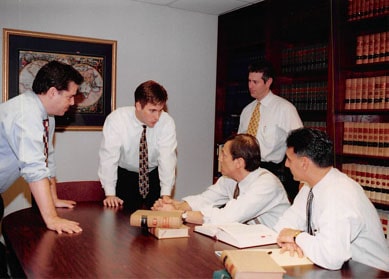
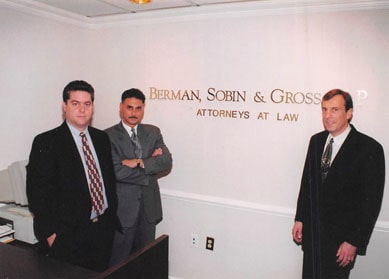
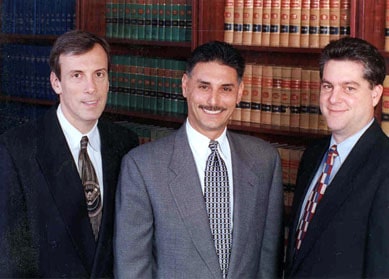
For more than 35 years, Berman | Sobin | Gross LLP has represented workers throughout Maryland, including Howard County, in claims that range from straightforward benefit recoveries to hard-fought trials before the Workers’ Compensation Commission and Maryland’s appellate courts. Our firm has handled hundreds of jury trials and appeals, including cases before both of Maryland’s highest courts. One of our founding attorneys literally wrote the treatise that Maryland practitioners rely on as the authoritative reference in this field. We take on cases that other firms have declined, including those that require expert testimony, multiple hearings, and appeals beyond the Commission level.
Our attorneys work with clients throughout the state from offices in Baltimore, Lutherville, Gaithersburg, and Frederick. We have staff who are fluent in Spanish, because the factory and industrial workforce in Maryland is diverse and every worker deserves to communicate clearly with the people representing them. When you work with our firm, one attorney stays with you throughout your case. The person who evaluates your claim is the same person who knows your file when it goes to hearing.
For Columbia factory workers dealing with serious industrial injuries, Berman | Sobin | Gross LLP offers the depth of experience and the willingness to see a case through wherever it needs to go. Contact our firm to speak with a Columbia industrial injury attorney about your claim and what your options actually are.