

Columbia Construction Worker Injury Attorney
Construction work in Columbia keeps Howard County growing, from the mixed-use developments around the Town Center to the residential builds spreading through Ellicott City and beyond. The workers framing those structures, laying electrical systems, operating cranes, and pouring concrete face physical hazards every single shift. When a serious injury happens on one of those sites, the question of who owes what to whom rarely has a clean answer. Columbia construction worker injury attorneys at Berman | Sobin | Gross LLP have spent 35 years untangling exactly these situations for Maryland workers who got hurt doing jobs the rest of us count on.
Why Construction Injuries in Columbia Produce Complicated Claims
Most construction sites in Columbia involve multiple layers of contractors. A general contractor holds the main contract, subcontractors handle specific trades, and workers may be employed by any one of those companies, or sometimes misclassified as independent contractors to avoid liability. That structure creates real problems when someone gets hurt.
Workers’ compensation covers injuries caused by the employee’s own employer. But when a subcontractor’s employee is injured because of negligence by the general contractor, another subcontractor, a property owner, or an equipment manufacturer, there may be a separate civil claim that goes beyond the workers’ comp system entirely. These are called third-party claims, and construction sites generate more of them than almost any other work environment.
A fall from scaffolding might involve a defective scaffold manufactured by a third party. An electrocution might trace back to a property owner who failed to disclose live utility lines. A crane collapse might be a machine defect case, a maintenance failure case, and an OSHA violation case all at once. The difference between a workers’ comp benefit recovery and a full third-party personal injury recovery can be enormous, measured in lost future wages, medical expenses, and compensation for permanent disability that workers’ comp alone would never fully address.
This is one reason why choosing legal representation in a construction injury case matters so much at the outset. Firms that handle only workers’ comp may not see or pursue the third-party angle. Firms without construction injury depth may miss the liability theory entirely.
The Injuries That Define Construction Site Cases
Columbia’s active development pipeline means workers here face the full spectrum of construction hazards. Falls from elevation remain the leading cause of fatal construction injuries nationally, and local sites are no exception. Workers fall from roofs, scaffolding, ladders, and through unguarded floor openings. These injuries are often catastrophic, producing spinal cord damage, traumatic brain injury, and fractures that require extended surgical care and long-term rehabilitation.
Struck-by injuries from falling tools, swinging equipment, or vehicles moving through a work zone cause another significant share of serious injuries. Electrical contacts, caught-in or caught-between incidents involving machinery or excavation collapses, and overexertion injuries round out the categories that Maryland’s workers’ compensation system, and the civil courts, see most frequently from construction environments.
Some injuries become clearer in hindsight than they appear on the day they happen. A worker who takes a hard impact and returns to the job may not understand the extent of a traumatic brain injury until symptoms develop over days or weeks. A back injury dismissed as a strain might later reveal herniated discs or spinal canal compromise. The early decisions made about medical treatment and claim documentation shape what recovery looks like years later.
What OSHA Violations Mean for Your Injury Claim
Federal OSHA standards set out specific requirements for fall protection, scaffolding systems, excavation shoring, electrical safety, and equipment guarding on construction sites. When an employer violates those standards and a worker gets hurt as a result, the OSHA record becomes a significant piece of evidence.
An OSHA citation does not automatically win a legal claim, but it does establish that a safety standard existed, that the employer knew or should have known about it, and that the employer failed to comply. In a third-party negligence case against a general contractor or site owner, that kind of evidence can be powerful. In a workers’ comp proceeding where the employer disputes the nature or cause of the injury, it may help establish that hazardous site conditions existed and were not addressed.
Columbia construction sites that experience serious injuries are subject to OSHA inspection. Workers and their families should preserve any OSHA investigation records, citations, or penalty notices they receive or can request. Those documents can be central to a claim.
Questions Injured Columbia Construction Workers Ask
I was classified as an independent contractor on the job site. Does that mean I cannot file a workers’ comp claim?
Not necessarily. Maryland workers’ compensation law looks at the actual working relationship, not just the label an employer puts on it. Many workers classified as independent contractors are legally employees for workers’ comp purposes. If you were directed by a supervisor, worked set hours, used the company’s equipment, and had no real independent business, you may have a valid claim regardless of what the paperwork says. This is a situation where getting a legal evaluation early matters considerably.
My injury happened because another subcontractor on the site was careless. Can I pursue a claim against them?
Yes. If someone other than your direct employer caused or contributed to your injury, you may have a third-party negligence claim against them. Workers’ comp from your employer and a civil claim against a negligent third party can run at the same time. Maryland law requires coordination between the two, but pursuing both is often the only way to recover the full scope of your damages.
The general contractor says my employer’s workers’ comp insurance covers everything. Is that true?
Workers’ comp from your employer covers your medical treatment and a portion of your lost wages. It does not compensate for pain and suffering, does not fully replace all lost future earning capacity in severe injury cases, and does not hold the responsible party accountable through the civil system. What the general contractor has told you may be accurate about their own liability exposure, but it is not an accurate statement of your complete legal options.
How long do I have to file a workers’ comp claim or a personal injury claim for a construction accident in Maryland?
For workers’ compensation in Maryland, the general rule is that claims must be filed within 60 days of the injury, though there are exceptions. For a third-party personal injury claim, Maryland’s statute of limitations generally gives you three years from the date of injury. These deadlines are not flexible, and missing them can bar recovery entirely. The sooner you speak with an attorney, the better your options remain.
What if the construction site was on federal property or involved a federal contractor?
Federal construction projects can trigger different legal frameworks, including the Defense Base Act or other federal workers’ compensation schemes depending on the context. These claims operate differently from Maryland state workers’ comp and require specific experience to handle properly.
Can I be fired for filing a workers’ compensation claim after a construction accident?
Maryland law prohibits retaliation against workers for filing workers’ comp claims. If an employer terminates or punishes a worker for asserting their legal rights after an injury, that conduct may give rise to a separate legal claim. Document everything and report any adverse employment action to your attorney immediately.
My injury required surgery and I may not be able to return to the same kind of work. What compensation is available?
Maryland workers’ comp provides benefits for temporary total disability while you recover, permanent partial disability if you have lasting functional impairment, permanent total disability in severe cases, and vocational rehabilitation if you cannot return to your prior occupation. A third-party civil claim may also address diminished earning capacity over a lifetime. For severe injuries, the difference between pursuing only workers’ comp and pursuing every available avenue of recovery can be substantial.
Representation Built for the Complexity of Construction Injury Cases
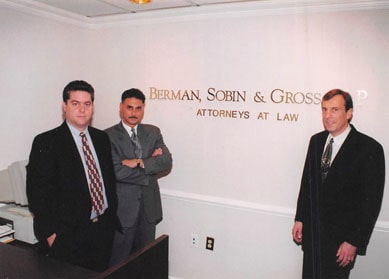
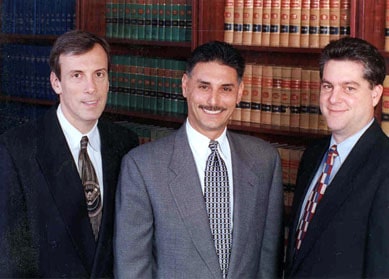
Berman | Sobin | Gross LLP has been representing injured workers throughout Maryland for 35 years. The firm has grown from three attorneys to over 20, with offices in Lutherville, Baltimore, Gaithersburg, and Frederick, giving Columbia-area workers access to representation without crossing the state. The firm has handled hundreds of workers’ compensation jury trials and has taken appeals before both of Maryland’s highest courts. One of the firm’s founders authored the definitive two-volume legal treatise on workers’ compensation in Maryland, the resource that attorneys and courts across the state continue to rely on.
Construction injury cases are not simple claims. They involve investigative work at the site level, coordination with OSHA records, expert testimony on cause and injury severity, and strategic decisions about whether workers’ comp alone or a combined workers’ comp and third-party approach serves the client best. Berman | Sobin | Gross LLP takes on the challenging cases, including those other firms have declined. Attorneys are fluent in Spanish and the firm serves the full diversity of Maryland’s working population. When a case requires going beyond a Commission hearing and into circuit court or beyond, this firm does not step back.
If you were injured on a Columbia construction site and want to understand the full scope of your options, contact Berman | Sobin | Gross LLP to speak with a Columbia construction injury attorney about your claim.