

Columbia Commercial Driver Injury Attorney
Commercial drivers in the Columbia area operate in a work environment most people never fully appreciate. Long hauls on I-95 and Route 29, tight delivery windows, physically demanding loading and unloading, and hours behind the wheel add up to an injury profile that looks nothing like a typical office worker’s claim. When a trucker, delivery driver, or bus operator gets hurt on the job, the workers’ compensation system they encounter is layered in ways that can work against them if they don’t know where the pressure points are. A Columbia commercial driver injury attorney who has actually litigated these claims, not just filed the paperwork, makes a real difference in what benefits get recovered and how quickly they arrive.
What Makes Commercial Driver Injuries Different at the Workers’ Comp Commission
The Maryland Workers’ Compensation Commission handles thousands of claims each year, but commercial driver cases carry complications that distinguish them from most. The physical demands of truck driving, courier work, and transit operations produce injuries that insurers often dispute on causation grounds. A back injury in a warehouse is straightforward to trace. A lumbar condition in a long-haul driver gets contested because the employer’s medical expert will argue that years of vibration and sedentary sitting created a pre-existing degenerative condition, not any single incident.
That distinction matters enormously under Maryland law. The Commission must evaluate whether the work was a contributing cause of the injury, not the sole cause. Employers and their insurers know this, and they invest in medical evaluations designed to muddy that causation question. Challenging those evaluations requires attorneys who know Maryland workers’ comp medicine, who can retain credible opposing experts, and who understand how the Commission weighs competing medical testimony. At Berman Sobin Gross LLP, one of the firm’s founders literally wrote the definitive treatise on workers’ compensation in Maryland, the reference resource that attorneys and judges across the state rely on. That level of substantive command shapes how the firm approaches every disputed causation question.
Beyond causation, commercial drivers face issues around wage calculation that other claimants rarely encounter. Overtime, per diem payments, variable route pay, and seasonal fluctuations in earnings all affect the average weekly wage calculation that determines a driver’s temporary total disability rate. Getting that number right is not automatic. The employer’s insurance carrier has every incentive to calculate it conservatively. Drivers need someone who will audit that calculation and push back where it’s wrong.
The Specific Injuries That Send Commercial Drivers to the Commission
Rotator cuff tears from repeated overhead lifting when loading and unloading cargo are among the most common surgical injuries in this category. Herniated discs develop from prolonged vibration exposure combined with sudden jolts on rough road surfaces. Knee injuries from repeated cab entry and exit, sometimes on poorly designed steps or running boards, are also well-documented. Hearing loss from prolonged exposure to engine noise and traffic is its own recognized occupational disease under Maryland law. Cardiovascular conditions, particularly among public safety transport workers, can trigger statutory presumptions that shift the burden to the employer to disprove a work connection.
The Howard County area’s commercial driver workforce is substantial. Warehousing and distribution operations near the Columbia Gateway business district, regional freight terminals along Route 1, and delivery infrastructure serving the dense residential corridors from Ellicott City through Jessup generate a consistent stream of injured workers. These are not marginal claims. They often involve significant permanent partial disability, prolonged inability to work, and genuine questions about whether a driver can return to the physical demands of commercial operation.
When a driver cannot return to their prior position, the vocational rehabilitation question becomes central. Maryland workers’ compensation law provides for vocational services in appropriate cases, and the firm’s appellate record reflects that commitment. In Fikar v. Montgomery County, Berman Sobin Gross established that injured workers receiving service-connected disability retirement could also access vocational rehabilitation benefits, a ruling that expanded options for seriously injured workers across the state. Understanding how that precedent applies to a Columbia driver’s situation requires attorneys who work in this space constantly.
Third-Party Claims Alongside the Workers’ Comp Case
Not every commercial driver injury is confined to a workers’ compensation claim. Drivers who are hurt in collisions while working may have civil claims against negligent third parties entirely separate from what workers’ comp provides. A delivery driver struck by a distracted motorist on Route 175 or on the I-95 interchange can pursue the at-fault driver’s liability coverage while simultaneously recovering workers’ compensation benefits. The interaction between those two recovery streams involves coordination rules that require careful management to preserve the full value of both claims.
Berman Sobin Gross handles personal injury and workers’ compensation claims, which means the firm can evaluate a commercial driver’s situation across both tracks without the client needing to coordinate between separate firms with potentially conflicting strategies. That integrated approach is practical, not just convenient. Decisions made in the workers’ comp proceeding can affect the civil case, and vice versa. Having attorneys who understand both bodies of law working on the same client’s behalf removes a source of exposure that often goes unrecognized.
Questions Commercial Drivers in Columbia Ask About Their Claims
My employer says my injury happened because I have a pre-existing back condition. Can they really deny my claim on that basis?
Not necessarily. Maryland law does not require that your work be the only cause of your injury. If your job aggravated, accelerated, or combined with a pre-existing condition to produce your current disability, that can still support a compensable claim. The key is how the medical evidence gets developed and presented. Pre-existing condition defenses are common and often overstated by employers’ insurers.
I was classified as an independent contractor. Does that close the door on a workers’ comp claim?
Independent contractor classification does not automatically determine your status under Maryland workers’ compensation law. The Commission looks at the actual working relationship, not just what the paperwork says. Many drivers classified as independent contractors are found to be employees for workers’ comp purposes when the facts of control, equipment ownership, and work integration are examined carefully.
How is my average weekly wage calculated if I earn overtime and per diem payments on top of my base rate?
Maryland law looks at actual earnings over a set period to establish average weekly wage. Whether per diem payments and irregular overtime are properly included in that calculation depends on their nature and consistency. These figures directly determine your temporary disability rate and any permanent disability award, so getting them right matters significantly.
My employer’s insurance company sent me to a doctor I didn’t choose. Do I have to accept that doctor’s opinion?
You have the right to independent medical evaluation. The Commission’s medical process allows for the development of competing medical opinions, and insurance company physicians frequently give opinions that minimize injury severity or dispute the work connection. That opinion is not the final word. Your attorney can retain qualified medical experts and challenge the insurer’s position at a Commission hearing.
I can’t return to driving because of my injury. What happens to my benefits?
If your injury prevents you from returning to commercial driving, the long-term picture involves permanent partial or permanent total disability benefits, along with potential vocational rehabilitation services if you can be retrained for other work. The specific outcome depends on the medical findings, your age, your education, and other factors the Commission evaluates. These cases require active development, not passive waiting.
Can I be fired for filing a workers’ compensation claim?
Maryland law prohibits retaliation against an employee for filing a workers’ compensation claim. If an employer takes adverse action in response to a claim, that creates its own legal exposure. Documenting the timeline of events after a claim is filed matters, and anyone who suspects retaliation should speak with an attorney promptly.
How long do I have to file a claim after a work injury?
Maryland generally requires that a workers’ compensation claim be filed within two years of the date of injury, or in the case of an occupational disease, within two years of the date the worker knew or should have known that the condition was work-related. Some situations involve different timeframes. Waiting to see how an injury resolves is a common reason people find themselves outside the filing window, so getting a claim evaluated early is worth doing.
Injured Commercial Drivers in Howard County Deserve Real Representation
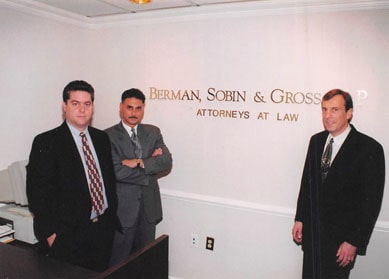
Berman Sobin Gross LLP is the largest workers’ compensation firm in Maryland representing injured workers, with offices in Lutherville, Baltimore, Gaithersburg, and Frederick and attorneys serving clients throughout Howard County and the broader region. The firm has handled tens of thousands of Commission hearings and hundreds of workers’ compensation jury trials, including appeals before both of Maryland’s highest courts. That litigation depth means the firm does not shy away from claims that require full development, expert battles, or appellate advocacy. If another attorney has declined your case or suggested it cannot go beyond an administrative hearing, the firm’s attorneys are prepared to evaluate what it would actually take to pursue the claim fully. Injured commercial drivers in Columbia and Howard County can reach Berman Sobin Gross for a confidential case analysis to understand their options and what their claim is genuinely worth.