

College Park Warehouse Worker Injury Attorney
Warehouse work in the College Park area is physically demanding in ways that most office workers never see up close. The Prince George’s County corridor along Route 1 and the industrial zones near the Capital Beltway are home to distribution centers, freight operations, and storage facilities where workers lift, load, operate forklifts, and navigate crowded floors for full shifts. When something goes wrong in that environment, the injuries are rarely minor. A College Park warehouse worker injury attorney from Berman | Sobin | Gross LLP has been handling exactly these kinds of claims for over three decades, working for the laborers and logistics workers who keep goods moving through the Washington metropolitan region.
What Warehouse Injuries in the College Park Area Actually Look Like
The nature of warehouse work in Prince George’s County creates a specific set of injury patterns that attorneys handling these claims need to understand deeply. Forklift collisions are among the most serious, and they occur in high-traffic facilities where visibility is poor and operational pressures push workers to move faster than is safe. Loading dock accidents involving falling freight or gaps between trailers and the dock surface send workers to trauma centers with broken bones, spinal injuries, and crush injuries to hands and feet.
Repetitive stress injuries accumulate over time in workers who spend years pulling orders, stacking pallets, or operating equipment in the same biomechanical patterns day after day. These claims can be harder to prove than acute injuries because there is no single incident to point to. Employers and their insurers often push back hard on repetitive stress claims, arguing that the condition is degenerative rather than work-related. That is where detailed medical documentation and the right legal strategy make the difference.
Slip and fall injuries on wet loading areas, chemical exposures in facilities that store hazardous materials, and injuries caused by poorly maintained equipment round out the injury landscape for local warehouse workers. The workers’ compensation system is designed to cover all of these, but coverage does not happen automatically. Claims get denied, disputed, and delayed, and workers who handle their cases alone often receive far less than they are entitled to.
The Workers’ Compensation Process in Maryland and Where Claims Break Down
Maryland’s workers’ compensation system functions through the Maryland Workers’ Compensation Commission, which has exclusive jurisdiction over most workplace injury disputes in the state. A Prince George’s County warehouse worker files a claim with the Commission, the employer and its insurer respond, and the parties either reach agreement or proceed to a hearing.
The process looks straightforward on paper. In practice, it breaks down at several predictable points. Employers or their insurers routinely dispute whether an injury is covered, whether it is as severe as the worker claims, or whether it is causally connected to the work itself. They hire their own medical experts to give opinions that minimize the severity of an injury or attribute it to pre-existing conditions. They monitor return-to-work timelines and apply pressure on workers to accept light-duty assignments before they have truly healed.
The Commission’s hearing process has strict procedural requirements. Missing deadlines, failing to properly document the nature and extent of an injury, or agreeing to a settlement without understanding what it covers can permanently affect a worker’s right to future benefits. Berman | Sobin | Gross LLP’s attorneys have handled not just thousands of Commission hearings but also hundreds of jury trials and appeals to Maryland’s highest courts. When a case goes past the administrative level, that track record matters.
When Third-Party Liability Exists Alongside a Workers’ Comp Claim
Workers’ compensation covers most warehouse injuries, but it is not the only avenue available in every case. When an injury is caused in part by someone other than the employer, a separate personal injury claim against that third party may be worth pursuing alongside the workers’ comp claim.
In the warehouse context, this comes up most often when a worker is injured by a piece of equipment with a design or manufacturing defect, when a delivery driver employed by a different company causes an accident on a shared dock, or when a contractor working in the facility is responsible for a hazardous condition. The College Park area’s concentration of large distribution facilities means there are often multiple companies and vendors operating in the same space, and liability does not always stop at the employer’s door.
Pursuing a third-party claim requires different legal work than a Commission proceeding. It involves investigating the circumstances of the injury, identifying all responsible parties, and building a damages case that can go beyond the wage replacement and medical benefits available through workers’ comp. Berman | Sobin | Gross LLP handles both types of claims, which means injured workers do not have to find a second firm or manage two separate representations.
Questions Warehouse Workers Often Ask Before Filing a Claim
Do I have to report my injury to my employer before filing with the Commission?
Yes. Under Maryland law, you are required to notify your employer of a work injury, generally within a short window of when it occurred or when you knew or reasonably should have known it was work-related. Failing to give proper notice can jeopardize your claim. An attorney can advise you on whether notice requirements have been met in your specific situation and whether any exceptions apply.
My employer says my back injury is just a pre-existing condition. Can they deny my claim on that basis?
Having a pre-existing condition does not disqualify you from workers’ compensation coverage if your work activities aggravated, accelerated, or combined with that condition to cause your current disability. This is a common area of dispute and typically requires strong medical evidence to counter the employer’s position. The legal standard in Maryland is well-established, and experienced attorneys know how to present the medical record in a way that supports the claim.
What benefits can I receive while I am out of work recovering from a warehouse injury?
Maryland workers’ compensation provides temporary total disability benefits, which replace a percentage of your average weekly wage while you are unable to work. Medical benefits cover treatment related to the injury. If your injury results in a permanent impairment, you may also be entitled to a permanent partial or permanent total disability award. The specific amounts depend on the nature and severity of your injury and your earnings history.
My employer is pressuring me to come back on light duty before my doctor says I am ready. What should I do?
This is a situation where legal counsel is genuinely important. Light-duty assignments in warehouse settings can be genuinely appropriate, or they can be structured in ways that put a still-injured worker at risk of re-injury or that affect benefit calculations in ways the worker does not fully understand. An attorney can review the specifics of what is being offered and advise on your rights before you agree to anything.
The insurance company offered me a settlement. Should I accept it?
Settlement agreements in Maryland workers’ compensation cases, particularly those that resolve a claim fully, can close off your right to future medical benefits and wage replacement if your condition worsens. Understanding what you are giving up is essential before signing anything. A full evaluation of the settlement’s terms against the projected value of your ongoing benefits is the work an attorney does before recommending any resolution.
Can I be fired for filing a workers’ compensation claim?
Maryland law prohibits retaliation against employees for filing workers’ compensation claims. If an employer takes adverse action, including termination, because of a claim, that is a separate legal issue that can be pursued. The workers’ compensation claim itself proceeds regardless of employment status.
What if the injury happened because my employer ignored OSHA violations or known safety problems?
The existence of OSHA violations or ignored safety complaints does not typically change how a workers’ compensation claim is handled through the Commission, since workers’ comp is generally a no-fault system. However, documented safety violations can be relevant in evaluating whether a third-party claim exists, or in certain penalty provisions within the workers’ comp statute. An attorney can assess whether these facts affect the overall legal strategy for your case.
Representing College Park Area Warehouse Workers at Berman | Sobin | Gross LLP
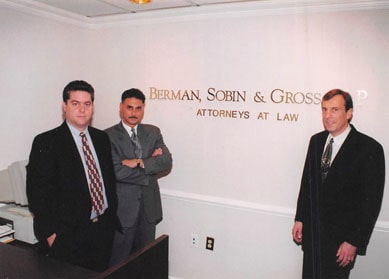
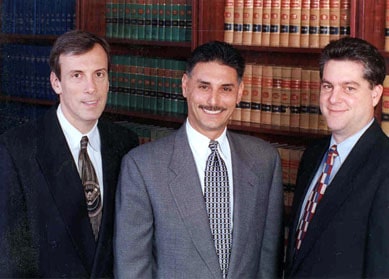
Berman | Sobin | Gross LLP is the largest workers’ compensation law firm in Maryland representing injured workers. The firm has grown from three attorneys to over twenty, with offices throughout the state, and has spent 35 years building the kind of litigation experience that matters when a case becomes contested. One of the firm’s founders authored a two-volume treatise on Maryland workers’ compensation law that practitioners across the state continue to use. That depth of knowledge is not incidental to a College Park warehouse injury case, it shapes the strategy from the first filing to any final appeal.
The firm represents workers in Prince George’s County and throughout the region, including those in the College Park, Greenbelt, Lanham, and Hyattsville areas where warehouse and distribution work is concentrated. Spanish-language representation is available, which matters in an industry where a significant portion of the workforce communicates primarily in Spanish.
If you were hurt in a warehouse job in the College Park area and are dealing with a denied claim, a disputed injury, or pressure to settle before you understand what your case is actually worth, the workers’ compensation attorneys at Berman | Sobin | Gross LLP are ready to review your situation. Contact the firm today for a confidential case analysis with a Maryland warehouse worker injury lawyer who will stay with your case from start to finish.