

College Park Utility Worker Injury Attorney
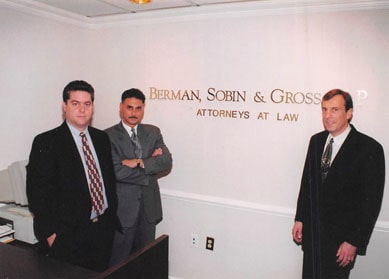
Utility work in College Park and across Prince George’s County carries a distinct set of physical risks that most employment does not. Whether maintaining electrical infrastructure near the University of Maryland corridor, repairing water mains along Route 1, or working on underground telecommunications systems throughout the city’s older residential neighborhoods, utility workers operate in environments where the gap between a normal shift and a serious injury can close in seconds. When that happens, the workers’ compensation system becomes the primary avenue for medical coverage and wage replacement, and how well a claim is handled from the start often determines what a worker and their family actually recovers. College Park utility worker injury attorneys at Berman | Sobin | Gross LLP have spent 35 years representing exactly this kind of worker throughout Maryland, including the communities of Prince George’s County where infrastructure demands are constant and the work is unforgiving.
The Specific Hazards That Put College Park Utility Workers at Risk
Utility work is not a monolithic category. Electrical lineworkers, gas technicians, water and sewer crews, telecommunications installers, and public works employees each face injury patterns shaped by their particular trade and environment. In College Park, several factors compound those risks.
The density of underground utility infrastructure near the university campus means crews frequently work in excavated trenches or confined spaces where oxygen levels, structural collapse, and chemical exposure are live concerns. Trenching accidents in particular can produce catastrophic crush injuries, and confined space entry creates risks of asphyxiation or toxic gas exposure that standard surface work does not present.
Electrical utility workers face arc flash and electrocution hazards that can cause burns across a significant portion of the body, cardiac events, and permanent neurological damage. These injuries often require extended treatment, skin grafting, and long-term rehabilitation, and the full cost of that treatment may not be apparent until well into recovery.
Overhead work on utility poles or elevated platforms exposes workers to fall risks, and the intersection of Route 1, Paint Branch Parkway, and other high-traffic corridors in College Park means roadway utility crews regularly work adjacent to moving vehicles. Being struck by traffic is a recognized leading cause of fatality for roadway utility workers nationally, and local road conditions in this part of Prince George’s County create real exposure.
For workers on water and sewer infrastructure, repetitive motion injuries accumulate over time alongside acute incidents. These occupational disease claims are often more difficult to pursue than single-incident trauma claims, because employers and insurers frequently dispute the connection between the work and the medical condition. Maryland law provides specific mechanisms for pursuing these claims, but the evidentiary standards require careful handling from the beginning.
How Maryland Workers’ Compensation Actually Works for Utility Employees
Maryland’s Workers’ Compensation Commission administers the state’s workers’ comp system, and most utility workers injured on the job have a right to benefits that include payment of medical expenses related to the injury, temporary total or temporary partial disability benefits during the period when they cannot work or can only work in a reduced capacity, and permanent disability benefits if the injury results in lasting functional impairment.
For utility workers employed by municipalities or public agencies in Prince George’s County, there is an additional layer of analysis. Public employees in Maryland are covered under the workers’ compensation system, but the claims process and the interaction with employment benefits, sick leave, and disability retirement programs can create complications that private-sector workers do not face. Understanding how workers’ comp benefits coordinate with any available public employee benefits matters enormously for what a worker ultimately receives.
Vocational rehabilitation is another benefit that injured utility workers often overlook. If a worker’s injuries prevent them from returning to their trade, Maryland law provides access to vocational rehabilitation services designed to facilitate a return to suitable employment. Berman | Sobin | Gross LLP has successfully litigated cases establishing that injured workers receiving service-connected disability retirement can still access vocational rehabilitation, a point that directly benefits public sector utility employees who might otherwise believe those doors are closed to them.
The claims process begins with reporting the injury to the employer and filing a claim with the Workers’ Compensation Commission, but those initial steps are only the beginning. Commission hearings address disputes over the compensability of the claim, the nature and extent of disability, and the adequacy of medical treatment. When insurers or self-insured employers dispute claims, workers need representation that can present medical evidence effectively and challenge employer-side medical opinions.
When a Third Party Shares Responsibility for the Injury
Workers’ compensation covers injuries regardless of fault, which is its primary advantage. But it also limits recovery, generally excluding non-economic damages like pain and suffering. In certain utility worker injury situations, a third party outside the employer may bear legal responsibility for what happened, and that opens a separate avenue for recovery that workers’ comp does not provide.
A utility crew struck by a negligent driver on a College Park road has a potential personal injury claim against that driver in addition to a workers’ comp claim. A worker injured due to a defective piece of equipment, a faulty bucket truck mechanism, or a poorly designed tool may have a product liability claim against the manufacturer. A utility worker harmed because a property owner failed to accurately mark private line locations could have a claim against that owner.
These third-party claims can run alongside a workers’ compensation claim, subject to rules about how any third-party recovery interacts with the workers’ comp lien. Berman | Sobin | Gross LLP handles both workers’ compensation and personal injury matters, which means clients do not need separate representation when both avenues are available. Having coordinated representation across both claim types protects against gaps that could cost workers significant compensation.
Questions Utility Workers in College Park Ask About Their Claims
What if my employer disputes that the injury happened at work?
Employers and their insurers dispute compensability for various reasons, including questions about whether the injury occurred during the course of employment or whether a pre-existing condition is actually the source of the problem. These disputes go to a Workers’ Compensation Commission hearing where both sides present evidence. Thorough documentation from the day of the incident, consistent medical records, and witness accounts all contribute to establishing compensability, and having an attorney manage that evidentiary record from the start matters.
Can I choose my own doctor for treatment?
Maryland law has specific rules about medical care in workers’ compensation cases, including the ability to select a treating physician from a list of providers. How the selection process works in practice, and what happens when a worker wants to change providers or seek specialist care, involves procedural steps that affect both the quality of treatment and the strength of the claim. Understanding those procedures early prevents mistakes that complicate later proceedings.
What happens if my injuries prevent me from ever doing utility work again?
Permanent disability benefits under Maryland workers’ compensation are calculated based on the nature and degree of the impairment, using schedules that assign values to specific losses of function. For workers whose injuries prevent them from returning to their trade entirely, the distinction between scheduled and unscheduled permanent disability becomes critical to how benefits are calculated. This is an area where the difference between adequate and inadequate representation can be measured in years of lost income.
My employer is the city. Does that change how my claim works?
Municipal employers in Maryland participate in the workers’ compensation system, but they often self-insure, meaning the city handles claims directly rather than through a private insurer. The practical experience of dealing with a municipal employer’s risk management office is different from dealing with a commercial insurer, and workers should be aware that the interests of the employer, even a public one, are not aligned with their own when it comes to valuing a claim.
How long do I have to file a claim in Maryland?
Maryland law sets specific deadlines for filing workers’ compensation claims, and missing them can bar recovery entirely. For most traumatic injury claims, the filing deadline is tied to the date of the accident. For occupational disease claims, which are common among utility workers dealing with repetitive stress or long-term chemical exposure, the time calculation works differently. Consulting with an attorney promptly after an injury or diagnosis ensures the deadlines are met correctly.
What if a previous work injury affected the same part of my body?
Prior injuries to the same body part do not eliminate a worker’s right to compensation for a new aggravation or worsening caused by current employment. Maryland law recognizes claims where current work conditions have aggravated a pre-existing condition. Employers routinely attempt to attribute current impairment entirely to the prior injury in order to minimize their liability, and rebutting that argument requires medical evidence and legal analysis that an experienced attorney can organize effectively.
Can I be fired for filing a workers’ compensation claim?
Maryland law prohibits retaliatory discharge for filing a workers’ compensation claim, and workers who experience adverse employment actions after filing have potential legal remedies separate from the compensation claim itself. If a utility worker is terminated, demoted, or otherwise penalized in a way that appears connected to their claim, that issue should be addressed directly rather than ignored.
Representing College Park Utility Workers Through Every Stage of a Claim
Berman | Sobin | Gross LLP is the largest workers’ compensation law firm in Maryland representing injured workers, with attorneys and staff who serve clients throughout Prince George’s County and the broader Washington metropolitan area. The firm’s attorneys have handled hundreds of workers’ compensation jury trials and argued appeals before both of Maryland’s highest courts, including cases that have changed how the law applies to workers across the state. One of the firm’s founders authored the leading two-volume treatise on Maryland workers’ compensation, the reference that continues to guide practitioners statewide. College Park utility worker injury cases involve fact-specific, technically demanding claims, and this firm has both the resources and the litigation record to pursue them completely, including past the Commission level when that is what a case requires. Workers who have had claims denied or undervalued elsewhere are encouraged to seek an evaluation of where their claim stands.