

College Park Job Injury Attorney
Work injuries in College Park follow predictable patterns. The University of Maryland campus employs thousands of maintenance, food service, and facilities workers. The warehouses and distribution centers along Route 1 run overnight shifts in demanding physical conditions. State and county employees fill offices and fieldwork roles throughout the city. When something goes wrong in any of these environments, the workers’ compensation system is supposed to provide medical coverage and wage replacement. What it actually provides, in many cases, depends heavily on how the claim is handled from the start. A College Park job injury attorney from Berman | Sobin | Gross LLP helps injured workers understand what they are entitled to and push back when employers or insurers respond to valid claims with delays, denials, or lowball offers.
Where College Park Workers Get Hurt and Why It Matters Legally
The nature of a work injury shapes every aspect of a workers’ compensation claim. A repetitive motion injury affecting a university facilities employee develops over months, which creates different evidentiary challenges than an acute fall at a construction site on Kenilworth Avenue. A public safety worker with a cardiovascular condition faces a different legal framework than a restaurant employee with a back strain.
College Park’s workforce is genuinely diverse. Retail and food service employees along Baltimore Avenue deal with slip-and-fall hazards and overexertion injuries. Drivers making deliveries through the dense traffic corridors near the Capital Beltway face accident risks that can complicate the line between workers’ compensation and third-party liability. University employees covered under state employment classifications may be subject to specific procedural rules that differ from private-sector claims. Recognizing which legal framework applies to a particular worker’s situation is not a formality. It directly affects what benefits are available, what deadlines govern the claim, and whether additional remedies exist beyond workers’ comp.
Maryland law requires most employers to carry workers’ compensation insurance, but coverage gaps exist. Some contractors misclassify employees as independent contractors to avoid coverage obligations. Some employers carry inadequate insurance. In those situations, injured workers may still have options, including claims against the Uninsured Employers’ Fund, and in third-party negligence cases, direct civil claims against responsible parties.
The Workers’ Compensation Commission Process and Where Claims Actually Stall
Maryland workers’ compensation claims are administered through the Workers’ Compensation Commission, which handles everything from initial benefit approvals to disputed hearings. For a College Park worker, the nearest Commission offices and the courts that handle appeals are part of the practical landscape of pursuing a claim. Understanding how the process actually unfolds, not how the brochure describes it, makes a real difference in outcomes.
Claims often stall at predictable points. The initial report is filed, and then the employer’s insurance carrier orders an independent medical examination. The examining physician, selected and paid by the insurer, concludes that the injury is not work-related, or that the worker has reached maximum medical improvement earlier than the treating physician believes. The insurer then cuts off benefits based on that opinion. This is one of the most common pressure points in contested workers’ compensation cases, and it is also one of the areas where experienced legal representation carries the most weight.
Berman | Sobin | Gross LLP has handled hundreds of workers’ compensation jury trials and has argued appeals before Maryland’s highest courts. The firm’s attorneys do not treat a Commission hearing as the end of the road if the outcome does not reflect the actual merits of a claim. That willingness to push cases into court is not posturing. It is a practical advantage, because insurers evaluate claims differently when they know the opposing counsel will actually go to trial.
Occupational Disease Claims in College Park’s Work Environments
Not every serious work injury happens in a single moment. Some of the most significant and legally complex claims involve conditions that develop over time through repeated exposure. For College Park workers, this can include hearing loss from sustained noise exposure, respiratory conditions from chemical or dust exposure, musculoskeletal disorders from repetitive tasks, and cardiovascular conditions affecting public safety employees.
Maryland law provides specific protections for occupational diseases, and the rules governing how they are established, how the date of injury is calculated, and what benefits attach are distinct from those governing traumatic injuries. For public safety workers, Maryland’s presumption statutes shift the burden of proof for certain conditions, including heart disease and hypertension, so that the employer must disprove the job connection rather than the worker having to prove it. Berman | Sobin | Gross LLP has litigated these issues at the appellate level, including cases that clarified how age deductions are calculated for occupational hearing loss and cases affirming that cardiovascular presumptions apply even after a public safety worker has retired or is off duty at the time of the medical event.
These are not abstract legal victories. They represent real benefits that flow to real workers because the law was clarified through litigation. College Park’s public safety employees and the university and government workers who may develop occupational conditions over long careers have a direct interest in how these legal standards are applied.
Questions College Park Injured Workers Ask
How long do I have to report a work injury in Maryland?
Maryland law generally requires injured workers to report a workplace injury to their employer within ten days of the accident. For occupational diseases, the reporting period runs from when the worker knew or should have known that the condition was work-related. Missing these deadlines can jeopardize a claim, though exceptions exist in some circumstances. Reporting promptly and in writing protects your position.
Can my employer fire me for filing a workers’ compensation claim?
Maryland law prohibits retaliation against employees who file workers’ compensation claims. Termination, demotion, or adverse changes to employment conditions following a claim filing can give rise to a separate legal claim. The connection between the claim and the adverse action matters, and documentation of the sequence of events is important if retaliation is suspected.
What if the insurer says my injury is pre-existing and not covered?
Pre-existing conditions do not automatically disqualify a claim. Maryland workers’ compensation law covers injuries where work activities aggravate, accelerate, or combine with a pre-existing condition to produce the current disability. The insurer’s position that a condition is entirely pre-existing is often a negotiating stance, not a final legal determination. Medical evidence, including the treating physician’s opinions, is central to challenging that position.
What benefits can I receive if I cannot return to my job?
Maryland workers’ compensation provides for temporary total disability benefits while a worker is unable to work, temporary partial disability benefits when a worker can work in a reduced capacity, and permanent partial or permanent total disability benefits based on the long-term effects of the injury. Vocational rehabilitation services are also available in some circumstances. The specific amounts depend on the worker’s average weekly wage and the nature and extent of the disability.
What happens if my employer does not have workers’ compensation insurance?
Maryland’s Uninsured Employers’ Fund exists to provide benefits to workers whose employers are not covered by workers’ compensation insurance. Claims against the Fund follow a different process, and additional legal options may be available depending on the circumstances. An attorney can help identify all available avenues when standard coverage is not in place.
Does workers’ compensation cover injuries that happen on a break or during lunch?
Maryland workers’ compensation generally covers injuries that arise out of and in the course of employment. Whether a break-time injury falls within that standard depends on where the injury occurred, what the worker was doing, and whether the employer controlled or provided the space. These situations are fact-specific and often contested.
Can I choose my own doctor for treatment?
Maryland has specific rules about initial medical treatment in workers’ compensation cases, and the employer or insurer often has significant influence over which providers are authorized. However, workers have rights in this area, particularly as a claim develops. Disputes over medical treatment and the adequacy of authorized care are common issues in contested claims.
Representation for College Park Workers, from the Commission to the Courthouse
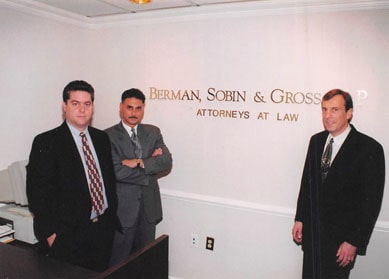
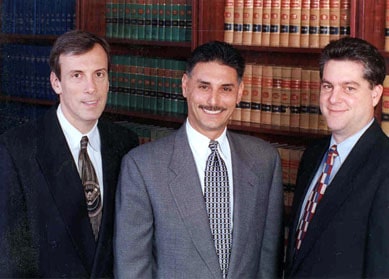
Berman | Sobin | Gross LLP has represented injured workers across Maryland for 35 years. The firm has grown from three attorneys to more than twenty, with offices in Lutherville, Baltimore, Gaithersburg, and Frederick, serving clients throughout the state, including College Park and the broader Prince George’s County area. The firm’s attorneys include Spanish-speaking staff members, and the firm is committed to making sure language is never a barrier to clear communication with clients. For College Park workers who have been injured on the job, who have received a denial, or who are uncertain whether their claim has been handled fairly, Berman | Sobin | Gross LLP offers a confidential case analysis with no obligation. The firm represents workers, not employers or insurance companies, and the attorneys here stay with their clients from the first consultation through the resolution of the case. Contact Berman | Sobin | Gross LLP to speak with a College Park job injury lawyer about your situation.