

College Park Healthcare Worker Injury Attorney
Healthcare workers in College Park carry enormous physical and emotional weight every shift. Nursing assistants who lift patients dozens of times a day, hospital technicians exposed to radiation and chemicals, home health aides who work alone in private residences with no backup. When one of these workers gets hurt, the workers’ compensation system is supposed to step in. In practice, that process is rarely simple. A College Park healthcare worker injury attorney at Berman | Sobin | Gross LLP can help you understand what you are actually owed and what to do when the system pushes back.
The Physical Reality of Healthcare Work in College Park
The College Park area sits adjacent to the University of Maryland’s main campus, and that proximity shapes the local healthcare workforce in specific ways. University of Maryland Medical System facilities, outpatient clinics, rehabilitation centers, and a dense network of assisted living and memory care facilities all draw workers from Prince George’s County and surrounding communities. These are not desk jobs.
Overexertion from patient handling is one of the leading causes of serious injury in this field. A nursing assistant who helps transfer a non-ambulatory patient dozens of times per week faces cumulative stress on the spine, shoulders, and knees that can accumulate quietly for years before reaching a breaking point. That kind of gradual-onset injury creates real problems in the workers’ compensation system, because there is rarely a single incident date to point to.
There are also acute injuries: a slip on a wet floor during a shift change, a needlestick from a sharps container that was too full, a patient who becomes combative and strikes a care provider. These incidents happen fast and leave workers wondering immediately whether they handled the reporting correctly and whether their employer is going to be cooperative about the claim.
Exposure injuries add another layer of complexity. Healthcare workers who handle chemotherapy drugs, sterilization agents, or certain cleaning chemicals face risks that do not show up on an X-ray. Occupational disease claims under Maryland law require specific medical and factual development, and they are frequently contested by employers and insurers who argue that the condition predates employment or has a different cause.
Where Healthcare Worker Claims Actually Break Down
The workers’ compensation claim process looks straightforward on paper. You report the injury, you see a doctor, benefits begin. The reality for healthcare workers in College Park often looks different.
Employers in this sector are often large institutions with sophisticated human resources departments and established relationships with insurance carriers. Those carriers retain physicians for independent medical evaluations whose opinions, not always aligned with your own treating provider’s, carry significant weight at the Workers’ Compensation Commission. A claim that seems solid on the surface can stall at an IME report that questions causation or minimizes the extent of disability.
Repetitive stress injuries and occupational disease claims face the highest rate of denial. Insurers frequently argue that a nurse’s back injury is degenerative, not work-related, or that a worker’s respiratory condition predates their exposure to workplace chemicals. These arguments are not always made in good faith, and they are not always correct. They do, however, require a response with real medical and legal substance behind it.
Part-time healthcare workers, per-diem staff, and workers placed through staffing agencies face additional complications around employer coverage and which entity is actually responsible for their benefits. Those structural questions need answers quickly, because the window for filing a claim in Maryland is real.
What Berman | Sobin | Gross LLP Brings to Healthcare Worker Cases
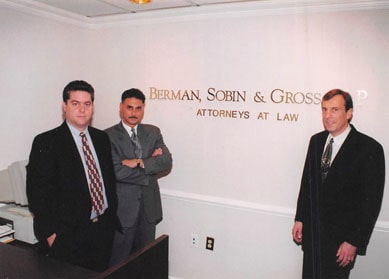
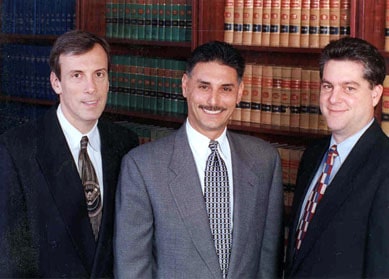
Berman | Sobin | Gross LLP has represented workers’ compensation claimants throughout Maryland for 35 years. The firm is the largest workers’ compensation law firm in Maryland representing injured workers, with offices in Lutherville, Baltimore, Gaithersburg, and Frederick, serving the full range of communities in Prince George’s County, including College Park.
One of the firm’s founders literally wrote the book on workers’ compensation in Maryland, a two-volume treatise that remains the primary reference resource for practitioners in this field. That depth of knowledge matters when a case involves a contested occupational disease, a disputed causation opinion, or a claim that has been denied at the administrative level and needs to go further.
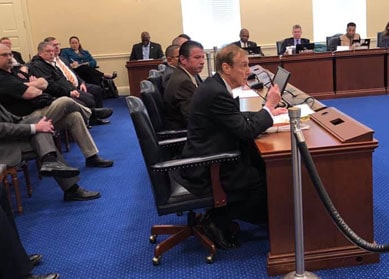
The firm does not turn away difficult cases. When an insurer contests a claim through an independent medical evaluation, when a healthcare employer disputes whether an injury is work-related, when a partial disability award does not reflect what a worker has actually lost, the attorneys here are prepared to take the case past the Commission and into the courts. The firm has handled hundreds of workers’ compensation jury trials and argued appeals before both of Maryland’s highest appellate courts.
For healthcare workers specifically, this means having attorneys who understand how to build occupational disease claims with the medical foundation those cases require, how to challenge IME opinions that do not hold up to scrutiny, and how to address the specific employment structures that complicate coverage questions for per-diem and agency workers.
Questions Healthcare Workers in College Park Ask Before Calling
My employer said my back injury is just wear and tear, not a work injury. Do I still have a claim?
Possibly. Maryland law recognizes that work can aggravate or accelerate a pre-existing condition, and that aggravation can still be compensable. The key question is whether your work activities materially contributed to the injury or to its worsening. That requires medical documentation and, often, a direct challenge to the employer’s characterization of your condition.
I was placed in my position through a staffing agency. Who is responsible for my workers’ compensation benefits?
This depends on the specific arrangement between the staffing agency and the facility where you were working. Maryland law has provisions that address leased employees, and in some situations more than one entity may bear responsibility. This is one of the threshold questions that needs to be resolved early in a claim, because it affects how and where the case is filed.
I did not report my injury right away because I was not sure how serious it was. Does that bar my claim?
Not necessarily. Maryland does have notice requirements, but late reporting does not automatically kill a claim. The analysis depends on how much time passed, the nature of the injury, and whether the employer can show it was genuinely prejudiced by the delay. A gradual-onset injury, like cumulative back damage from patient lifting, presents different notice questions than a discrete event like a fall.
The workers’ compensation doctor says I can return to full duty, but I physically cannot do my job. What do I do?
You have the right to contest the medical opinion. Your treating physician’s assessment matters, and the Commission weighs conflicting medical opinions. You also have the option to request an independent medical evaluation under certain circumstances. Accepting a return-to-work determination that is not accurate can seriously damage your claim, so this is a decision worth addressing with legal counsel before you act.
I was injured in a patient assault. Can I pursue anything beyond workers’ compensation?
Potentially. If a third party other than your employer contributed to the conditions that allowed the assault to occur, a separate civil claim may exist alongside your workers’ compensation claim. The analysis depends on the specifics of how the incident happened and who was involved. Workers’ compensation and civil liability are separate tracks, and pursuing one does not automatically foreclose the other.
My claim was denied. How much time do I have to respond?
Deadlines under Maryland workers’ compensation law are strict. Once a claim is denied, the window for requesting a hearing before the Commission moves quickly. Missing those deadlines can have serious consequences for your ability to recover benefits at all. This is not a situation where waiting to see what happens is a reasonable approach.
What benefits am I actually entitled to if I am injured working in healthcare?
Covered benefits in Maryland workers’ compensation include medical treatment related to the injury, temporary total or partial disability payments if you cannot work or can only work at reduced capacity, and permanent disability awards where the injury leaves lasting impairment. Vocational rehabilitation may also be available if you cannot return to healthcare work. The specific amounts depend on your average weekly wage and the nature of your disability.
Healthcare Workers in College Park Deserve Representation That Matches What They Are Up Against
The institutions that employ healthcare workers in the College Park area are not without resources when a workers’ compensation claim is filed against them. They have insurance carriers, retained physicians, and legal teams whose job is to limit what gets paid out. A College Park healthcare worker injury attorney at Berman | Sobin | Gross LLP represents workers who are up against exactly that structure, and the firm has the experience and the willingness to take a fight as far as it needs to go. Contact Berman | Sobin | Gross LLP for a confidential case analysis with one of our Maryland healthcare worker injury attorneys.