

College Park Government Employee Injury Attorney
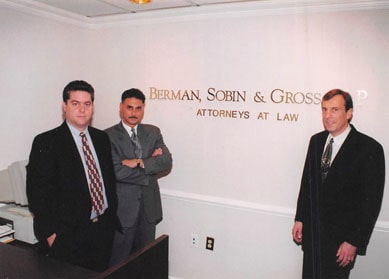
Government workers in College Park carry real responsibility and real risk. Whether you work for the City of College Park, Prince George’s County, the University of Maryland system, or a state agency with offices in the area, a workplace injury can upend your income, your health, and your family’s stability in ways that ordinary workers’ compensation cases do not always capture. College Park government employee injury attorneys at Berman | Sobin | Gross LLP have spent 35 years representing public employees across Maryland, and that depth of experience matters when your claim involves the specific rules, presumptions, and procedural layers that apply to government workers.
Why Government Employment Changes the Legal Picture After a Workplace Injury
Public employees in Maryland do not always move through the same workers’ compensation channels as private-sector workers, and the differences are not minor. Depending on your employer, you may be covered under the standard Maryland Workers’ Compensation Act, or you may fall under a separate statutory scheme with its own benefit structure, appeal process, and deadlines. State employees, county workers, and municipal employees are each governed by distinct rules, and Prince George’s County workers, in particular, often have layered benefits through pension systems, leave provisions, and collective bargaining agreements that interact with any compensation claim in complicated ways.
Public safety employees, a category that includes firefighters, law enforcement officers, corrections officers, EMTs, and paramedics working in and around College Park, have access to enhanced protections under Maryland law. These include statutory presumptions that link certain diseases, including heart disease, hypertension, and lung conditions, to the nature of public safety work. Those presumptions shift the burden significantly, but employers and their insurers consistently challenge them, sometimes by introducing medical experts to argue that the scientific basis for the presumption does not hold. Berman | Sobin | Gross LLP successfully argued before Maryland’s courts that such challenges to the presumption itself are not permissible testimony, a result that directly protects injured public safety workers across the state.
The Specific Injuries That Show Up in College Park Government Work
College Park sits at the intersection of significant state government activity and a major research university, which means the government workforce here is unusually varied. Workers at the University of Maryland who fall under state employment classifications, public works employees managing the infrastructure along Route 1 and the surrounding corridors, and law enforcement personnel stationed in one of Maryland’s more densely trafficked jurisdictions all face occupational hazards that are distinct from one another.
For physical laborers and field crews, musculoskeletal injuries from repetitive lifting, equipment operation, and outdoor exposure accumulate over time and are frequently disputed by employers who argue that the condition is degenerative rather than work-related. For law enforcement and corrections officers, traumatic injuries from incidents involving the public, occupational stress injuries, and hearing loss from equipment and environmental noise all raise fact-intensive questions about causation. For office-based government workers, repetitive strain injuries and conditions linked to ergonomic failures are often dismissed early in the claims process.
Whatever the category, the common thread is that government employers and their insurers rarely accept complex claims at face value. They have legal departments, third-party administrators, and access to physician panels whose opinions tend to favor denial or minimized benefits. Having an attorney who has handled hundreds of workers’ compensation hearings and trials, and who has taken cases to both of Maryland’s highest appellate courts, changes what is possible for injured government workers.
Overtime, Light Duty, and Lost Wages for Public Employees
One of the areas where government employee injury claims diverge most sharply from standard workers’ compensation is in wage calculations. Many public employees in Prince George’s County earn a meaningful portion of their total compensation through overtime, shift differentials, and secondary assignments. When an injury limits an employee to light duty or removes them from service entirely, the wage loss calculation becomes contested.
Maryland courts have addressed this directly. In Montgomery County v. Deibler, Berman | Sobin | Gross LLP established that public safety workers placed on full-salary light duty can still claim compensation for the overtime wages they were earning before the injury, because the salary replacement does not account for that lost income. That holding matters for College Park government workers who depend on overtime as part of their regular compensation structure.
Light duty assignments themselves create complications. Employers sometimes use them to argue that an employee is not entitled to wage replacement benefits, even when the assignment prevents the worker from returning to their actual classification and responsibilities. Understanding how light duty interacts with Maryland’s compensation framework, and how to counter arguments that minimize an injured worker’s losses, requires familiarity with the full body of case law governing public employees.
Questions College Park Government Employees Ask After a Work Injury
Does a government employee in Maryland have to file a workers’ compensation claim differently than a private-sector employee?
The filing process with the Maryland Workers’ Compensation Commission applies to most government workers, but the deadlines, benefit structures, and available protections can differ depending on whether your employer is the state, a county, or a municipality. Some employees are also covered by separate benefit programs that interact with the Commission process. Getting the procedure right from the start is important, because missteps can affect the benefits available to you.
What happens if my government employer says my injury is pre-existing or degenerative?
Pre-existing condition arguments are among the most common reasons claims are denied or reduced. Maryland law does not bar compensation simply because a condition existed before the workplace injury. What matters is whether the work environment aggravated, accelerated, or combined with the pre-existing condition to cause the current disability. A medical opinion that supports the connection between your work and the worsening of that condition is central to addressing this argument.
Are public safety employees in College Park entitled to presumptions that other workers are not?
Yes. Maryland law provides statutory presumptions for firefighters, law enforcement officers, corrections officers, EMTs, and other public safety employees that certain diseases, including heart disease, hypertension, and respiratory illness, are occupationally caused. These presumptions are significant because they shift the burden to the employer to disprove the connection, rather than requiring the worker to prove it. However, employers regularly challenge these presumptions, which is why representation matters.
Can I receive vocational rehabilitation if I am already receiving a service-connected disability retirement?
Maryland courts, in a case argued by Berman | Sobin | Gross LLP, confirmed that injured workers receiving service-connected disability retirement benefits are still entitled to access vocational rehabilitation services through the workers’ compensation system. These are not mutually exclusive benefits, and injured government employees should not accept an employer’s assertion that receiving a retirement benefit closes off other remedies.
What if I was injured while off duty but the condition is related to my government job?
For public safety employees, the occupational disease presumptions do not necessarily require that the injury or illness manifested on duty. The Maryland court decision in Montgomery County v. Pirrone, which Berman | Sobin | Gross LLP litigated, confirmed that heart, lung, and hypertension presumptions apply even after retirement or while off duty. This is a nuanced area of law that frequently requires legal advocacy to apply correctly.
How long do I have to file a claim after a government workplace injury in Maryland?
Maryland’s statute of limitations for workers’ compensation claims is generally two years from the date of the accidental injury or from the date the worker knew or should have known about an occupational disease. However, various factors, including the date of last employment, the nature of the condition, and the employer’s prior notice, can affect this timeline. Waiting to consult with an attorney creates risk.
If another law firm turned down my case, should I still seek a second opinion?
Yes. Berman | Sobin | Gross LLP takes on challenging cases that require substantial time and resources, including cases that other firms have declined or that other attorneys have not pushed past an administrative hearing. If your claim was denied or abandoned at an early stage, the case may still have merit worth pursuing before the Commission or in the courts.
Representing Public Employees Throughout Prince George’s County and Greater Maryland
Berman | Sobin | Gross LLP is the largest workers’ compensation law firm in Maryland representing injured workers. The firm serves clients throughout Prince George’s County, including College Park, Largo, Bowie, and surrounding communities, as well as clients statewide from offices in Lutherville, Baltimore, Gaithersburg, and Frederick. Government workers in the Washington, D.C. metro region, including those employed by Maryland state agencies or county governments with operations near the Capitol Beltway, are among the employees the firm represents regularly. The firm includes attorneys and staff members fluent in Spanish, so language is not a barrier to representation.
Talking to a College Park Government Worker Injury Lawyer
When a workplace injury affects your ability to work in the position you trained for, the benefits system that is supposed to support you can feel more adversarial than helpful. A government employee injury lawyer in College Park from Berman | Sobin | Gross LLP can review your claim, explain how the applicable presumptions and statutes interact with your specific employer and job classification, and tell you honestly what the path forward looks like. The firm has litigated public employee claims at every level, from initial Commission hearings through appellate review, and that record is built on actual cases, not promises. Contact Berman | Sobin | Gross LLP to discuss your situation and get a clear picture of your options.