

College Park Communication Workers Injury Attorney
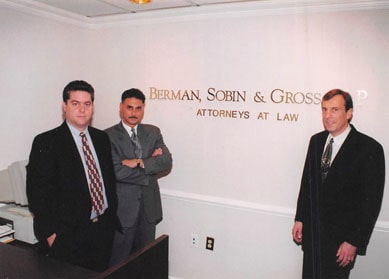
Communication workers in College Park put their bodies on the line every day. Climbing utility poles in the shadow of Route 1, pulling cable through commercial buildings near the University of Maryland, or working exposed to electrical hazards at transmission sites throughout Prince George’s County, these jobs carry serious physical risks that most people never think about. When a telecom technician, cable installer, or broadcast worker gets hurt on the job, the workers’ compensation system is supposed to step in. In practice, getting the full benefits owed is rarely straightforward. Berman | Sobin | Gross LLP has spent 35 years representing Maryland workers in exactly these situations, and a College Park communication workers injury attorney at the firm can help you understand what your claim is actually worth and how to pursue it.
What Makes Communication Worker Injuries Different from Other Workers’ Comp Claims
The workers’ compensation system treats all workplace injuries under the same general framework, but the practical realities of a communication worker’s claim often look nothing like a slip-and-fall in an office building. The exposure patterns are different. The injuries are different. And the disputes that arise tend to be different too.
Telecom and cable workers frequently suffer injuries from falls off ladders or aerial lifts, repetitive strain from pulling wire and working in confined spaces, nerve damage from sustained vibration exposure, electrical burns, and injuries sustained in vehicle accidents while driving between service calls throughout the College Park area and surrounding Prince George’s County. These injuries can be acute and visible, or they can accumulate slowly over months and years in ways that make it easy for an employer or insurer to contest whether work caused the condition.
Occupational diseases and repetitive-use injuries are where communication worker claims get complicated. When an employer’s physician says your shoulder condition is degenerative, not work-related, that opinion carries real weight in the system unless you have legal representation that knows how to counter it. Berman | Sobin | Gross LLP has handled these disputes extensively, including appellate cases that changed how Maryland law treats certain employer medical opinions.
College Park’s Communication Industry and the Claims That Come With It
Prince George’s County is home to a dense concentration of communication infrastructure. The University of Maryland campus alone generates enormous demand for fiber, data, and broadcast technicians. The Route 1 corridor and the commercial zones around I-95 and the Capital Beltway create steady work for cable and telecommunications crews. Federal contractors and their communication subcontractors operate throughout this part of the county, and many of their employees work in environments where the lines between employer, general contractor, and subcontractor get complicated fast.
That complexity matters when a worker is hurt. Who is your actual employer for workers’ compensation purposes? If a subcontractor hired you to work at a site controlled by a prime contractor, does that affect your claim? What if your employer lacks adequate workers’ comp coverage? These questions don’t have automatic answers, and the facts specific to your employment relationship determine how your case proceeds. An attorney familiar with the construction and telecommunications industries in the College Park market will recognize these issues immediately and know how to dig into the employment structure before filing.
For communication workers at broadcast facilities or tower sites in the region, there are additional exposure concerns, including height-related fall risks that produce some of the most catastrophic injuries in any industry. Maryland’s workers’ compensation system does provide benefits for serious and permanently disabling injuries, but maximizing those benefits requires building a complete medical and vocational record from the beginning.
When the Commission Isn’t the End of the Road
Most workers’ compensation claims are resolved at the Maryland Workers’ Compensation Commission level. But some are not, and communication workers with complex or high-value claims sometimes need to go further. Berman | Sobin | Gross LLP is one of the few Maryland firms that has handled hundreds of workers’ compensation jury trials and appeals before both of the state’s highest courts. That appellate experience isn’t incidental, it shapes how the attorneys at this firm approach every claim from day one.
If you’ve already had a claim denied, had a hearing go badly, or been told by another attorney that your case isn’t worth pursuing past the Commission level, that assessment may not be correct. The firm specifically takes on cases that require more time, resources, and willingness to litigate. One of the firm’s founders authored a two-volume treatise that remains the standard reference work on workers’ compensation in Maryland. That depth of knowledge matters when a case involves contested medical evidence, occupational disease theories, or issues of employer misclassification.
Answers to Questions Communication Workers in College Park Actually Ask
My injury developed over time from repetitive work. Can I still file a workers’ compensation claim?
Yes. Maryland workers’ compensation covers occupational diseases and conditions that develop gradually from work activities, not only sudden traumatic injuries. Conditions like carpal tunnel syndrome, shoulder impingement, or hearing loss from sustained noise exposure are compensable if work activities are a contributing cause. The key is building the right medical record and connecting the diagnosis to your specific job duties.
My employer is saying my injury happened off the clock. What do I do?
Disputes over whether an injury occurred during work hours or within the scope of employment are common. If you were driving a company vehicle between job sites, responding to an emergency call, or performing work-related tasks at the time of the injury, you may well be covered even if your employer contests it. The specific facts of how and when the injury happened are what matter, and an attorney can help you document them properly.
I work for a subcontractor on a large telecom project. Who is responsible for my workers’ comp benefits?
Generally, your direct employer is responsible for workers’ compensation coverage. However, if your employer lacks coverage or is uninsured, Maryland law may allow you to seek benefits from a general contractor up the chain. The employment structure in the communication and telecom industries can be layered, and sorting out who owes what requires a careful look at the contracts and relationships involved.
The insurance company’s doctor says I can go back to work, but my own doctor says I can’t. What happens now?
This is one of the most common sources of conflict in workers’ comp cases. The Commission will weigh the medical evidence from both sides. Employer medical examiners are paid for by the insurance carrier, and their opinions are not automatically entitled to more weight than your treating physician’s. An attorney can challenge a carrier’s medical opinion and present contradicting evidence effectively, including through cross-examination or by presenting independent medical records.
Can I get vocational rehabilitation if my injury prevents me from returning to my old communication technician job?
Maryland’s workers’ compensation system includes vocational rehabilitation benefits for injured workers who cannot return to their previous occupation. Berman | Sobin | Gross LLP has handled appeals on this issue specifically, including a case establishing that workers receiving service-connected disability retirement benefits remain eligible for vocational rehabilitation services.
What if my case was already denied or another lawyer wouldn’t take it further?
That’s not the end of the road. Berman | Sobin | Gross LLP regularly evaluates claims that other attorneys have declined or that did not succeed at an initial hearing. There are often procedural and substantive arguments that weren’t fully developed the first time. The firm is willing to assess cases others have passed on, particularly when the stakes are significant.
How long do I have to file a workers’ compensation claim in Maryland?
Maryland law sets filing deadlines that depend on the type of claim. For most accidental injuries, you must file within two years of the date of the accident. For occupational diseases, the deadline runs from when you knew or should have known that your condition was work-related. Missing these deadlines can result in losing your right to benefits entirely, which is why getting a claim evaluated promptly matters.
Reach Out to a Communication Workers’ Compensation Attorney Serving College Park
Berman | Sobin | Gross LLP represents injured workers throughout Prince George’s County and across Maryland, with offices in Lutherville, Baltimore, Gaithersburg, and Frederick. The firm has Spanish-speaking attorneys and staff, so language is not a barrier for clients who prefer to communicate in Spanish. If you are a communication worker in College Park who has been hurt on the job, consulting with a College Park communication workers compensation attorney at Berman | Sobin | Gross LLP costs you nothing up front. The attorneys here have built careers handling exactly these cases, and they will tell you straight what your claim involves and what you can reasonably expect from the process.