

Bowie Teachers & School Employees Injury Attorney
School employees in Bowie face a category of workplace hazards that rarely gets discussed outside the workers’ compensation system, but the data from Maryland school districts tells a consistent story. Teachers, paraprofessionals, cafeteria workers, custodians, bus drivers, and support staff file claims every year for injuries that range from slip-and-fall incidents on school grounds to physical assaults by students to cumulative stress injuries that develop over years of classroom work. When one of these injuries puts you out of work or limits your ability to do your job, the workers’ compensation system is where your claim begins. For Bowie teachers and school employees injured at work, having attorneys who understand both the Maryland workers’ compensation process and the specific dynamics of public school employment makes a material difference in how those claims resolve.
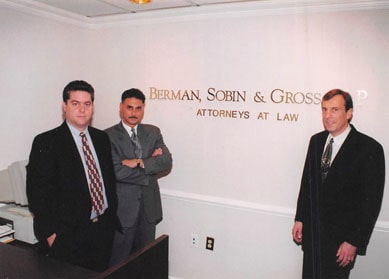
Berman | Sobin | Gross LLP has represented Maryland’s working people for 35 years, and that includes the educators and school support staff who make up one of the largest segments of the state’s public workforce. The firm is the largest workers’ compensation law firm in Maryland representing injured workers, with attorneys and staff fluent in Spanish and offices throughout the state.
What Actually Injures School Employees in Prince George’s County
Bowie sits within Prince George’s County Public Schools, one of the largest school systems in the country. The sheer size of that district means claims volume is significant, and so is the institutional knowledge the school system brings to contested claims. Understanding what types of injuries actually occur in school settings shapes how a claim needs to be built from the start.
Teachers frequently report repetitive strain injuries from years of writing on boards, positioning themselves around student desks, or performing physical demonstrations. Voice injuries are common among educators who spend hours projecting in acoustically poor classrooms. Slip and fall incidents happen in cafeterias, hallways, and parking lots, particularly during wet weather. Special education teachers and aides who work with students who have behavioral challenges are at elevated risk for physical assault injuries, including injuries to the back, neck, shoulders, and hands. School nurses handle potentially infectious materials. Custodial staff work with cleaning chemicals that can cause respiratory conditions over time. Bus drivers sustain back and neck injuries from vibration exposure and the physical mechanics of operating large vehicles on Maryland roads.
Each of these injury categories carries its own medical documentation requirements, its own causation questions, and its own disputes about whether the condition arose out of and in the course of employment. A chronic back condition developing over years of teaching looks different in a claim file than an acute fracture from a single fall, even though both are compensable under Maryland law.
How Public School Employment Affects the Workers’ Compensation Process
Public school employees in Maryland are covered by workers’ compensation, but the structure of public employment introduces layers that private sector employees do not encounter in the same way. Prince George’s County Public Schools is a self-insured employer, which means claims are managed internally rather than through a commercial insurance carrier. This matters practically because self-insured public employers often have experienced in-house claims management teams whose institutional familiarity with these claims can create pressure to resolve cases quickly and for less than their full value.
The timeline for reporting injuries is strictly enforced under Maryland law. An injured school employee generally has ten days to report the injury to their employer, and two years to file a claim with the Maryland Workers’ Compensation Commission. Missing either window can seriously damage or eliminate a valid claim. This is particularly relevant for school employees with occupational diseases or cumulative injuries, where pinpointing the date of injury is itself a legal question with real consequences.
Maryland law also provides enhanced protections and presumptions for certain categories of public safety employees. While teachers and most school support staff do not fall into the public safety category that applies to firefighters or law enforcement, the legal landscape for school employees is not static. Berman | Sobin | Gross LLP has a documented history of appellate litigation that has changed how Maryland workers’ compensation law applies to various employee categories, and that background informs how the firm approaches claims for educators and school workers whose situations might benefit from a closer legal look.
What Compensation School Employees Can Actually Recover
Maryland workers’ compensation benefits for injured school employees fall into several categories, and the interplay between them is often where disputes concentrate. Temporary total disability benefits replace a portion of lost wages when an injury prevents the employee from working entirely. Temporary partial disability applies when the employee can work in a reduced capacity. Permanent partial disability becomes relevant when the injury resolves but leaves lasting functional limitations. Medical benefits cover reasonable and necessary treatment causally related to the work injury.
For school employees, calculating the correct wage base matters considerably. Teachers often have supplemental pay for coaching, tutoring, or extracurricular responsibilities. Cafeteria workers and custodians may have overtime. Paraprofessionals working in multiple schools may have complex pay arrangements. The compensation rate calculation should capture the full picture of what the employee was earning, not just the base salary line on a pay stub.
Vocational rehabilitation is available under Maryland law for injured workers who cannot return to their prior position. For a teacher whose injury prevents returning to a classroom role, this benefit can be significant. The firm’s attorneys secured the appellate precedent in Fikar v. Montgomery County establishing that injured workers receiving service-connected disability retirement can still receive vocational rehabilitation services, a ruling that has broader implications for how these overlapping benefit streams interact.
Questions Bowie School Employees Ask About Their Injury Claims
My school told me to report the injury through their internal system. Is that enough to protect my claim with the Workers’ Compensation Commission?
Reporting to your employer is a required step, but it is separate from filing a formal claim with the Maryland Workers’ Compensation Commission. An internal report to your school or district does not automatically create a Commission record. Both steps need to happen, and the Commission filing has its own timelines that run independently of your employer’s internal reporting process.
I was injured by a student. Does that change whether I can file a workers’ compensation claim?
No. Injuries caused by student conduct, including physical assaults, are generally compensable under Maryland workers’ compensation law if they occurred while you were performing your job duties. The mechanism of injury does not disqualify the claim. These cases do sometimes generate causation disputes, particularly if the employer argues the injury was not directly related to a work activity, which is why documentation matters from the beginning.
I have a pre-existing back condition. Will my employer use that to deny my claim?
Pre-existing conditions are a frequent basis for dispute in workers’ compensation claims. Maryland law does not require that work be the sole cause of an injury, only that it be a contributing cause. An aggravation of a pre-existing condition caused or accelerated by work activity is compensable. However, the employer’s medical experts will often argue that any current limitation stems entirely from the pre-existing condition rather than the work event. This is precisely the type of claim that benefits from experienced legal representation to counter with the right medical evidence.
Can I choose my own doctor for treatment?
Maryland workers’ compensation law allows injured workers to select their own treating physician, subject to certain procedural requirements. The employer and its insurer have the right to request an independent medical examination, but that examiner’s opinion does not automatically control your treatment. Understanding how to work within this framework, and how to respond when employer medical opinions conflict with your treating physician’s findings, is a core part of competent claim representation.
What happens if I can never return to teaching because of my injury?
If your injury results in permanent limitations that prevent you from returning to your prior position or any equivalent employment, your case moves into permanent disability territory. This can include permanent total disability benefits, significant permanent partial disability awards, or vocational rehabilitation leading to a different career path. These are also the cases that tend to generate the most litigation, because the dollar amounts at stake are substantial and employers resist them accordingly.
How long does a workers’ compensation claim for a school employee typically take to resolve?
Straightforward claims where liability is undisputed and the injury is discrete can move through the Commission relatively quickly. Claims involving occupational diseases, disputed causation, permanent disability ratings, or complex medical histories take longer, often significantly so. The Prince George’s County school system’s self-insured structure means you are dealing with an entity that has handled many similar claims and will move at its own pace unless your attorneys push back effectively.
My employer says my injury happened because I was not following proper procedure. Does that mean I lose my benefits?
Maryland workers’ compensation is a no-fault system. In most circumstances, an employee’s own negligence does not bar recovery. There are narrow exceptions, but employee misconduct defenses rarely succeed on their own unless the conduct was willful and in direct violation of a clear prohibition. An employer raising a procedural violation defense is typically using it as a pressure tactic rather than as a legally viable bar to your claim.
Representing Bowie’s School Workforce in Workers’ Compensation Claims
The attorneys at Berman | Sobin | Gross LLP represent teachers, paraprofessionals, bus drivers, cafeteria staff, custodial workers, school nurses, and the full range of school support personnel across Maryland’s public school systems. The firm does not look for simple cases and has the depth to handle claims that require hearings before the Maryland Workers’ Compensation Commission, appeals through the circuit courts, or litigation before Maryland’s appellate courts. Bowie school employees who have been injured at work can reach Berman | Sobin | Gross LLP through offices in Lutherville, Baltimore, Gaithersburg, and Frederick to discuss their claims with attorneys who understand what is actually at stake for a working educator or support employee and how to pursue a full recovery under Maryland law. If other attorneys have declined your case or suggested it cannot go further, this firm has consistently taken on the claims others have passed over.
For injured school employees in Bowie and throughout Prince George’s County, Berman | Sobin | Gross LLP offers a confidential case analysis to evaluate your claim, explain what benefits apply to your situation, and outline a realistic path forward for your workers’ compensation case.